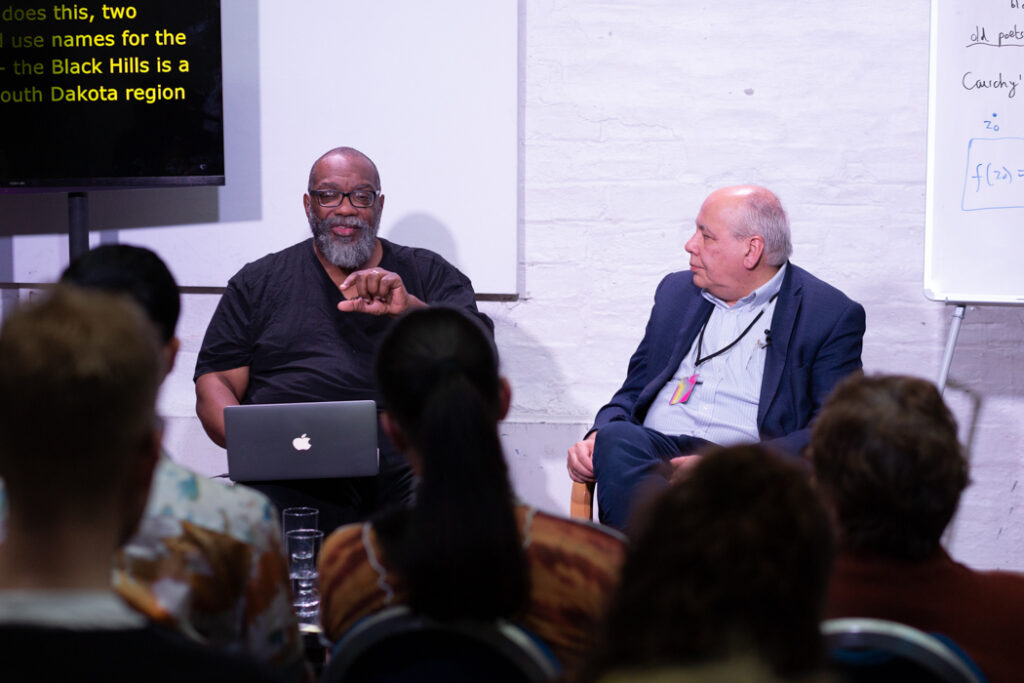
Discussion on Mathopoetics
Fred Moten Fernando Zalamea
A back and forth between Fred and Fernando on the transits and obstructions between mathematics and poetics, and how both help us to think from the other side.
Arika have been creating events since 2001. The Archive is space to share the documentation of our work, over 600 events from the past 20 years. Browse the archive by event, artists and collections, explore using theme pairs, or use the index for a comprehensive overview.
A back and forth between Fred and Fernando on the transits and obstructions between mathematics and poetics, and how both help us to think from the other side.
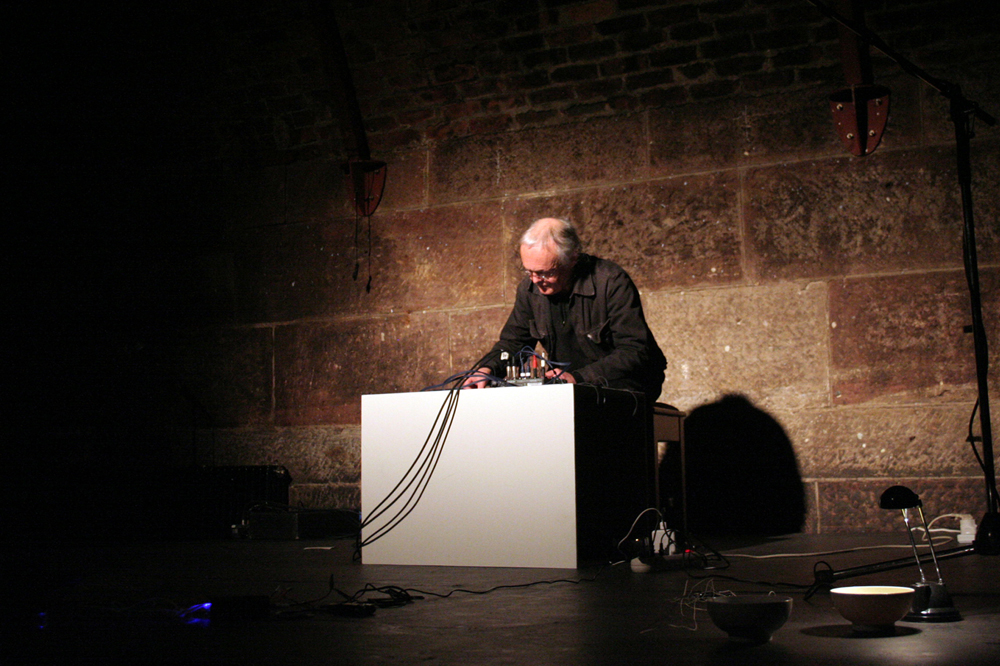
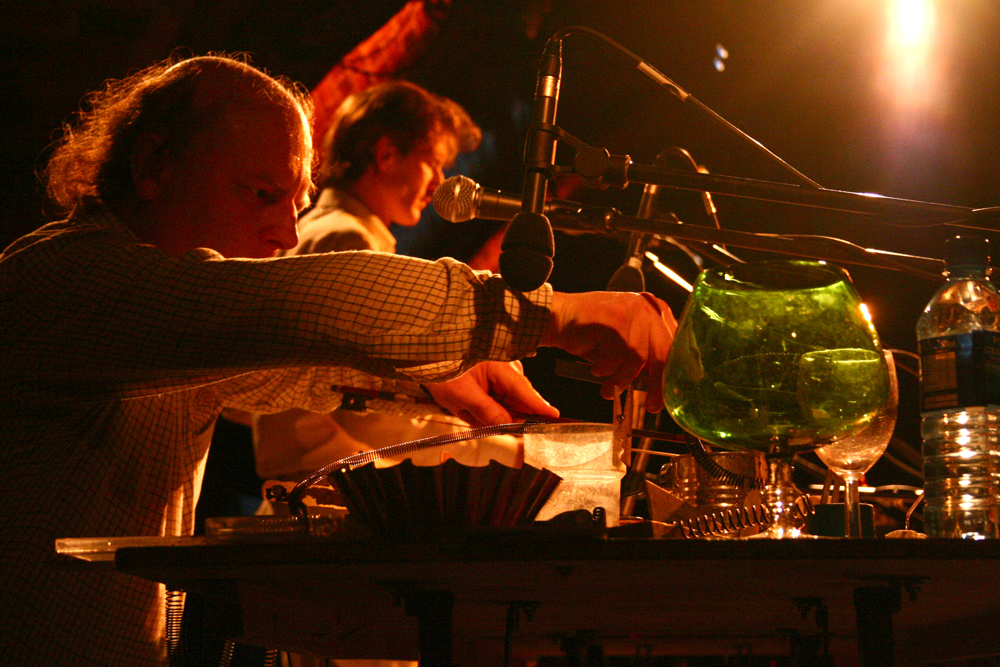
Julius’ “small music” features simple snatches of found sound, played back through small speakers, often set in bowls of pigment and dirt which shimmies in the vibrations.
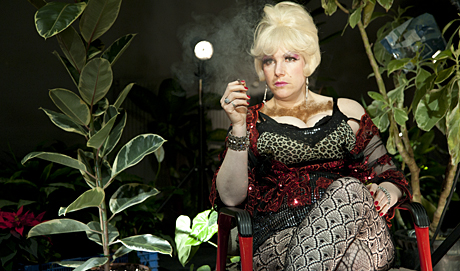
Trans-temporal drag, sexuality and the re-staging of illegible moments in history.
How do you know what you want? Should freedom be doing what you ought, not doing what you want? How might a philosopher and artist turn this thinking into an enabling condition in the context of noise and improvisation?
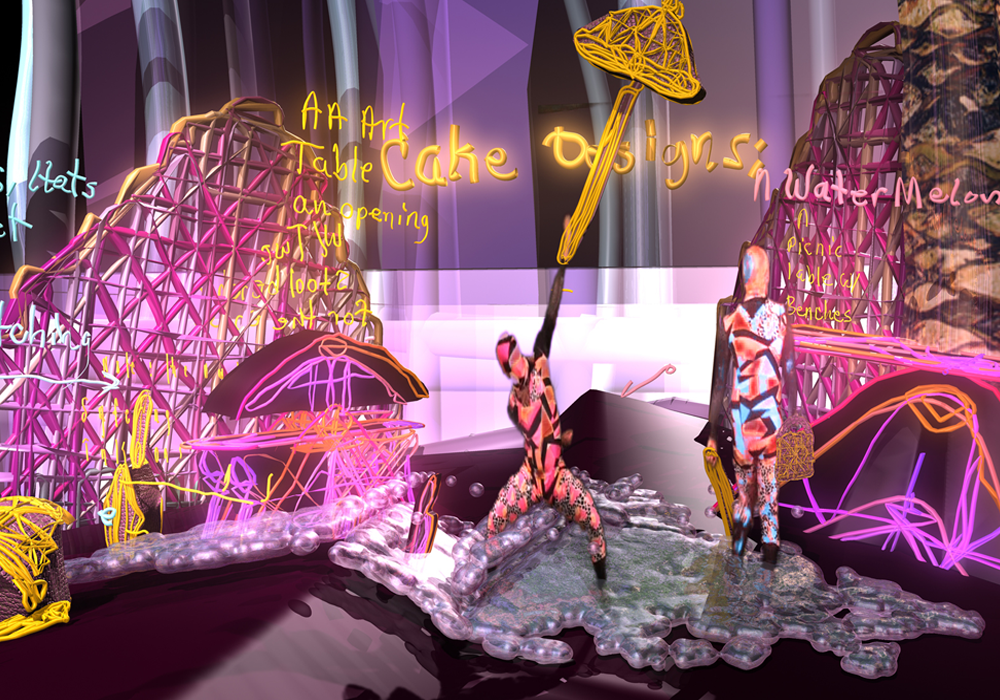
Emotional fantasies, towers of cakes, identity troubles, collapsed distance and time and Samuel R. Delany’s rarely seen 1971 film The Orchid.
Three short performances involving social exchange (jumpers, hats, glasses…) and singing (ballads)
The mutability of the body and the mobility of identity: queered pop culture, drag, lip-sync and performance.
Quintessentially British, The Bohman Brothers’ music is a home-made and DIY conflux of some of the most virulent strains of experimental music.
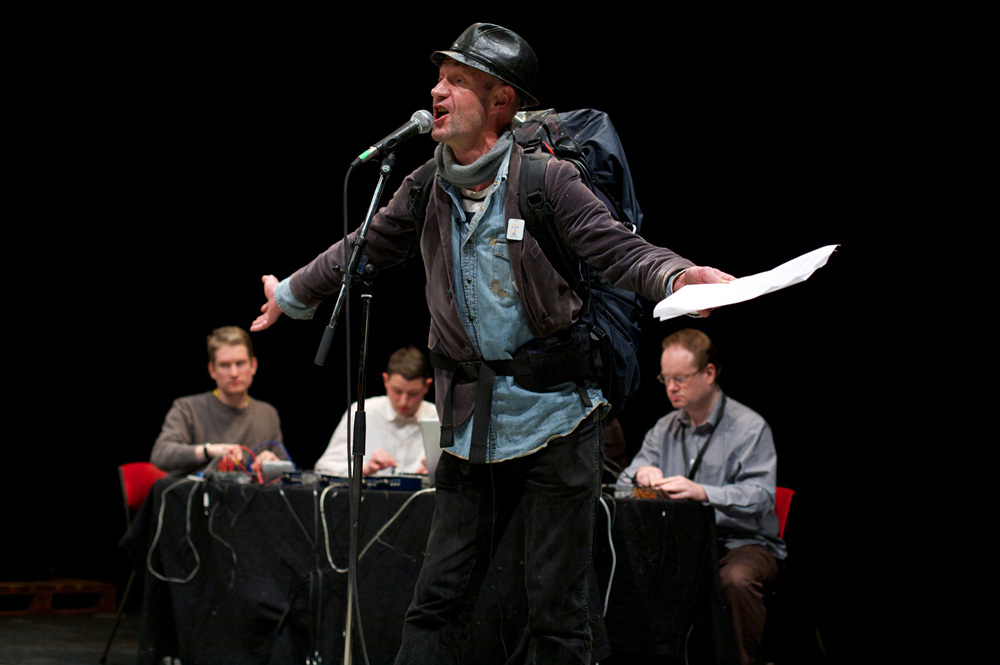
A performance, a radio show, an installation, an endurance test. A game of chance. Constantly broadcasting live, actor Tam Dean Burn will leave Tramway at the start of INSTAL and walk away from it, in an ever increasing spiral, for a day. Then he’ll walk back.
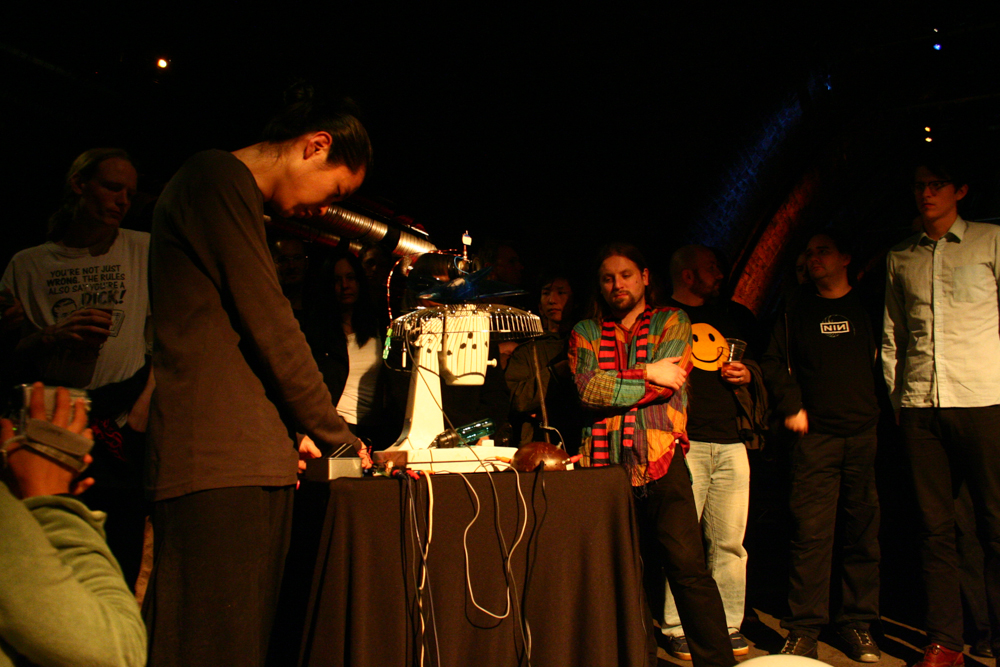
Umeda is a Japanese artist who is as fascinated in setting up interesting situations to observe, as he is in creating performances.
A film performance about Guy then, and Guy now, as a metaphor for the passing of time, which of course all film is inherently about.
Nina’s going to talk about November, by Hito Steyerl: what and how the film thinks, or about what and how it might makes us think (which is connected, but not the same thing), by watching, and it discussing (with you?).