The Experiment: Pt. 1
Amiri Baraka Fred Moten Wadada Leo Smith Sonia Sanchez
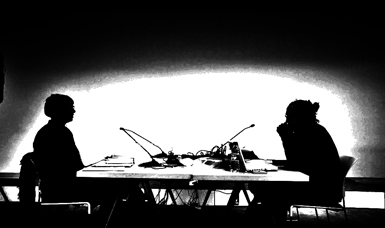
What happens when you are engaged in a deep and extended artistic practice that intersects between literature and music, notation and improvisation, sight and sound?
Arika have been creating events since 2001. The Archive is space to share the documentation of our work, over 600 events from the past 20 years. Browse the archive by event, artists and collections, explore using theme pairs, or use the index for a comprehensive overview.
What happens when you are engaged in a deep and extended artistic practice that intersects between literature and music, notation and improvisation, sight and sound?
Includes: a classic of innovative computer graphics, ex-pat Scot McLaren on form, a riotous psychedelic oil show with a Soft Machine accompaniment, subtle manipulation of data feedback, a colourful road movie and a reworking of a lost Paul Sharits film.
A poetic multi-screen performance about “the inadequacy of the arbitrary passing moment and the impossibility of permanence”. About time and change.
Killer of Sheep is an undisputed masterpiece of African-American filmmaking and one of the most poetic, perceptive dramas ever made about family and community.
Work for cello, percussion, contra bassoon and cherbulum commissioned for Instal in collaboration with Paragon
A chat with Eugene Thacker. Can we rethink the world as unthinkable, and without us?
A public gathering that brings together local artists, musicians, activists, and community organisers.
The final iteration of Arika’s INSTAL festivals, the 2010 edition was an experimental festival of experimental music – 3 days of events at the Tramway that explored un-average ideas about sound and music.
Is there a link between the ways we’re caged and exiled by the prison-industrial complex and the ways people’s bodies are violently categorised and segregated by race, class, gender or ability?
Four perspectives from people involved in different anti-capitalist and anti-racist struggles, considering how ideas of ‘ending’ have shaped their political thinking and praxis.
“The miracle of Herman Melville is this: that a hundred years ago in Moby Dick…he painted a picture of the world in which we live, which is to this day unsurpassed.” – C. L. R. James
A performed film lecture exploring how the ‘Rumberas’ of Caribbean cinema of the 40’s and 50’s subverted demeaning images of themselves through dance, sound and a sociality that insisted on blackness as being a cultural performance, not simply due to skin colour.