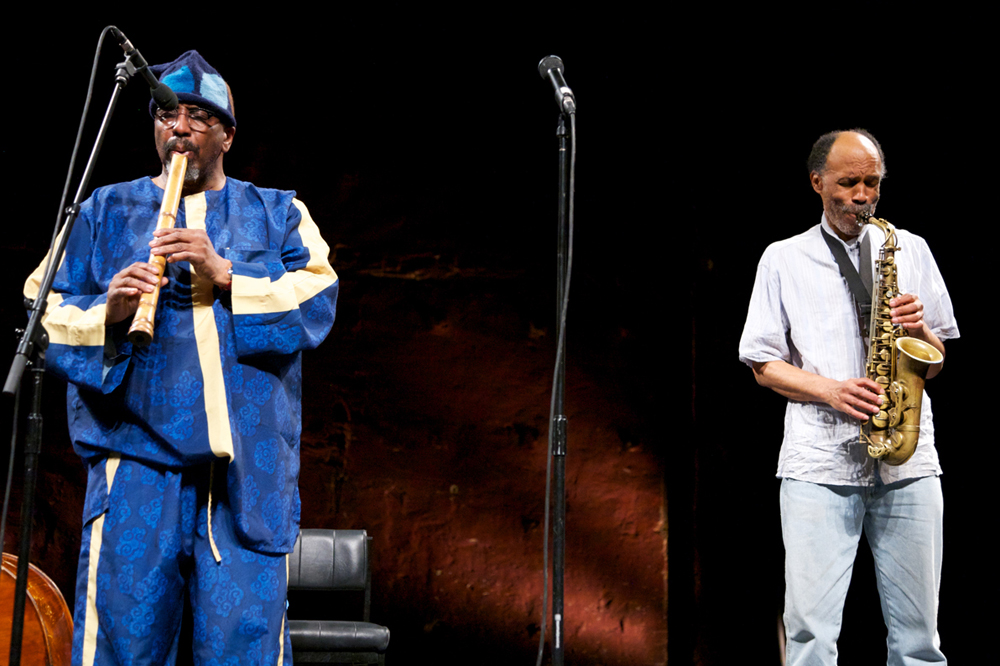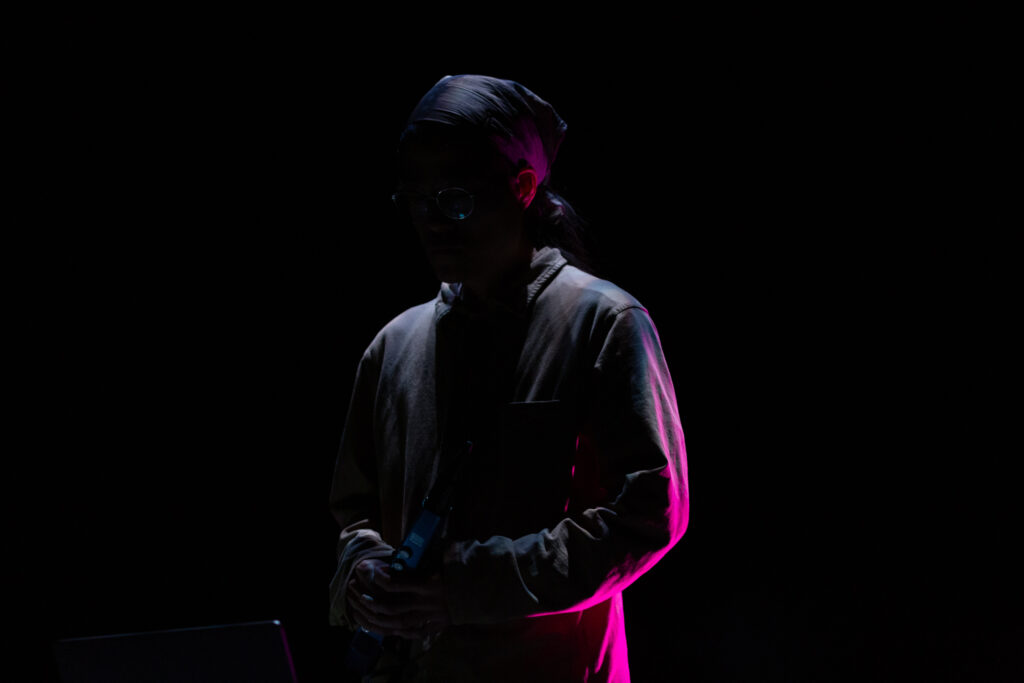
Daniel Carter & William Parker
Daniel Carter William Parker
What might Carter and Parker’s collaboration tell us about our own performances of responsibility and liberty, whether individual, social or musical?
Arika have been creating events since 2001. The Archive is space to share the documentation of our work, over 600 events from the past 20 years. Browse the archive by event, artists and collections, explore using theme pairs, or use the index for a comprehensive overview.
What might Carter and Parker’s collaboration tell us about our own performances of responsibility and liberty, whether individual, social or musical?
Lo-fidelity sheets of parinirvanic mangled tone get driven into oblivion by two longstanding gurus of the Northern England primitivist noise.
For this day-long festival, sex workers and their allies from New York, the tri-state area, and Europe will gather at MoMA PS1 to debate, perform, dance, strategize & share knowledge.
Ten short intimate one-on-one conversations with Robert Softley Gale – We all want to see ourselves reflected in the world around us—in society, in art, in culture… in porn?
A carefully thought out, simple but rich performance using just a turntable, teach yourself foreign language LP’s, the impeccable timing of a percussionist, and an idea.
A meditation on how all of us perform — sometimes reinforcing, sometimes subverting — the shifting categories of gender, sexuality and race.
Poems are kisses, fists, and underground rivers. For all these reasons and many more, I am a poet.
How does this practice, that simultaneously resists and honours the distinctions between these genres, materials and senses, determine the inhabitation of another: a convergence of aesthetic and social experimentation?
For day three of Ultra-red’s project, the investigation will take up protocols for listening to the sound of freedom composed and facilitated by Nancy Nevárez.
Investigating the border between the audible and the visible means looking at the margins, the edges of creativity where artists test out new boundaries and define them anew.
Dworkin asks: What would a non-expressive poetry look like? A poetry of intellect rather than emotion?
How can we imagine bodies not as an end in themselves, but as a medium through which we can become one another’s means?