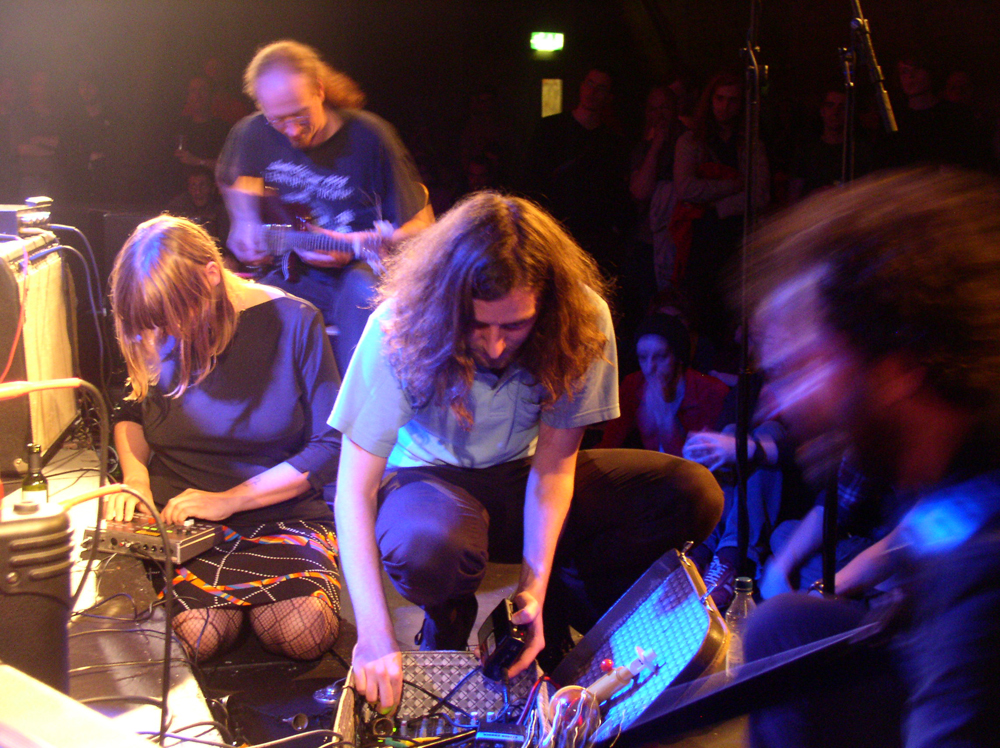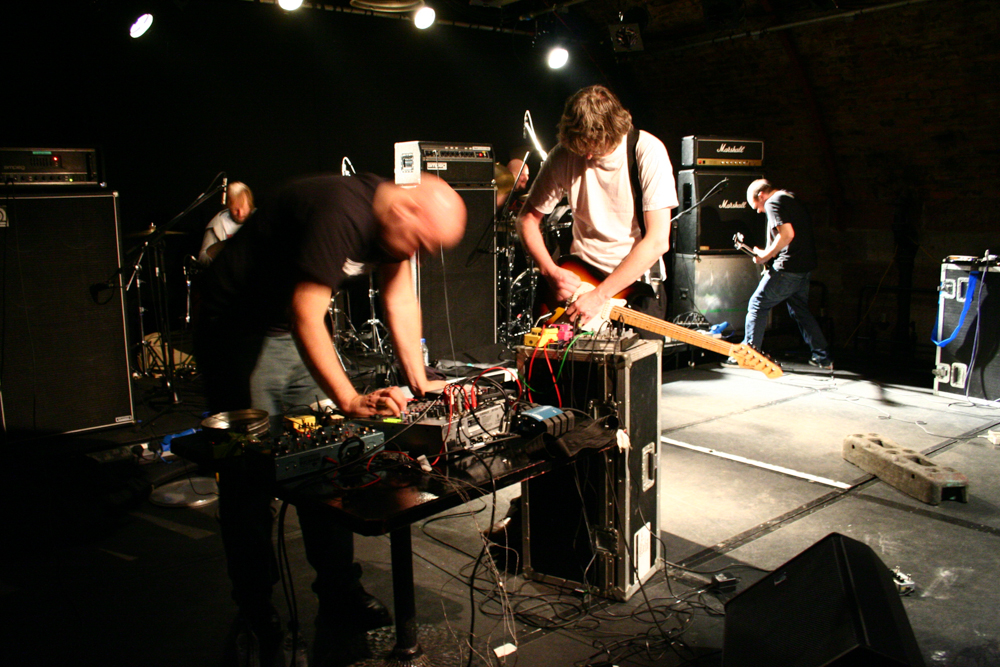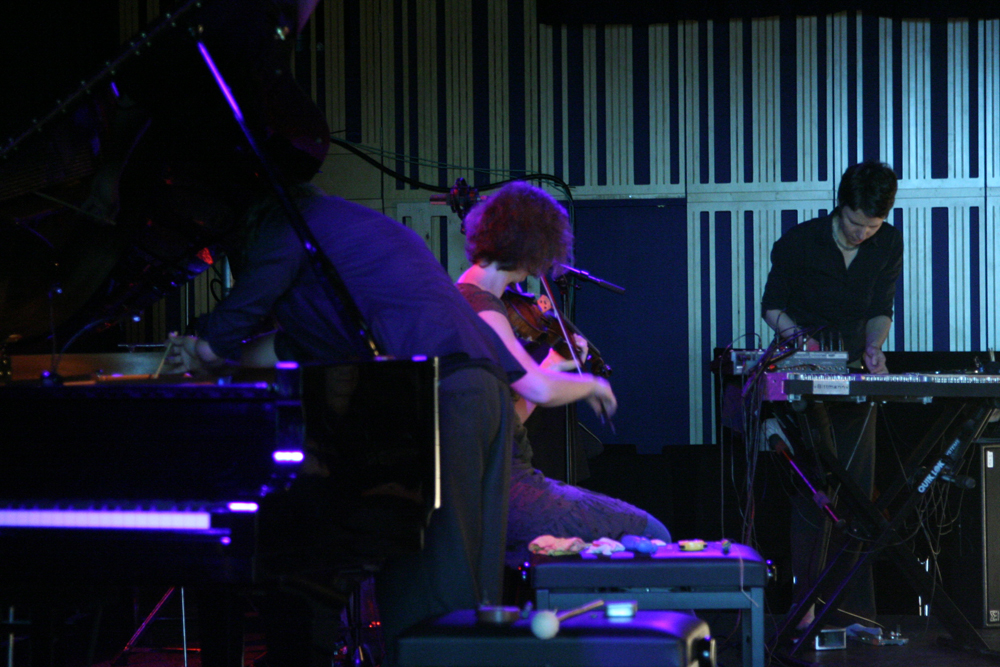
Free-form hook up
Ben Knight Hannah Ellul Neil Davidson
Two-parts Helhesten spit strangled shanties and cracked reeds from under a net of the Glasgow Improv Orchestra’s six-strings and one moustache.
Arika have been creating events since 2001. The Archive is space to share the documentation of our work, over 600 events from the past 20 years. Browse the archive by event, artists and collections, explore using theme pairs, or use the index for a comprehensive overview.
Two-parts Helhesten spit strangled shanties and cracked reeds from under a net of the Glasgow Improv Orchestra’s six-strings and one moustache.
“The miracle of Herman Melville is this: that a hundred years ago in Moby Dick…he painted a picture of the world in which we live, which is to this day unsurpassed.” – C. L. R. James
Munehiro Narita’s Kyoaku No Intention (Worst Intentions) fired out some of the most compelling no-wave improvised rock of the 80s.
Out of a dark haze, shafts of light emerge, as the emulsion is scratched from the surface of the film. Simultaneously, out of the black silence, noise and audible scratches bloom into a bright drone.
For day four of Ultra-red’s project, the investigation will take up protocols for listening to the sound of freedom composed and facilitated by Fred Moten.
A new interpretation of Kosugi’s Catch-Wave, producing a cloud of fluctuating, hypnotic drones, in front of a backdrop of projected waves.
A chorister attempting to sing Vivaldi, with live accompaniment, while trampolining for 20 minutes.
A sound diffusion piece by Glasgow University’s Musica Electronica, and a further selection of electroacoustic performances.
A drone installation populated by flourescent strip lights working in complicity with analogue radios – “all the lights just do their thing”.
A riot of 60’s psychedelia, magick, ritual and tight black leather, this programme highlights underground innovators who use and subvert pop music for their own experimental ends; and be warned, in Anger, there’s real darkness.
The Songspiels take on a mode of musical theatre developed by playwright Bertolt Brecht and composer Kurt Weill in the early twentieth century, presenting political and social concerns through the accessible and (often funny) form of song.
A sort of prayer and conference, a sort of scream and dialogue – a monologue and declaration at the time, addressing how we can build complicity with one another.