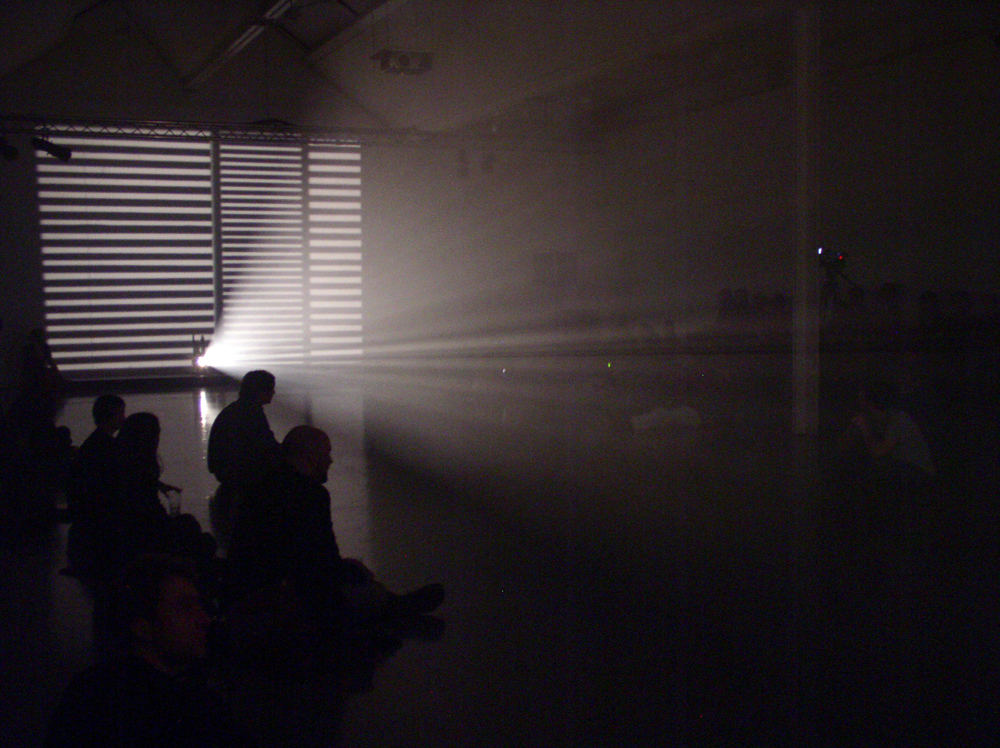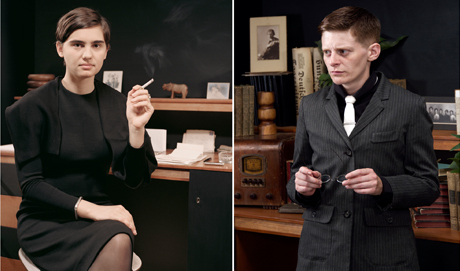
Dr. Mabuse dispassionately recites communist theory over found footage of riots
Evan Calder Williams
A bodiless treatise on narration, bored speakers, audience misbehaviour and police megaphones, but: is anybody listening?
Arika have been creating events since 2001. The Archive is space to share the documentation of our work, over 600 events from the past 20 years. Browse the archive by event, artists and collections, explore using theme pairs, or use the index for a comprehensive overview.
A bodiless treatise on narration, bored speakers, audience misbehaviour and police megaphones, but: is anybody listening?
Akio Suzuki and John Butcher performing in a remote sea cave near Durness.
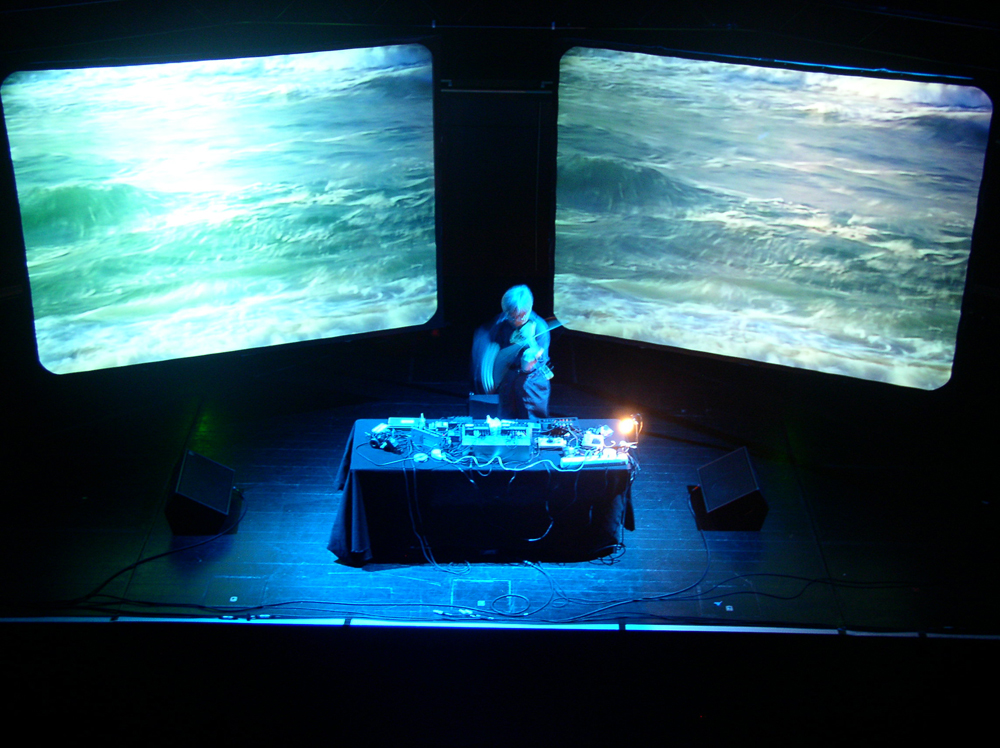
A beautifully crisp, slowly evolving duo for cello and projected images. Abstract but still figurative; change only noticeable after the fact.
“The miracle of Herman Melville is this: that a hundred years ago in Moby Dick…he painted a picture of the world in which we live, which is to this day unsurpassed.” – C. L. R. James
A community of those without community, for a community to come. A schizo-scenic video-collage of the disturbing ‘normality’ of Moby Dick.
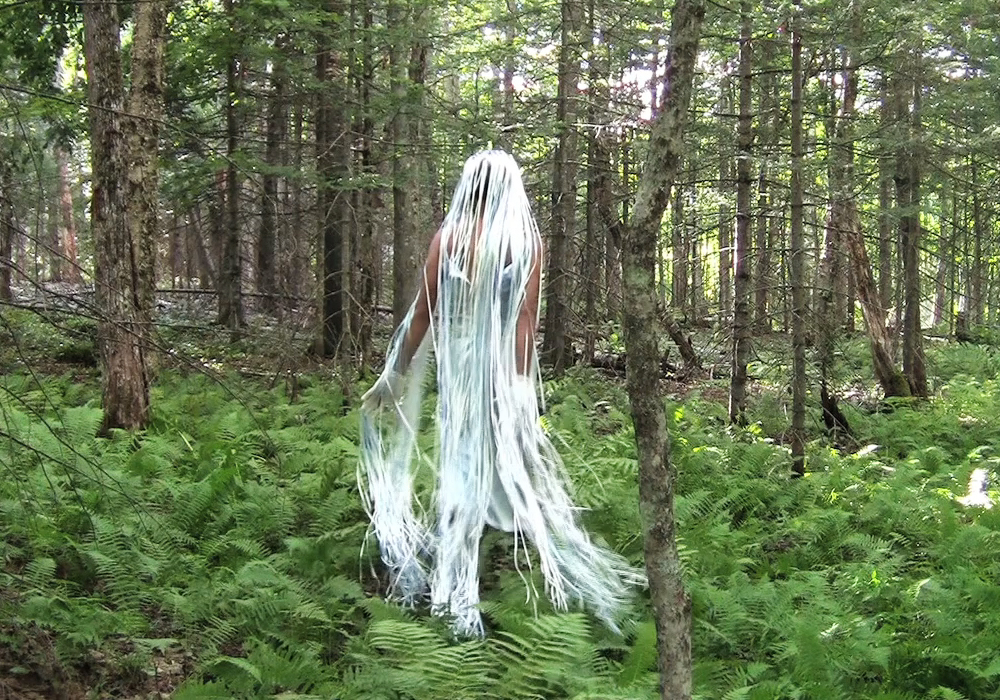
Inspired by Delany’s Aye, and Gomorra. A spookily filmic world where asexual bodies live in the contradiction of their unarousable loneliness and desire for intimacy and contact.
A live installation of the ‘Film Ist’: projected on 4 huge screens and an improvised soundtrack from 4 figureheads of the Austrian experimental music scene.
Glasgow. Power electronic klutz behaviour by Kovorox sound head-honcho. Bruised bodies and broken microphones.
A poet, playwright and activist, Sanchez emerged as a seminal figure in the 1960s Black Arts Movement, writing in the name of black culture, civil rights and women’s liberation.
How do people both inside and outside of prison work together to dismantle the criminal justice system and build a society based on collective care?
A performance for projectionist, musicians and audience, which plays with references to Oscar Levant and Gershwin: apparently a series of small doses of chaos.
Dworkin asks: What would a non-expressive poetry look like? A poetry of intellect rather than emotion?