Brian Dillon Talk
Brian Dillon
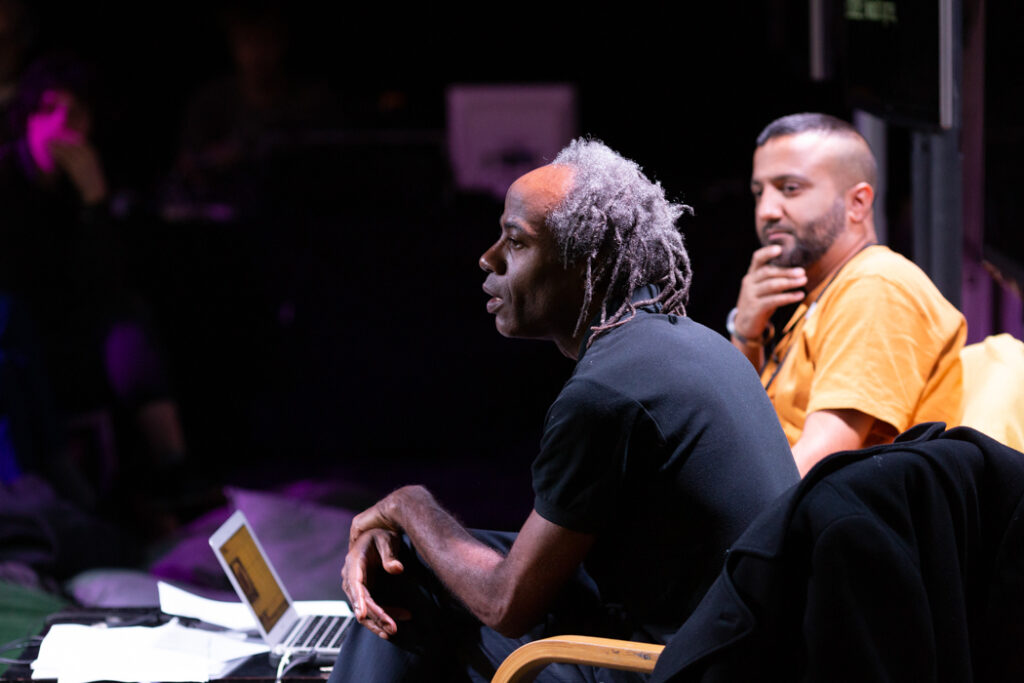
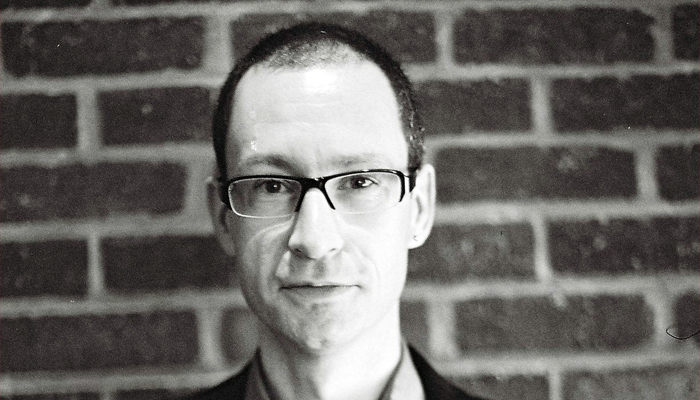
Join Brian as he ruminates on the history of how experimental filmmakers and sound artists have drifted into and taken over galleries in order to show their work.
Arika have been creating events since 2001. The Archive is space to share the documentation of our work, over 600 events from the past 20 years. Browse the archive by event, artists and collections, explore using theme pairs, or use the index for a comprehensive overview.
Join Brian as he ruminates on the history of how experimental filmmakers and sound artists have drifted into and taken over galleries in order to show their work.
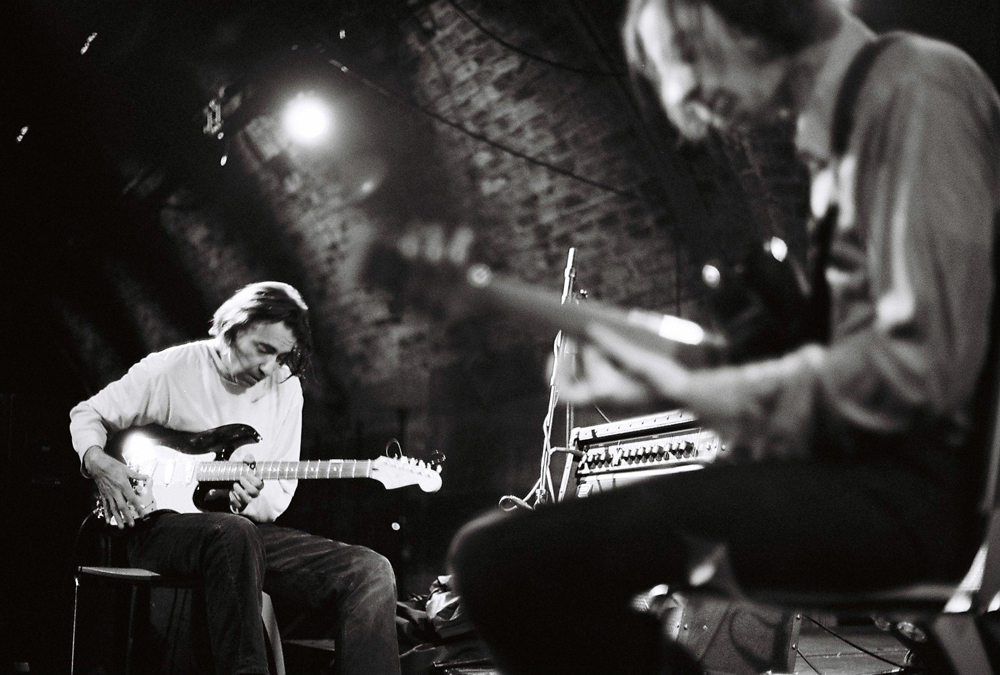
An utterly deep introspection told in aching, weeping guitar lines; melodic, simple, always minimal but somehow entirely epic.
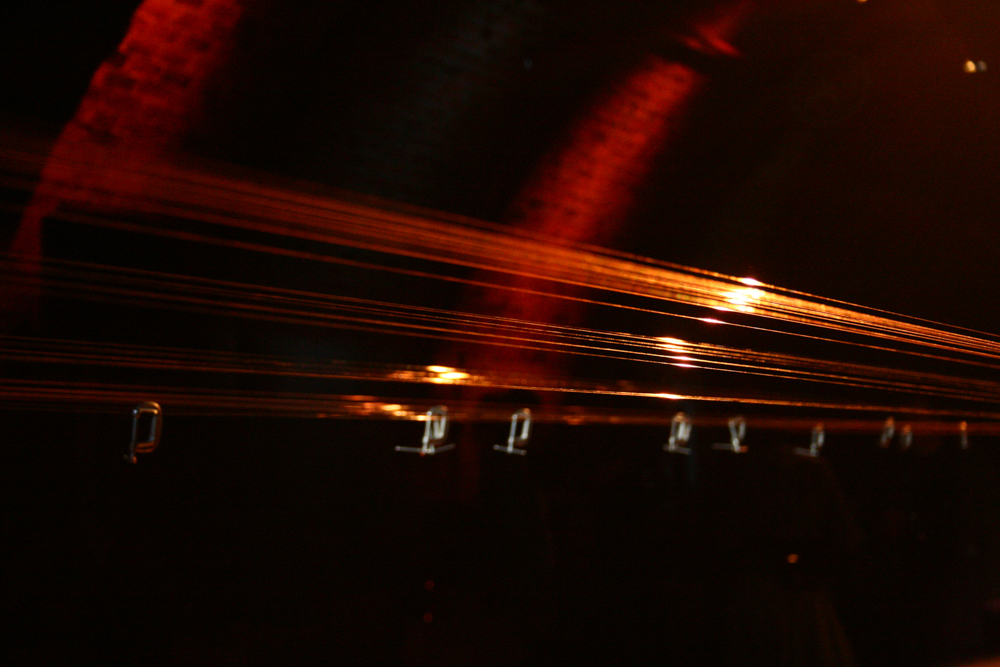
Long Stringed Instrument performance involving up to 100 wires strung in tension over a 40m arch.
Autobiographical detail becomes a lens to reflect and refract the deepest aspects of personal and social life in Delany’s ground-breaking non-fiction writing.
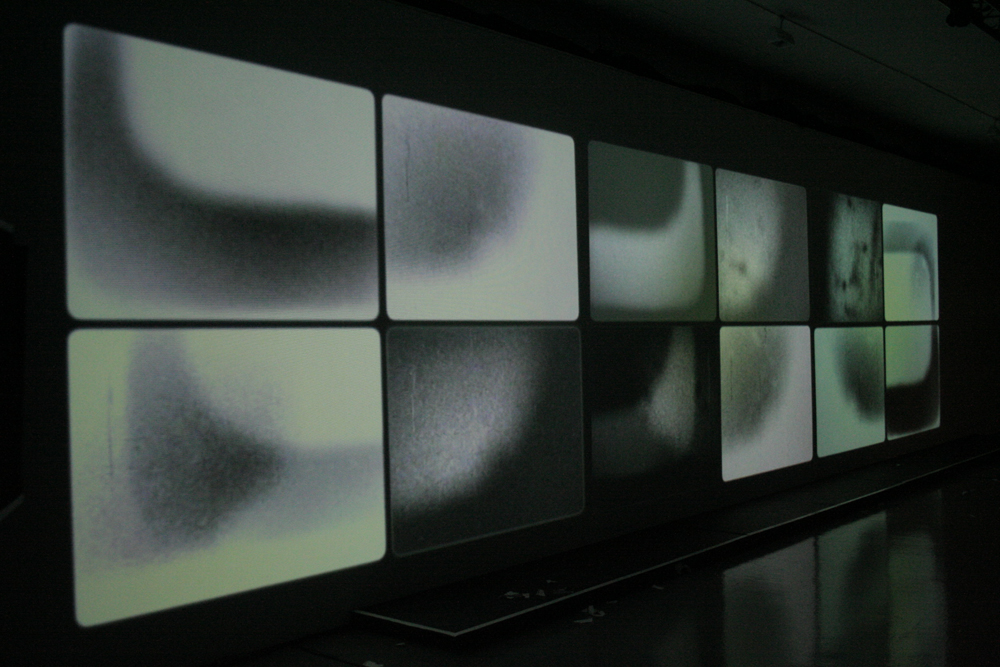
A poetic multi-screen performance about “the inadequacy of the arbitrary passing moment and the impossibility of permanence”. About time and change.
Radical transfeminism aims to hold the space for finding relations between the ruins of the everyday. Emerging from the debris, spaces for politics find form as poetics to carry understandings, actions and be/longings.
A Study Session focused on the thinking of Ailton Krenak – one of the great leaders of the Brazilian indigenous movement – led by curators and artists Amilcar Packer Arissana Pataxó.
Dub is strange. A conversation with Edward George and Dhanveer Brar.
The production of moving image (film) by the mechanically, unfalteringly repetitive manipulation of mass-produced materials (film), in order to explore three different allegorical representations (films) of repetitive human actions and labour under capital.
This set continues on from the Bud Neill inspired clatter using the contents of the Usurper twin’s pockets.
A whistle stop tour of visual and material culture that has anchored the sex workers rights movement through the decades until today.
Relative patterns of occlusion and exposure occupy two screens. Each exposure fires a stroboscopic flash of colour: yellow for one screen; blue for the other, filling the centre of both screens with colour, haloed with after-images.