Free-form hook up
Ali Robertson Malcy Duff Seymour Wright
Usurper luddite twins’ disabled instruments play a game of pick-up-sticks with the deconstructed horn of a young Derby opponent.
Arika have been creating events since 2001. The Archive is space to share the documentation of our work, over 600 events from the past 20 years. Browse the archive by event, artists and collections, explore using theme pairs, or use the index for a comprehensive overview.
Usurper luddite twins’ disabled instruments play a game of pick-up-sticks with the deconstructed horn of a young Derby opponent.
Smith/Stewart set up allegorical situations over which they often have little to no control, but which instigate explorations of dependence and trust, the body, sex and death.
Sometimes delicate, sometimes harsh and jarring, Yagi’s koto solos are as much inspired by Nancarrow or Cage as they are traditional.
Listening to people listening to their own homes. Musicians and actors will listen back to recordings made in local peoples homes on headphones, and interpret/ translate what they are hearing.
Radu plays a trombone, Klaus creates pure sine waves: they sound on their own, or sometimes together and often with considerable space and silence.
A performance bearing witness to a struggle built upon patience and collective action from the great multi-instrumentalist and member of the AACM.
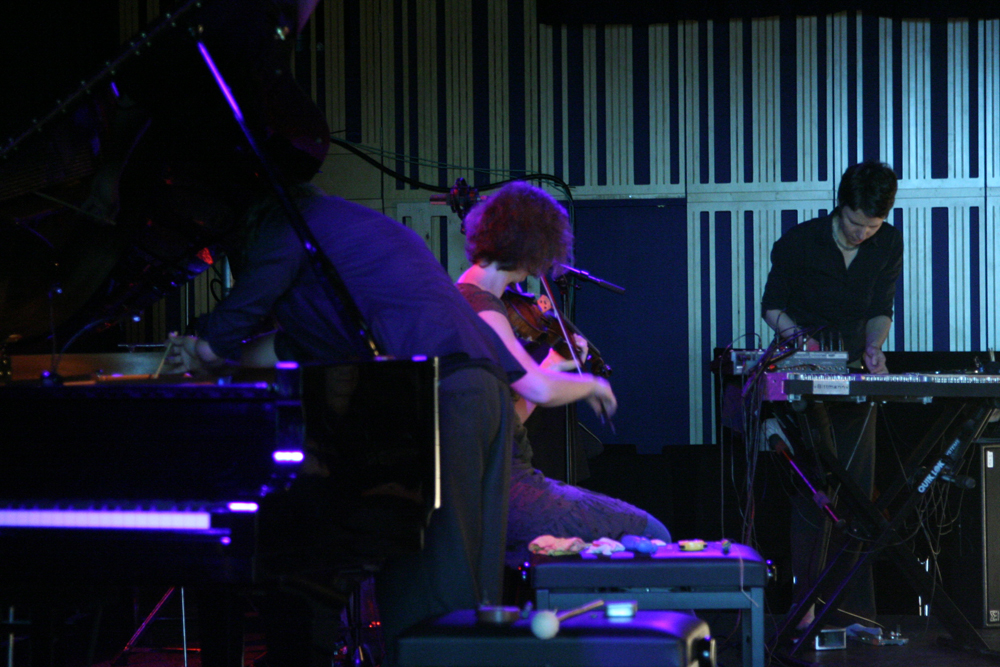
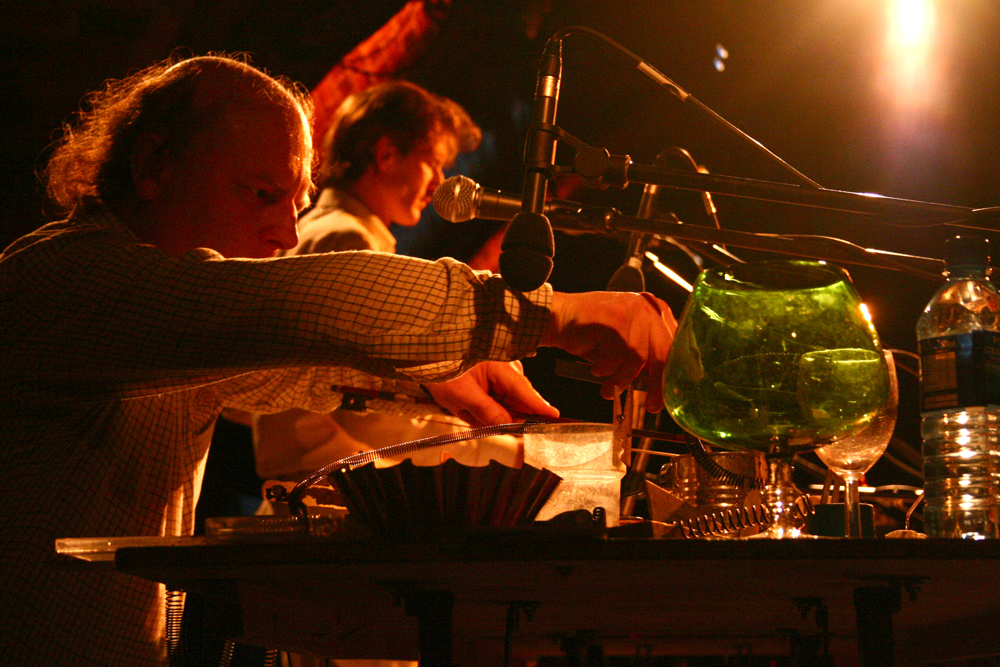
Freeform Super 8mm documentation of Friday at Instal 06 by filmmaker Matt Hulse.
How do people living with disability see themselves in today’s sexualised culture? How do we imagine our crip sexual selves despite society wanting to reduce us to non-erotic bodies?
West Coast drone-age guitar grumbler/ consumer electronic reclaimer meets free-thinking clang/ chime/ drone bluesman of The East.
Duo performance by two great French musique concrète improvisers using feedback, contact mics, tape, an old Revox tape machine, a vintage synth…
When one calls a strike, who hears the call, who attunes and listens to it? How to listen to the call of a strike? What prevents one from hearing this call or stops one from listening to it?
How does this practice, that simultaneously resists and honours the distinctions between these genres, materials and senses, determine the inhabitation of another: a convergence of aesthetic and social experimentation?