Where Good Souls Fear
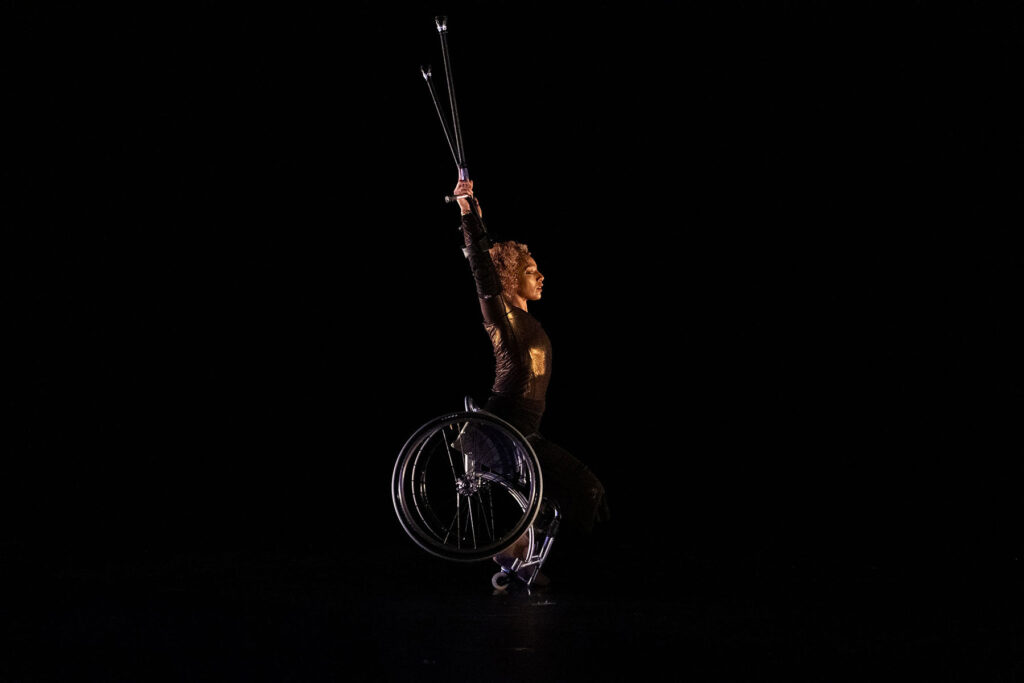
Alice Sheppard
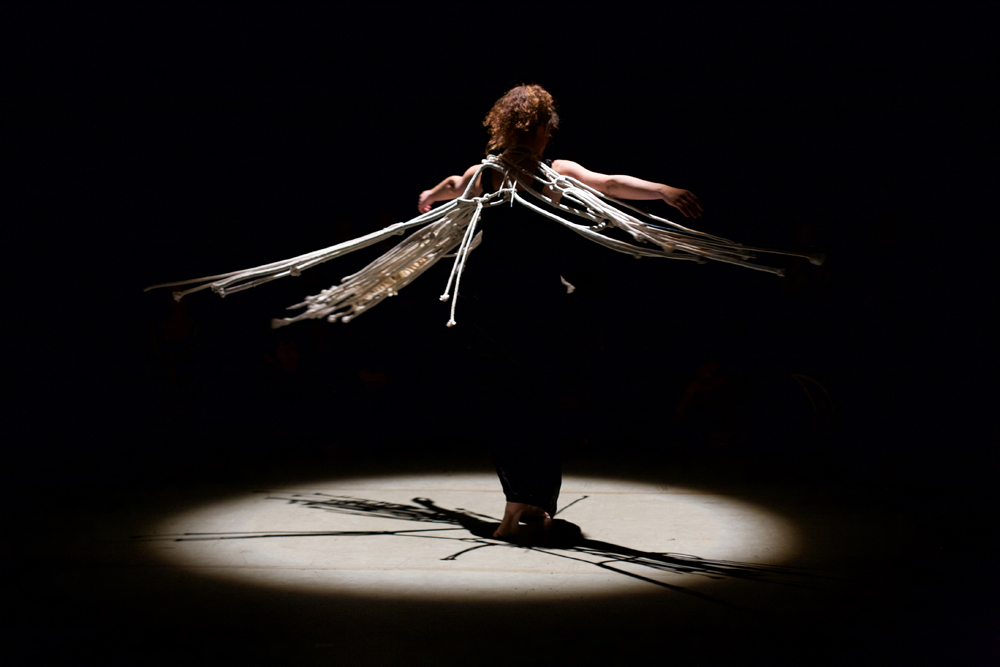
An occasion for commotion, and a chorus of motions. Choreography rotating your revolutions and then some.
Arika have been creating events since 2001. The Archive is space to share the documentation of our work, over 600 events from the past 20 years. Browse the archive by event, artists and collections, explore using theme pairs, or use the index for a comprehensive overview.
An occasion for commotion, and a chorus of motions. Choreography rotating your revolutions and then some.
Sean and Taku share an interest in structure, space and time. A spartan, abstract, considered and surprisingly musical set.
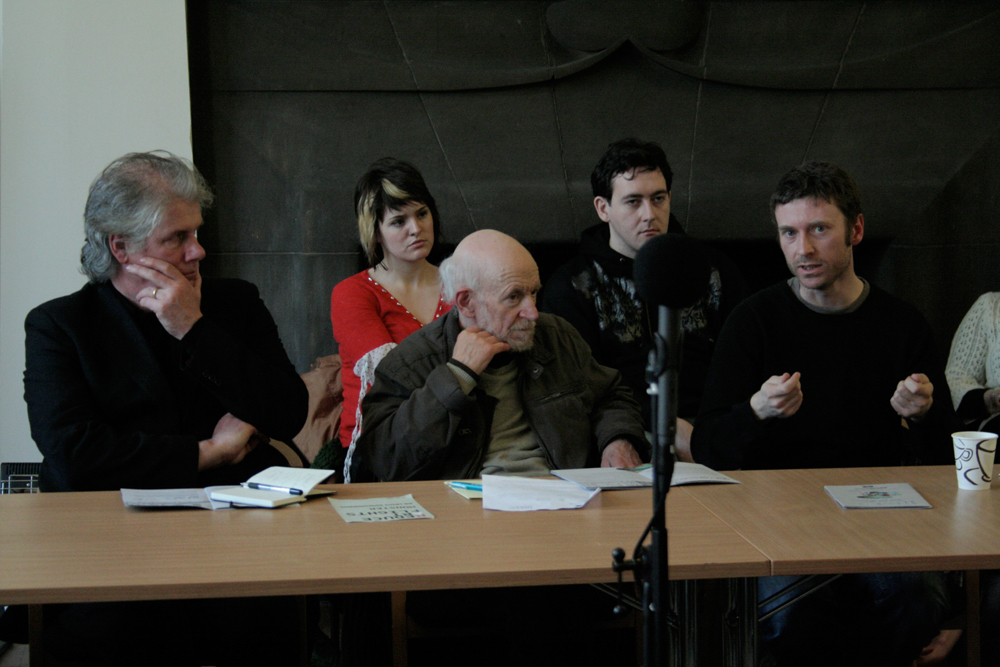
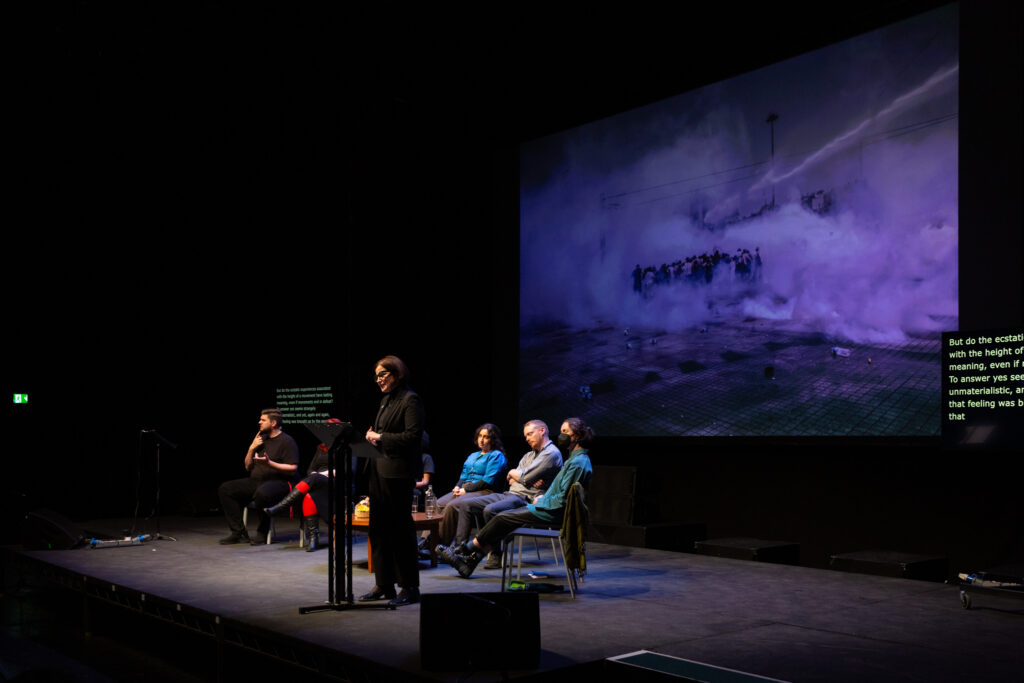
A performed self-cancelling discussion, with artists from the festival, invited speakers and local artists talking at once, over each other, or straining to be heard over the din.
Arika is working in partnership with Decriminalised Futures on a multi year collaboration featuring multiple creative projects exploring sex worker lives, experiences and movement struggles.
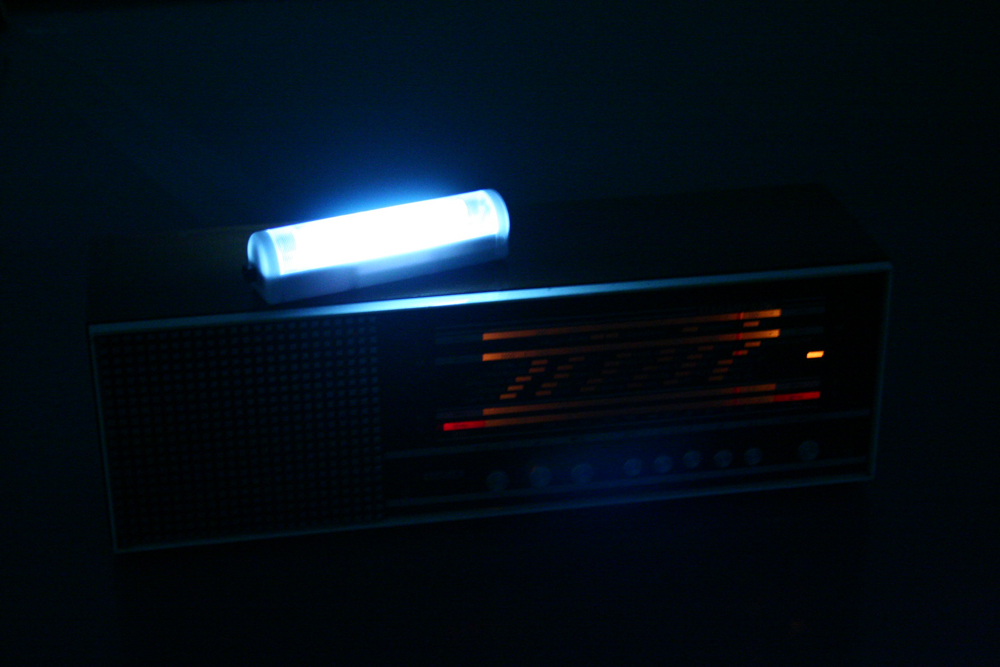
A drone installation populated by flourescent strip lights working in complicity with analogue radios – “all the lights just do their thing”.
Quartet improvisation by Klaus Filip – laptop, Radu Malfatti – trombone, Sean Meehan – snare & cymbals, Taku Unami – rice and dish.
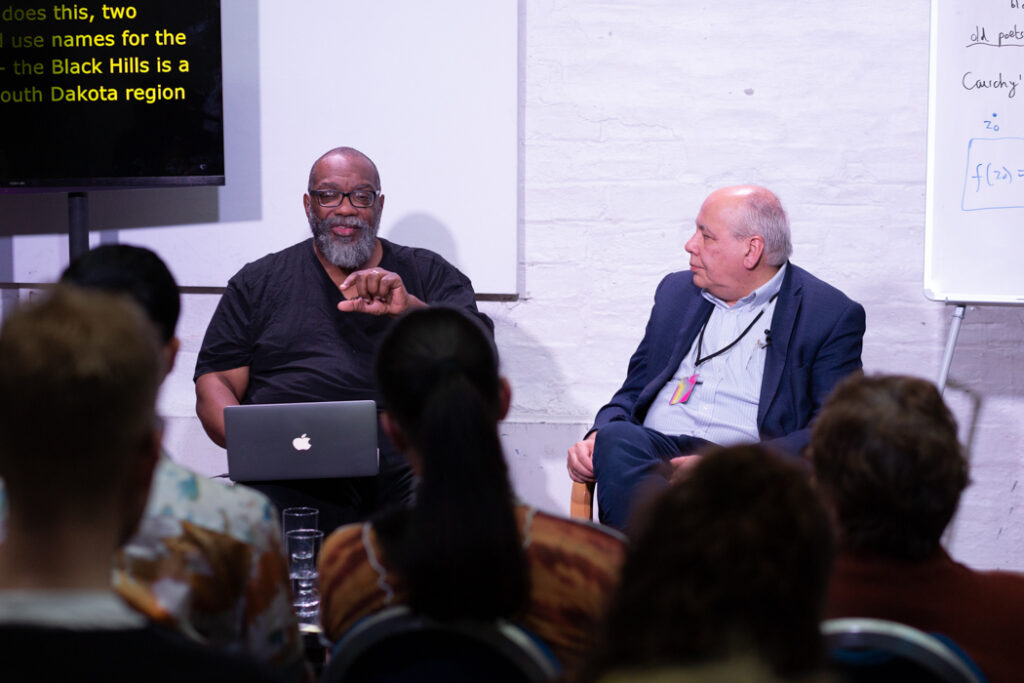
A back and forth between Fred and Fernando on the transits and obstructions between mathematics and poetics, and how both help us to think from the other side.
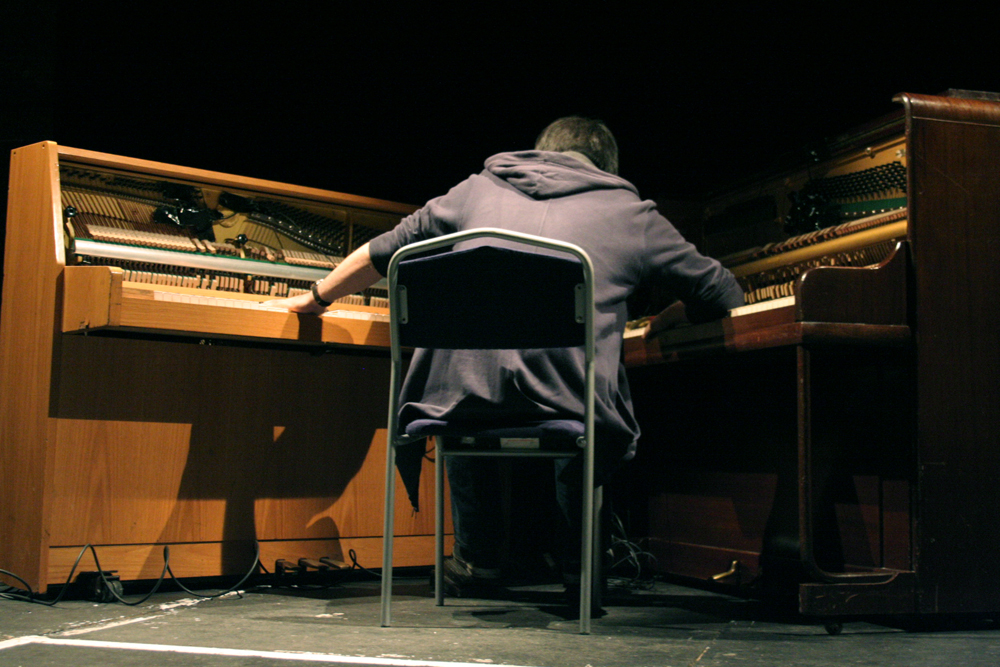
Sachiko’s very simple, pure sine tones and structures. Otomo on double pianos. Filament’s music isn’t composed and it isn’t improvised: it’s a hybrid of the two.
Can a musician create a sonic photograph; something with a depth of field, where you can hear sounds and their interconnections, much as you see objects and their relationships in a photo? Could a filmmaker use musical concepts to represent landscape?
A performance of Ueinzz’s new play. Each Ueinzz performance is a process of reinvention, between exhaustion and a fleeting vision: singular, collective, anonymous, plural, suspensive, intensive, unworking life.
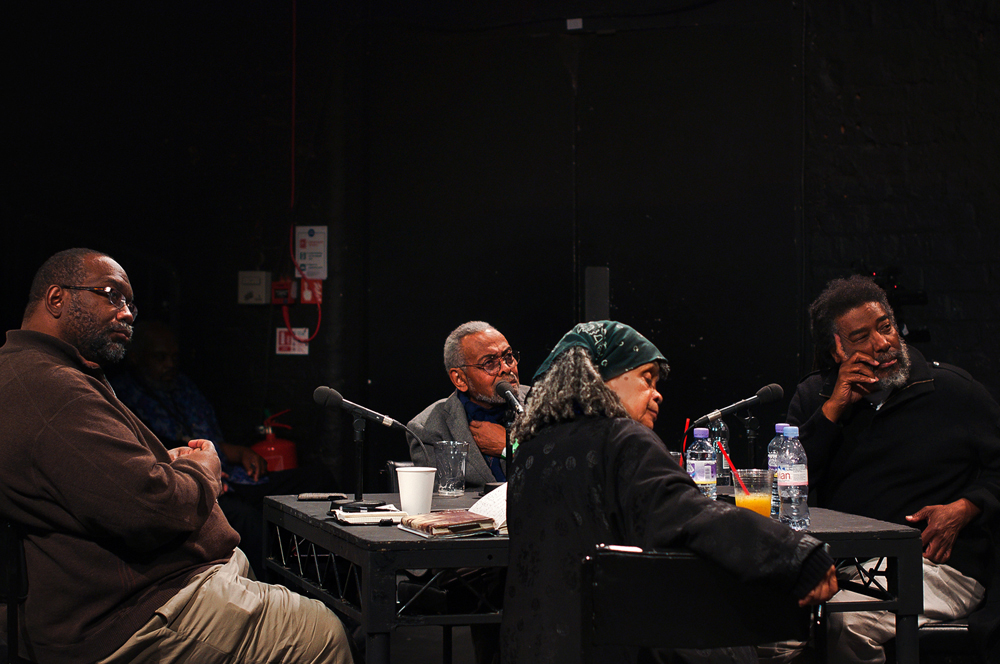
Four perspectives from people involved in different anti-capitalist and anti-racist struggles, considering how ideas of ‘ending’ have shaped their political thinking and praxis.
How does this practice, that simultaneously resists and honours the distinctions between these genres, materials and senses, determine the inhabitation of another: a convergence of aesthetic and social experimentation?