States of the Body Produced by Love
Nisha Ramayya
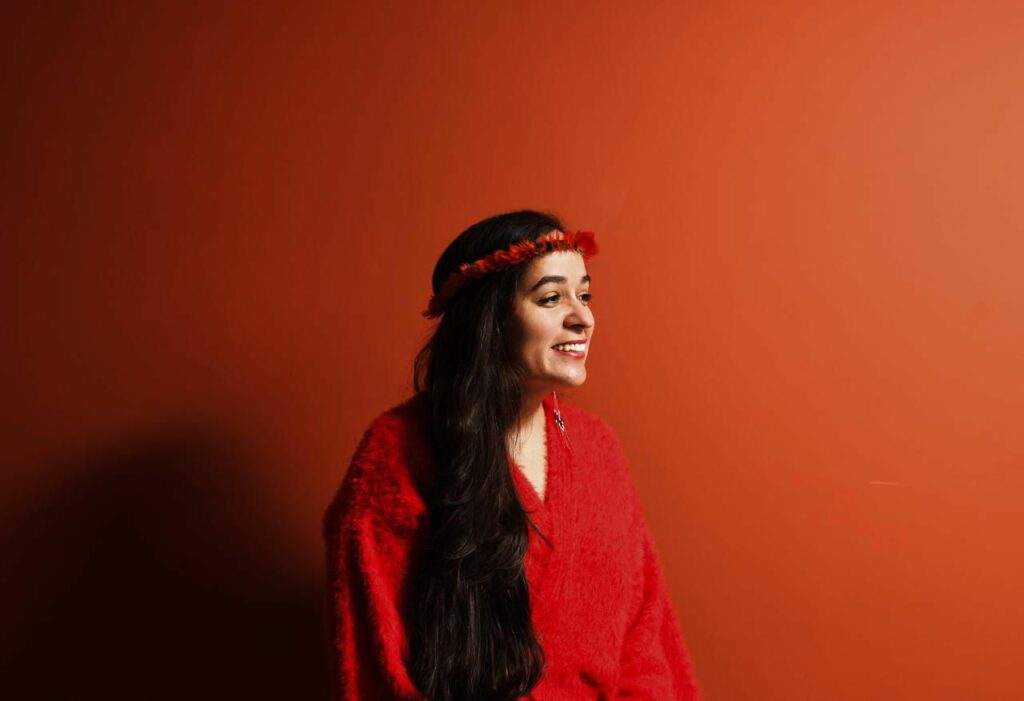
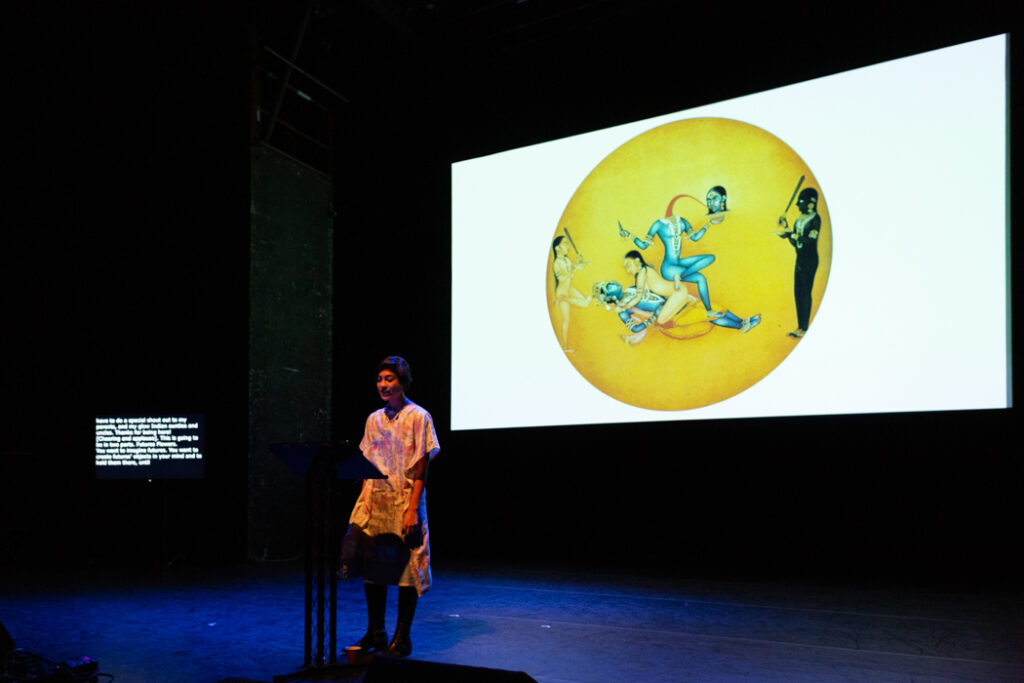
In Ramayya’s visionary poetry, the body assumes as many forms as love produces states: attraction and repulsion, excitement and exhaustion, selfishness and the dissolution of self.
Arika have been creating events since 2001. The Archive is space to share the documentation of our work, over 600 events from the past 20 years. Browse the archive by event, artists and collections, explore using theme pairs, or use the index for a comprehensive overview.
In Ramayya’s visionary poetry, the body assumes as many forms as love produces states: attraction and repulsion, excitement and exhaustion, selfishness and the dissolution of self.
Take a break and/ or hang in an Open Meet Up in IRL and URL
A socio-poetic reading on wayward communities – The wayward create upheavals, incite tumult. They come and go as they please; they are fugitive; they are in open rebellion against society.
From really simple, open instructions, An Unrhymed Chord creates a kind of half-way point between composition and improvisation.
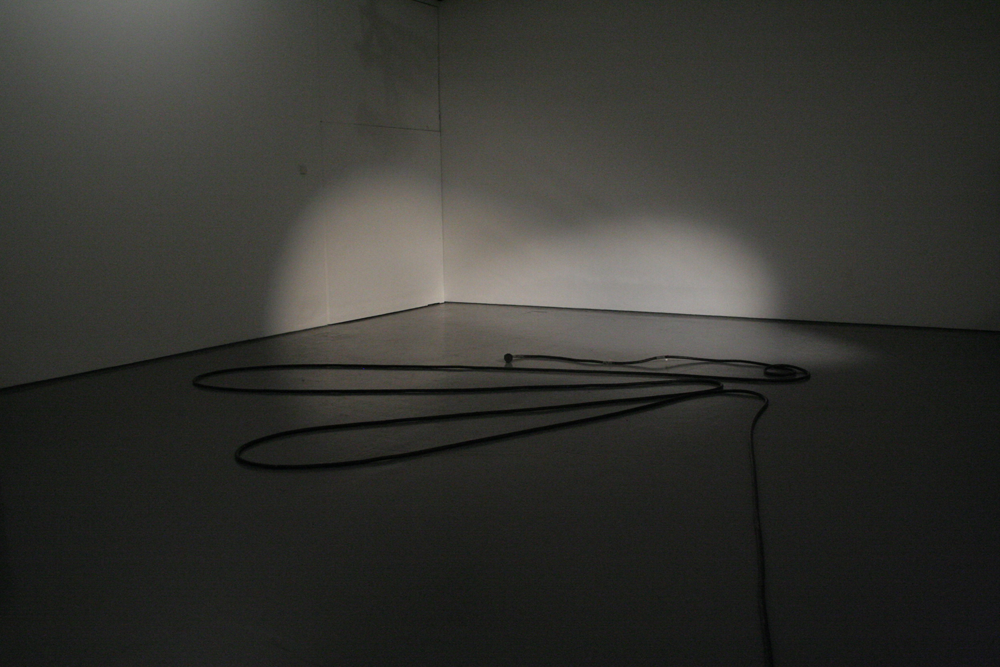
Temporary Outpost for an Auditory Gesture is a kind of performed installation that explores how sonic phenomena (like feedback, vibration, resonance, echo, rhythm) condition our experience.
A sound of buzzing and flickering metallic drones, glottal stops and guttural growls, and also an explosiveness and purity of sound that reminds you as much of Bill Dixon as anyone else.
Renouncing the bind of the written word, Chopin’s sound poetry is a magical evocation of the pure powers of the voices, stripped bare of language.
Thinking against the monoculturalism of Western thought—of faith, affection, sexuality and gender—which completely lacks any utility to, or descriptive value of Indigenous worldviews.
The weeks previous TLRS daily radio shows, after-hours conversations, radio booths and special guests reassembled as a live electroacoustic performance.
If life is assaulted by power, where do we find spaces for living? A conversation with Peter Pál Pelbart.
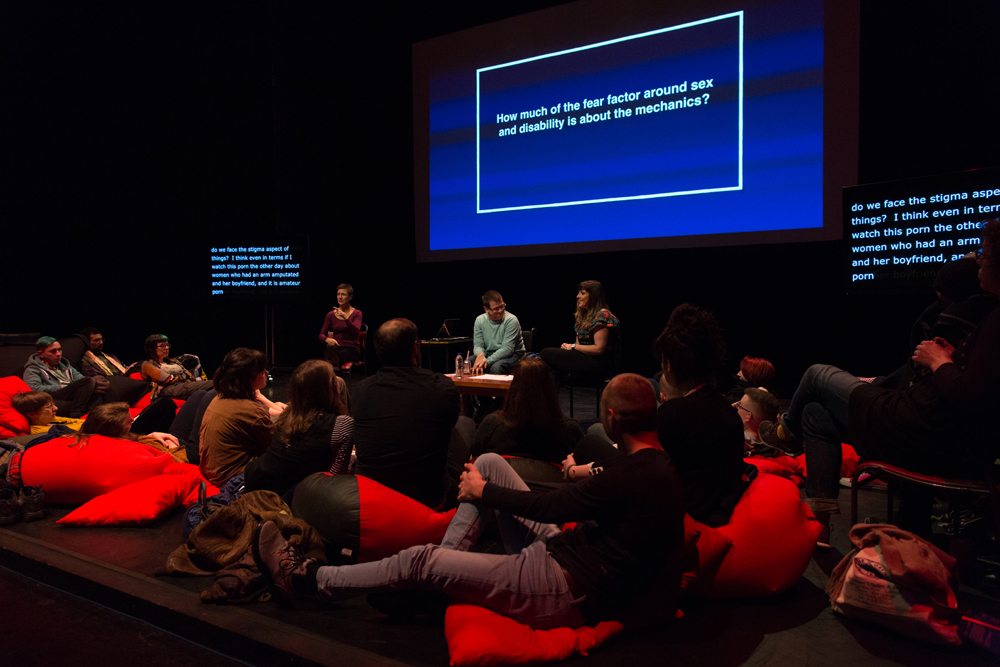
How do people living with disability see themselves in today’s sexualised culture? How do we imagine our crip sexual selves despite society wanting to reduce us to non-erotic bodies?
Instead of the one-way monologue of normal performance, what would be the result of an actual collective dialogue? Where would it go?