Episode 6: Make a Way Out of No Way
A 3-day exploration – through performance, screenings and discussion – of the art and politics of wayward communities who refuse to be bound by the fictions of race and sex.
Arika have been creating events since 2001. The Archive is space to share the documentation of our work, over 600 events from the past 20 years. Browse the archive by event, artists and collections, explore using theme pairs, or use the index for a comprehensive overview.
A 3-day exploration – through performance, screenings and discussion – of the art and politics of wayward communities who refuse to be bound by the fictions of race and sex.
Can our favourite Vegas-born poet of prophetic blackness and a South Central transmuter of social rage into beauty feel through each other?
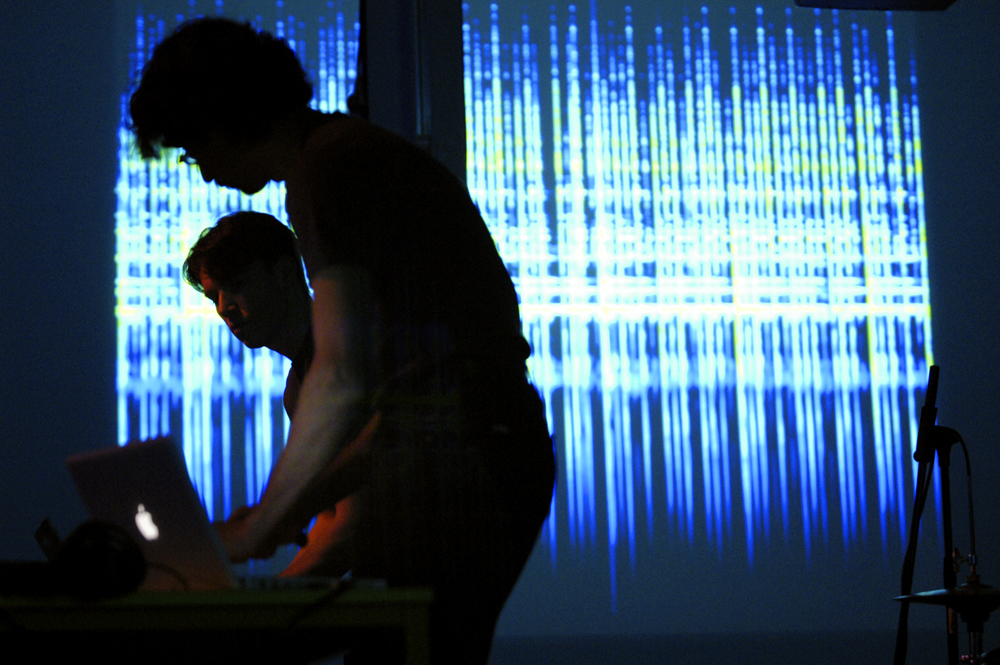
Patented 60 cycle hums, static pops, and terse electron pinpricks mutated into perfect, post-techno grooves and synaesthesic video
A sound diffusion piece by Glasgow University’s Musica Electronica, and a further selection of electroacoustic performances.
Akio Suzuki and John Butcher performing in a large multi chambered industrial ice house.
Ian and Gil will host a discussion on the Argument project’s social and political commentaries, and with you try and maybe think through whether and how they might still have some currency today: what’s changed and what’s stayed the same?
A performed, open, public conversation about how we might think politics from the position of intuition, in which Denise and Valentina use un-reasonable tools to map out a hybrid poetical/ ethical reading of their own situations.
Percussion used to explore the social construction of space
There are core ways in which our listening to the radio differs from other kinds of listening. What happens when we pay attention to how we pay attention?
In this interactive workshop, Dean Spade, author of Mutual Aid, will share key principles, explore common challenges in mutual aid work, and offer tools for working through them.
Watching films and chatting with Karrabing members about those films: as they attend to the memory and practice of the ancestral present and the ancestral catastrophe that Karrabing and their more-than-human world find themselves facing.
What happens when you are engaged in a deep and extended artistic practice that intersects between literature and music, notation and improvisation, sight and sound?