Future Justice in the Present
Jackie Wang KUCHENGA Nat Raha
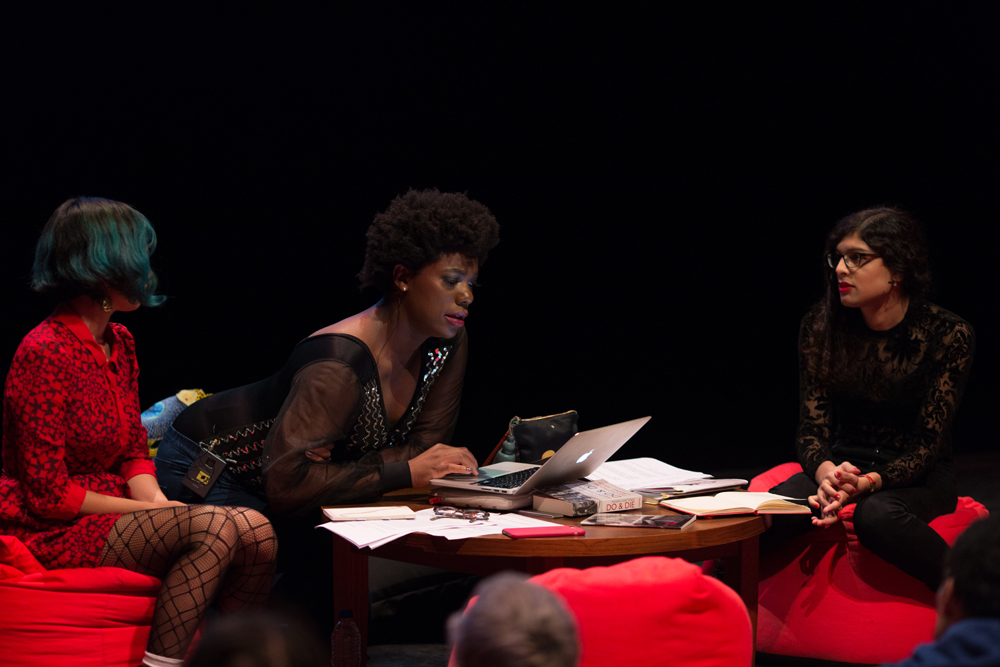
Thought and action, writing and protesting. A chat with Nat Raha, KUCHENGA and Jackie Wang asking what can be learnt from writing across genres by agitators, activists and abolitionists?
Arika have been creating events since 2001. The Archive is space to share the documentation of our work, over 600 events from the past 20 years. Browse the archive by event, artists and collections, explore using theme pairs, or use the index for a comprehensive overview.
Thought and action, writing and protesting. A chat with Nat Raha, KUCHENGA and Jackie Wang asking what can be learnt from writing across genres by agitators, activists and abolitionists?
Craig will give a guided reading of his handbook of exemplary instances of literary listening and will be joined by one of the selected authors, Vanessa Place.
In a moment of social exhaustion, we want to ask how we might care for each other differently. We Can’t Live Without Our Lives is a 5-day exploration of care as a form of struggle and resistance, with communities who embody it.
A temporary archive and research space tracing the ways in which sound and audition move through everyday life.
Complexly interacting colossal drones by the creator of some of the most legendary yet least heard music of the 70’s.
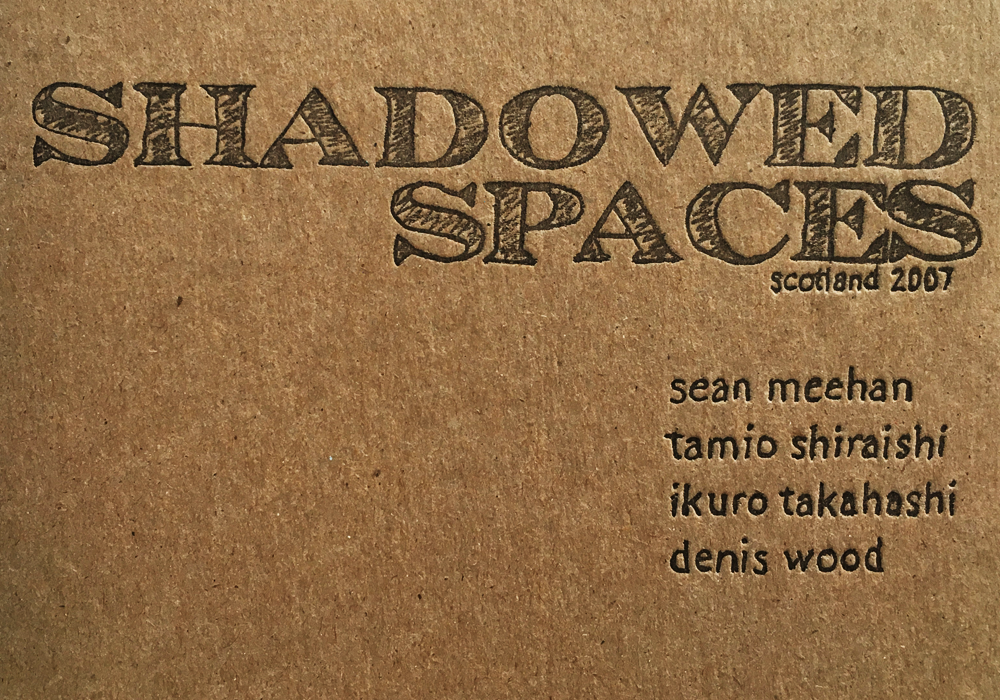
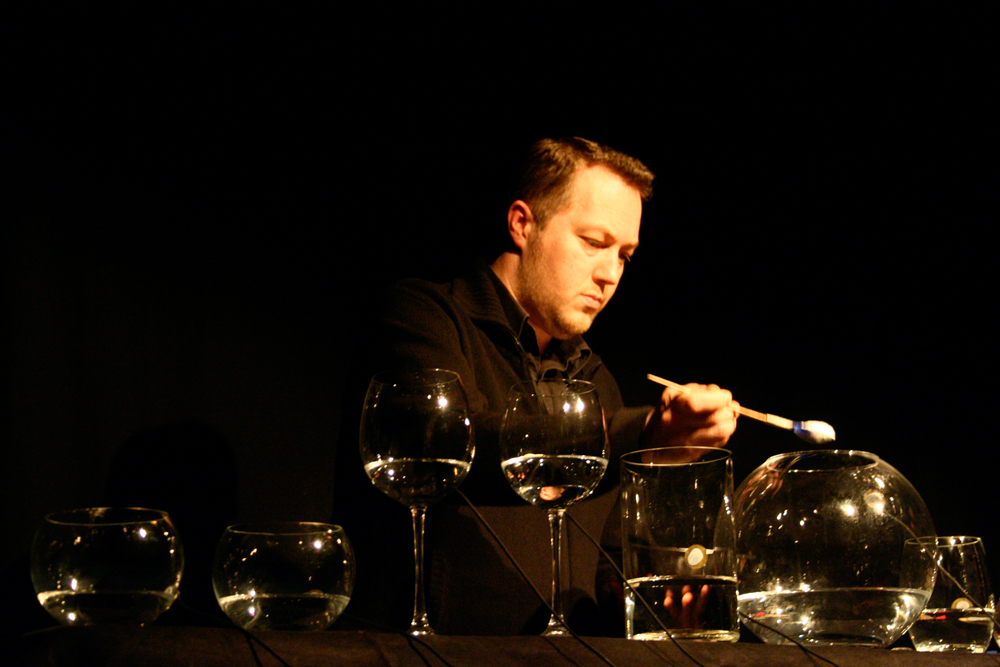
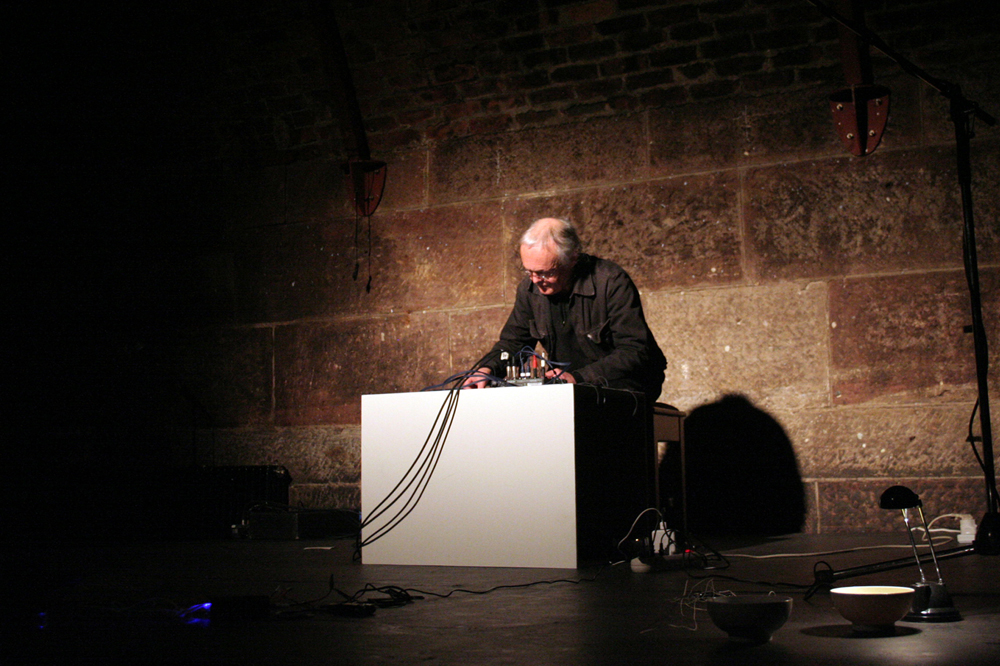
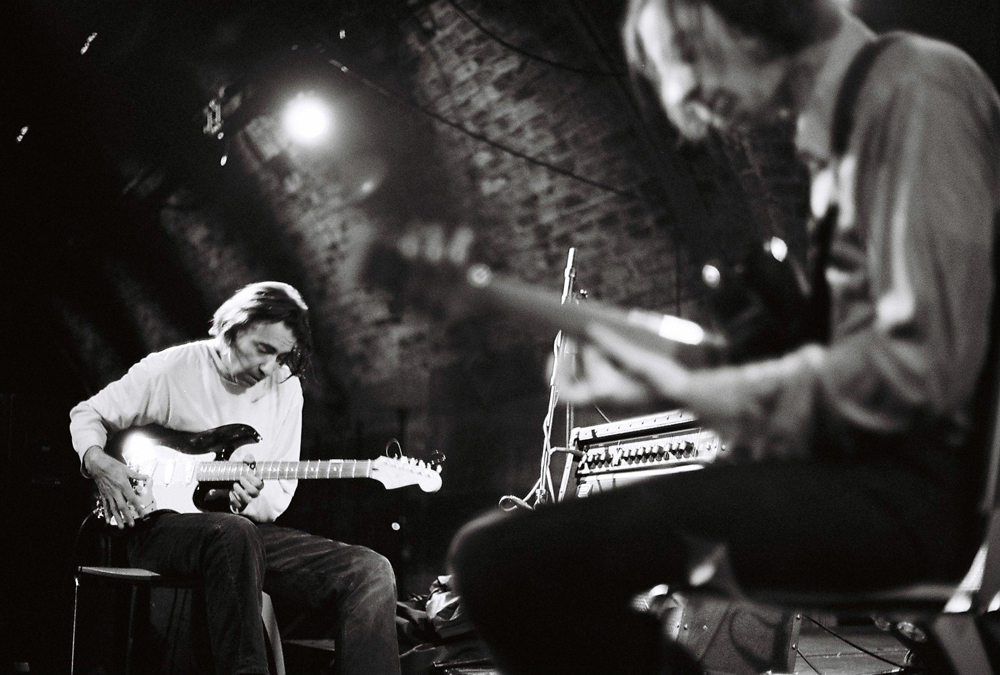
There exist places in our towns and cities that are created not by design, but by circumstance. Shadowed Spaces was a tour of overlooked, bypassed and unconsidered nooks and crannies with 3 musicians.
In this response to the Self Cancellation project, Lee Patterson dissolves medicine in glasses of water and explores the sonic content.
Julius’ “small music” features simple snatches of found sound, played back through small speakers, often set in bowls of pigment and dirt which shimmies in the vibrations.
A kind of audience activating, structured film guessing game in the manipulation of time, sound and image. “At 11:15, weiners. At 21:05, pornography. At 23:30, a duet. Watch the Clock.”
An utterly deep introspection told in aching, weeping guitar lines; melodic, simple, always minimal but somehow entirely epic.
The Echo project is an installation as audio guide for a crowd. And at the same time it’s a private conversation: with you, as one of 20 people in a room, a sort of public intimacy.
A panel exploring how to dismantle the master’s house — its material edifices and ideological architecture — and the construction of abolitionist futures in the present.