Based on a True Story – 1986
Rashad Becker
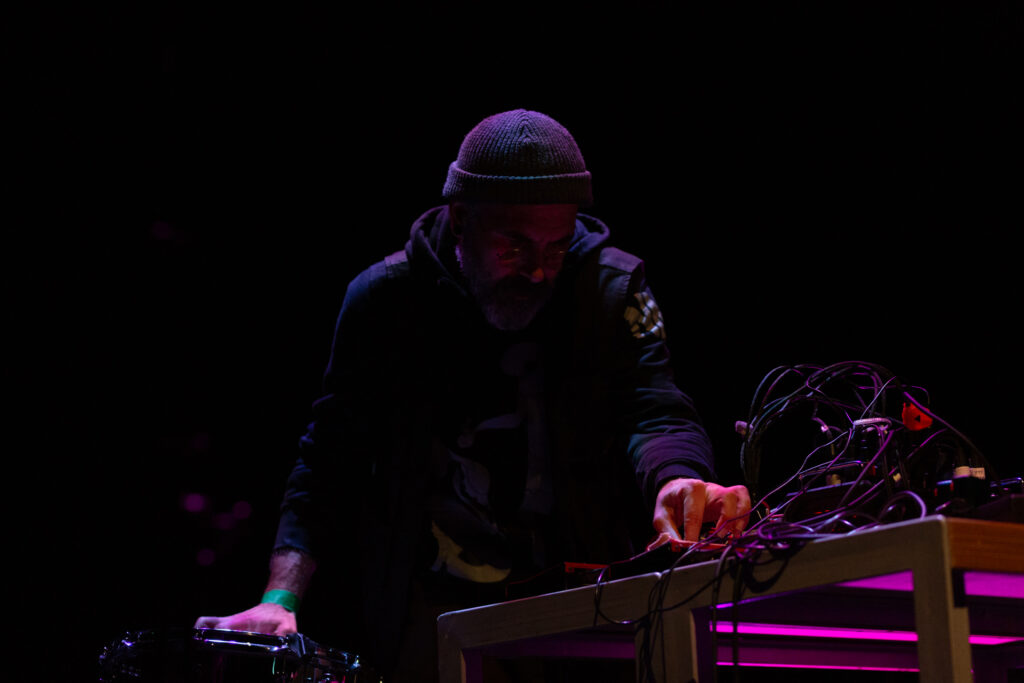
The most sophisticated synthetic music around: timbrally otherwise body music as sonified fictions and auditive sociograms.
Arika have been creating events since 2001. The Archive is space to share the documentation of our work, over 600 events from the past 20 years. Browse the archive by event, artists and collections, explore using theme pairs, or use the index for a comprehensive overview.
The most sophisticated synthetic music around: timbrally otherwise body music as sonified fictions and auditive sociograms.
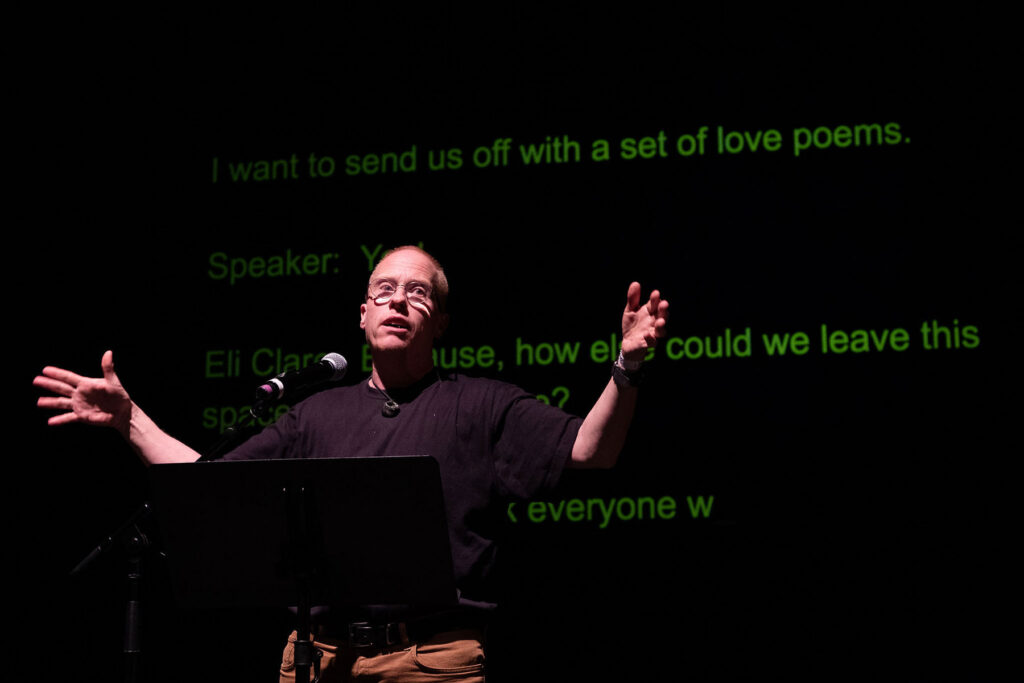
Poems are kisses, fists, and underground rivers. For all these reasons and many more, I am a poet.
A recording session for BBC Radio Scotland under the M74 ‘Ski Jump’ extension ramp, a secion of motorway that doesn’t go anywhere, one of several such structures that populate the motorway system in the centre of Glasgow.
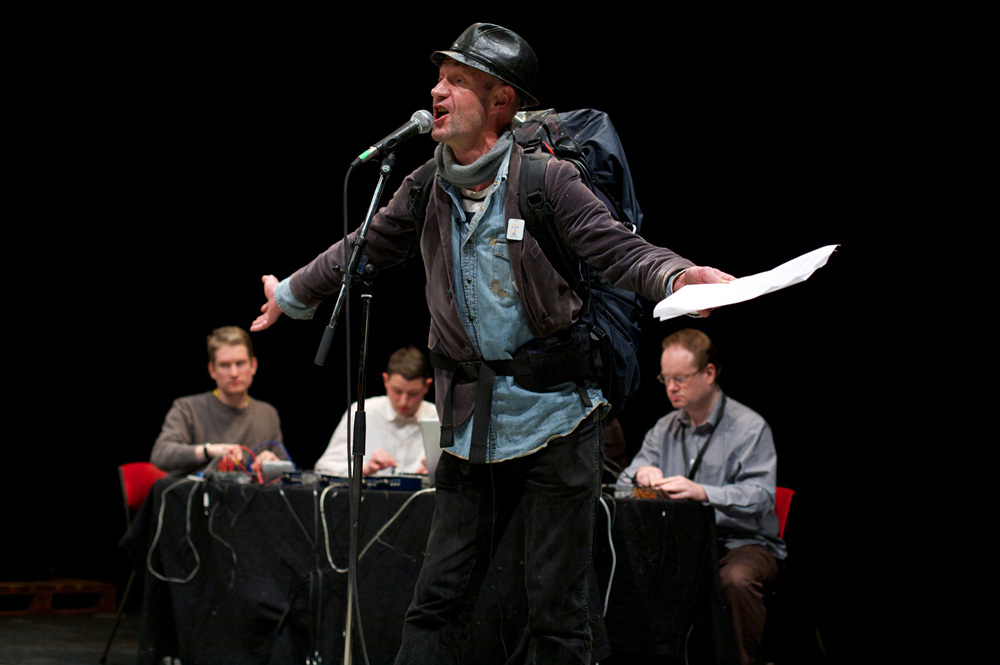
A performance, a radio show, an installation, an endurance test. A game of chance. Constantly broadcasting live, actor Tam Dean Burn will leave Tramway at the start of INSTAL and walk away from it, in an ever increasing spiral, for a day. Then he’ll walk back.
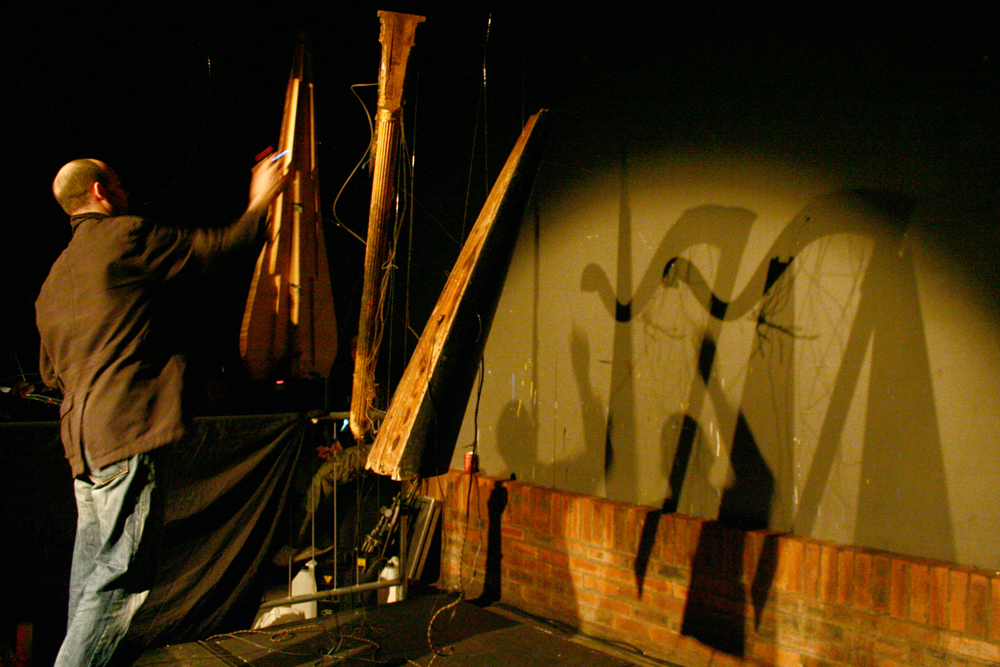
Rhodri Davies plays two deconstructed harps. Lee Patterson examines the sonic properties of burning nuts.
‘Ten Pieces in the Form of Painful Variations’ for piano, an impossible score that looks like a grapeshot musical stave, a text of barbed loathing and doubt – an anti-composition.
An improvised film about our worlds at the brink, on the edge, in front of a crisis. To stand on the side of life, by seeing the resistance to genocide in Palestine as a turning point to overcome.
What would a world and an ethics look like free from the destructive consequences of the Western mind?
This set continues on from the Bud Neill inspired clatter using the contents of the Usurper twin’s pockets.
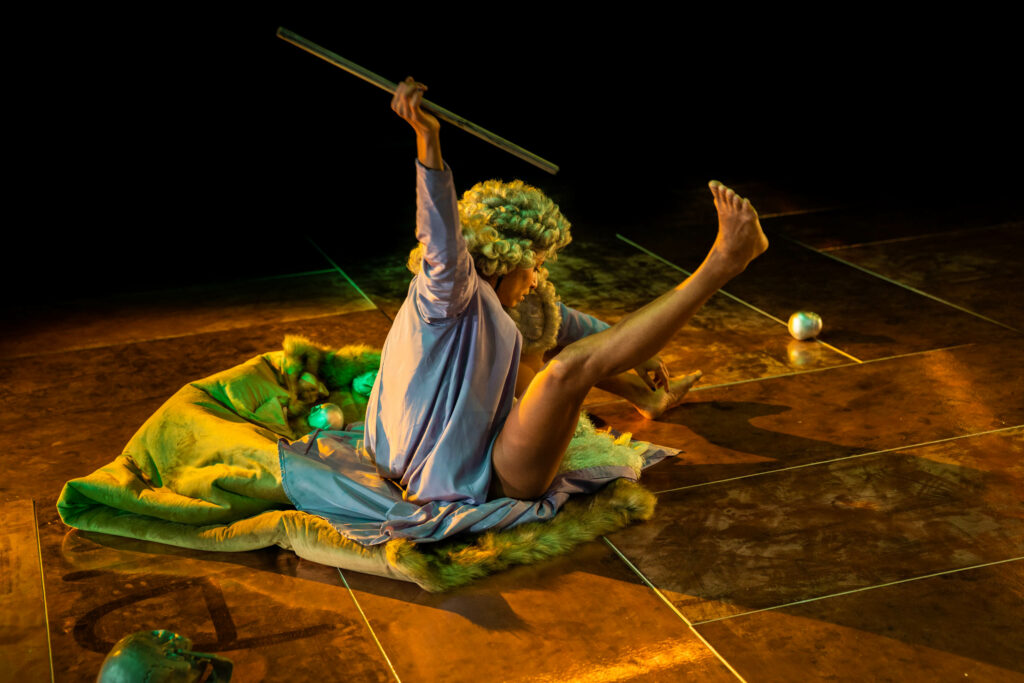
Conceptual choreography as critique, in Ligia’s film of Caribbean plots and scandals, and the possibilities of anti-colonial revenge, rest and repair.
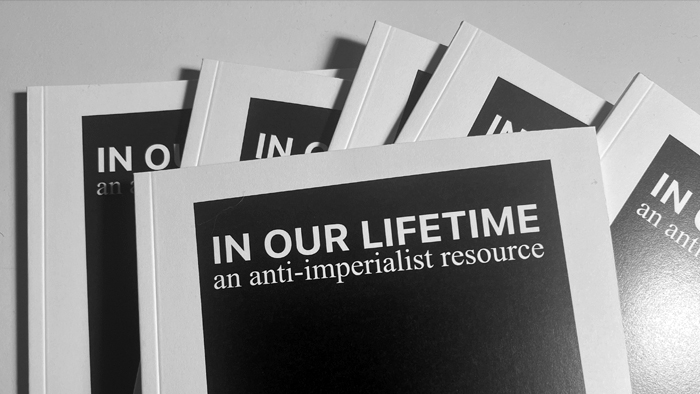
IN OUR LIFETIME, is an anti-imperialist resource, edited by Hussein Mitha, produced by Arika for Episode 11, featuring poetry, essays, questions, prompts, letters and works of anti-colonial imaginary.
Instead of the one-way monologue of normal performance, what would be the result of an actual collective dialogue? Where would it go?