What is the Sound of Freedom?
Fred Moten Ultra-red
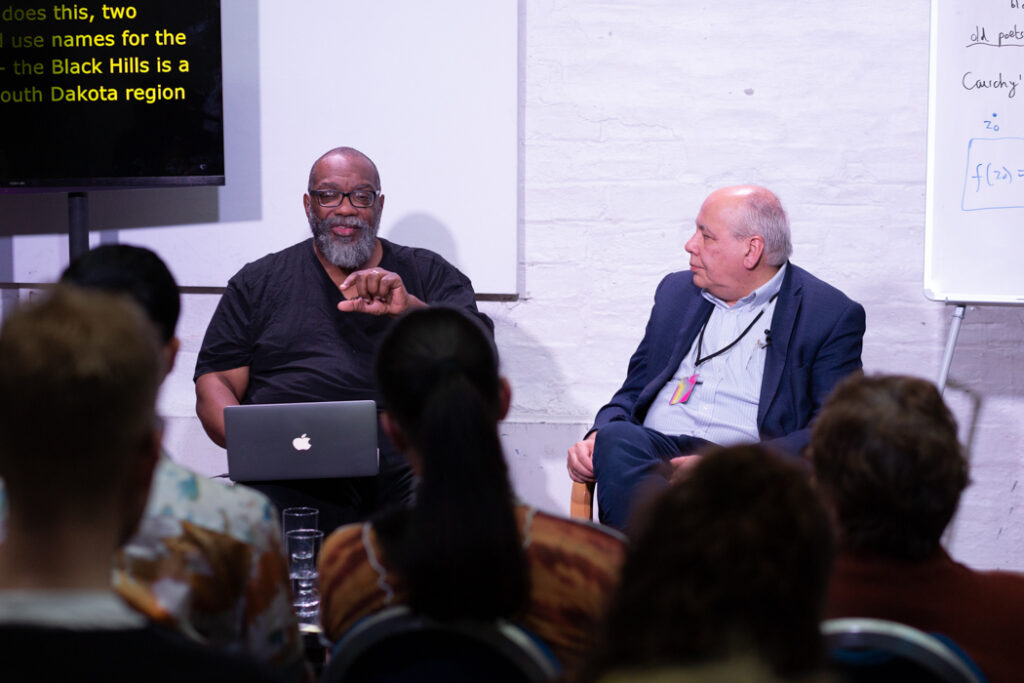
For day four of Ultra-red’s project, the investigation will take up protocols for listening to the sound of freedom composed and facilitated by Fred Moten.
Arika have been creating events since 2001. The Archive is space to share the documentation of our work, over 600 events from the past 20 years. Browse the archive by event, artists and collections, explore using theme pairs, or use the index for a comprehensive overview.
For day four of Ultra-red’s project, the investigation will take up protocols for listening to the sound of freedom composed and facilitated by Fred Moten.
Autobiographical detail becomes a lens to reflect and refract the deepest aspects of personal and social life in Delany’s ground-breaking non-fiction writing.
A conversation and livestream considering a global feminist critique of capital with Silvia Federici, Hortense Spillers and Gayatri C. Spivak.
Morgan Fisher is a filmmaker of great wit and charm who uses the tools of experimental film to dissect the basic presuppositions of commercial cinema.
Sax/Drums duo of raucous, pealing noise, and cries of beguiling lyricism, whispered sax phrases float in a timbral cloud of bowed metal and rumbling toms.
A poet, playwright and activist, Sanchez emerged as a seminal figure in the 1960s Black Arts Movement, writing in the name of black culture, civil rights and women’s liberation.
A dense, hard, immersive, chaotic spatial performance in sound: a momentary gap in consciousness, free of order or decision.
How does this practice, that simultaneously resists and honours the distinctions between these genres, materials and senses, determine the inhabitation of another: a convergence of aesthetic and social experimentation?
Poetry of raw fearless truth and the realest crip insight fully embedded in absolute lyrical lounge.
Databases carry the same seeds of creativity that early documentary makers saw in film. Both can empower people by helping them to master information, both can be claimed to represent some kind of reality or truth.
The pieces in the programme switch between silent film/ imageless sound, but we wanted to have a think about how ideas can take up residency on either side of the sound/ image border, without having to inhabit both at the same time.
Hartmut is going to talk a little about his work at large and the politics of how his films are constructed. And we’ll screen one of his best films: B-52.