Keiji Haino & Tony Conrad
Keiji Haino Tony Conrad
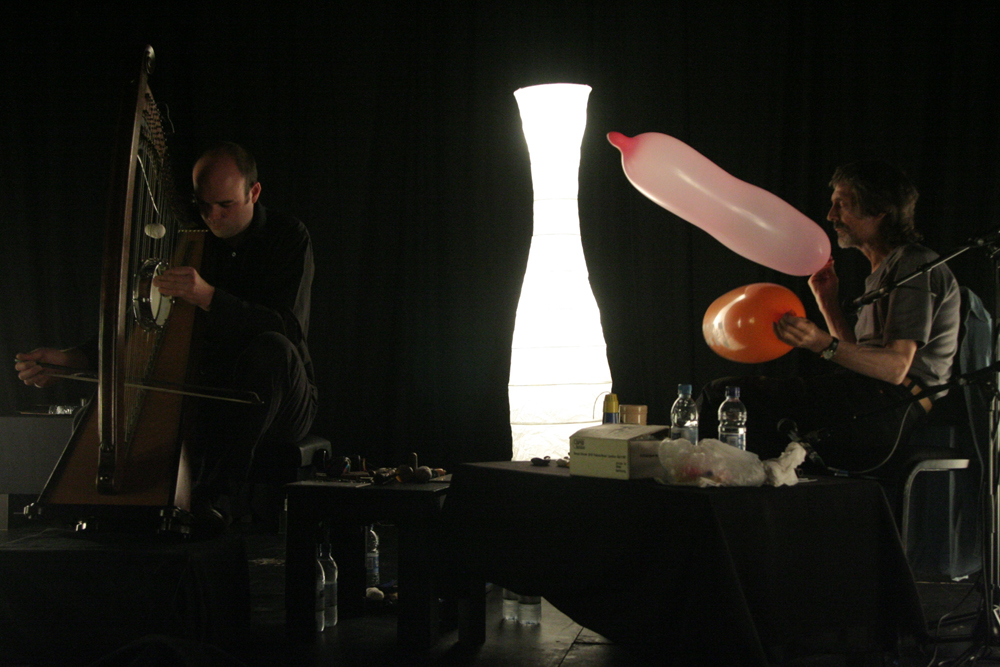
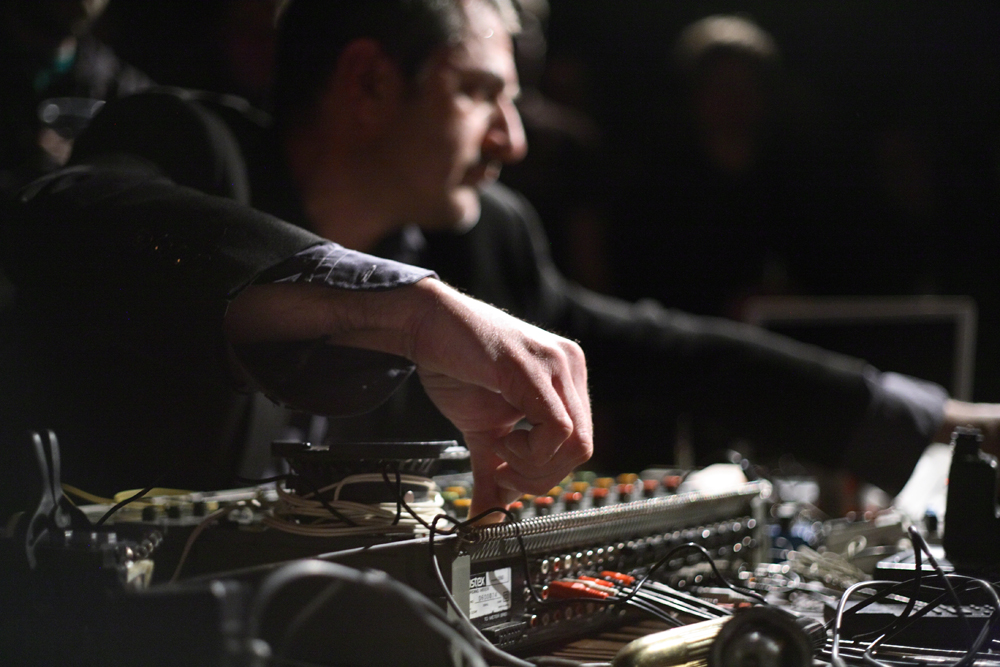
Although Tony had visited Haino in Japan, and they played together in private, this was the first time anyone other that Haino’s cat saw them perform together.
Arika have been creating events since 2001. The Archive is space to share the documentation of our work, over 600 events from the past 20 years. Browse the archive by event, artists and collections, explore using theme pairs, or use the index for a comprehensive overview.
Although Tony had visited Haino in Japan, and they played together in private, this was the first time anyone other that Haino’s cat saw them perform together.
Transfeminist and revolutionary poetry, voice and timbral abstraction: a sounding and spatialising of reparative sonic and somatic practices that can speak back to violent histories of expropriation and ecocide.
A kind of performed installation of searing noise and silence, where we’re not sure who the performer is, when it starts or ends or even who it’s for.
Journalist and underground music champion Alan Cummings talks to Keiji Haino about his career and his performance the previous evening.
In this workshop we will imagine ourselves as time travellers from a glorious and chaotic neurodivergent-led future.
Using violin and cello the duo map out a twilight sonic world that seems to tread the faultlines between improvisation and composition.
An contradictory guitarist, he’s equally at home in slow, halting acoustic improvisation or piercing minimal examinations of electric guitar.
A day of presentations and discussions on the theme of audio visual perception in the context of experimental music, film and art.
A dialogical meeting of Baraka’s radical poetry and Grimes’ free jazz syncopation.
Ian and Gil will host a discussion on the Argument project’s social and political commentaries, and with you try and maybe think through whether and how they might still have some currency today: what’s changed and what’s stayed the same?
A panel exploring the poetics of abolition. “Poetry is not only dream and vision; it is the skeleton architecture of our lives. It lays the foundations for a future of change.”
Film and sound stripped of ‘content’ and experienced spatially, to be looked at not on the screen but in the space of the gallery