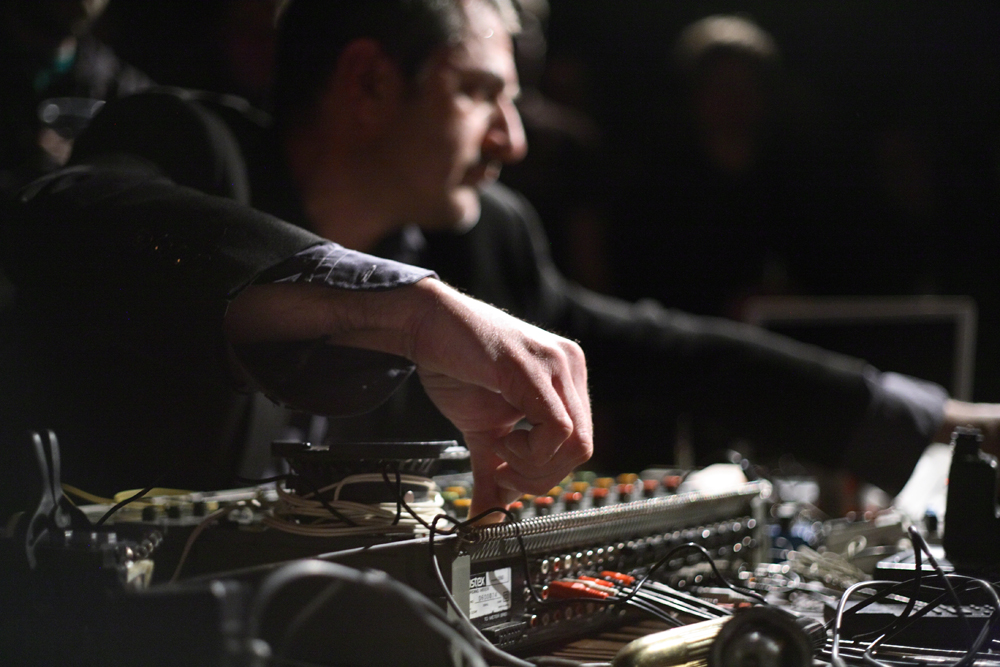
Jean-Philippe Gross & Jerome Noetinger
Jean-Philippe Gross Jerome Noetinger
Duo performance by two great French musique concrète improvisers using feedback, contact mics, tape, an old Revox tape machine, a vintage synth…
Arika have been creating events since 2001. The Archive is space to share the documentation of our work, over 600 events from the past 20 years. Browse the archive by event, artists and collections, explore using theme pairs, or use the index for a comprehensive overview.
Duo performance by two great French musique concrète improvisers using feedback, contact mics, tape, an old Revox tape machine, a vintage synth…
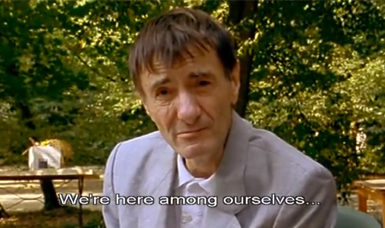
Dir. Nicolas Philibert
Documentary of La Borde clinic in France and its radical politics of experimentation, in which residents and staff reciprocate in a kind of entanglement, an opening up amongst themselves.
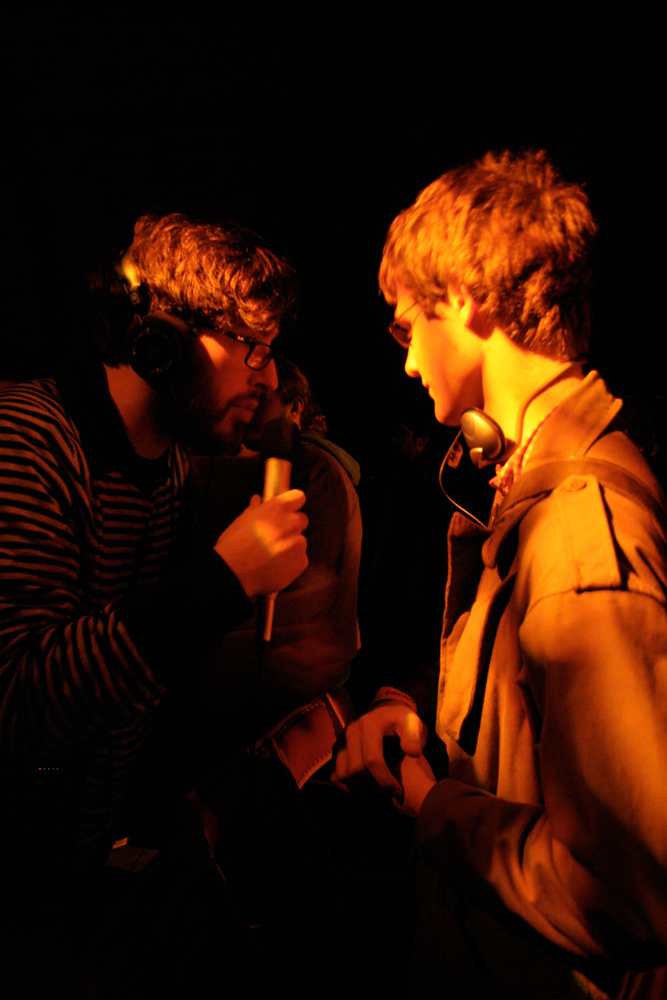
Jarrod Fowler creates a social space where layered one-to-one live encounters with the audience become sonic material.
How does this practice, that simultaneously resists and honours the distinctions between these genres, materials and senses, determine the inhabitation of another: a convergence of aesthetic and social experimentation?
Quartet improvisation by Klaus Filip – laptop, Radu Malfatti – trombone, Sean Meehan – snare & cymbals, Taku Unami – rice and dish.
Stripping back the domesticated ‘meaning’ of (everyday, mundane, kitchen) tools to reveal “a lexicon of rage and frustration.” Plus an allegorical use of mundane, everyday things as an examination of how meaning is constructed in film.
Power-electronic klutz behaviour indecipherable blasphemies, cuts, bruises and broken microphones by Kovorox Sound head-honcho Lea Cummings.
Solo performance on bass clarinet, jaw harp & voice by Arrington De Dionyso.
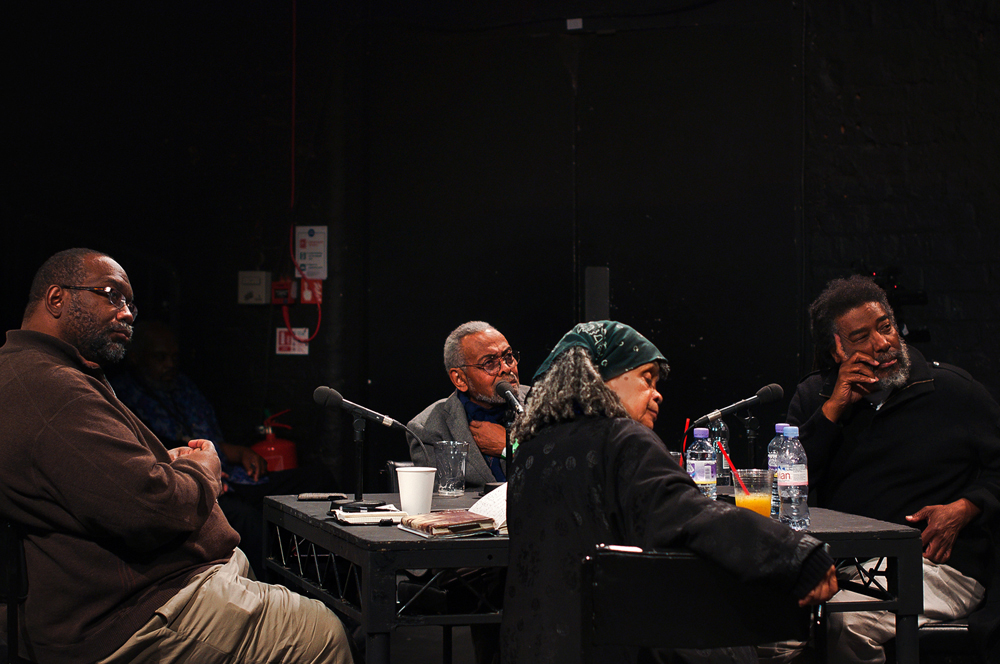
How black radical practices of abolition imagine a way out of the caging and mass killing of life.
If life is assaulted by power, where do we find spaces for living? A conversation with Peter Pál Pelbart.
The Songspiels take on a mode of musical theatre developed by playwright Bertolt Brecht and composer Kurt Weill in the early twentieth century, presenting political and social concerns through the accessible and (often funny) form of song.
Taking a scalpel to the relationship between performer and audience: cutting something out to see what’s left, a drastic subtraction and shift of emphasis.