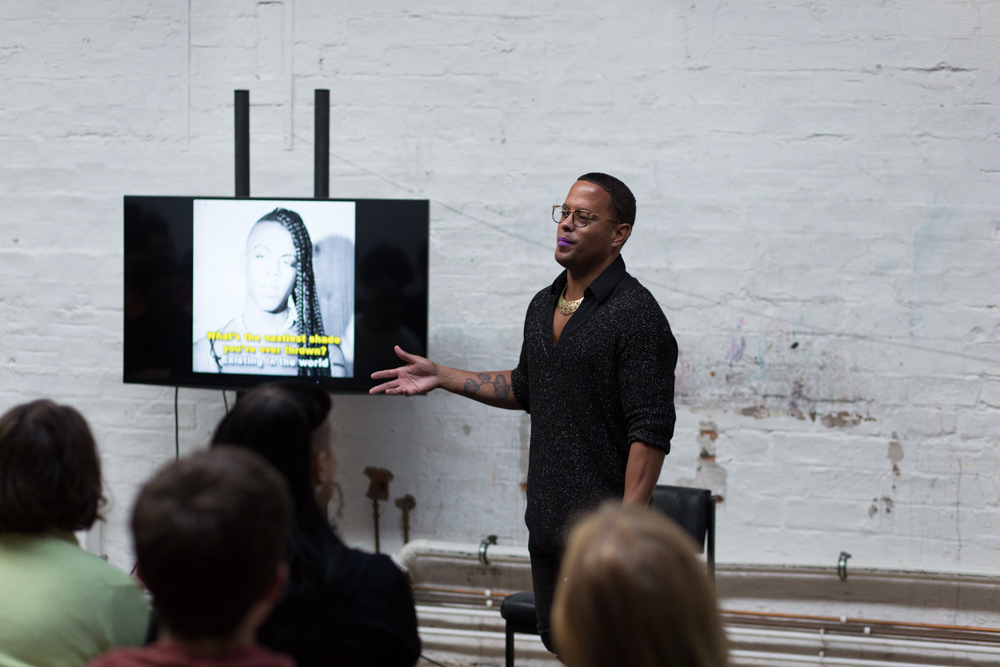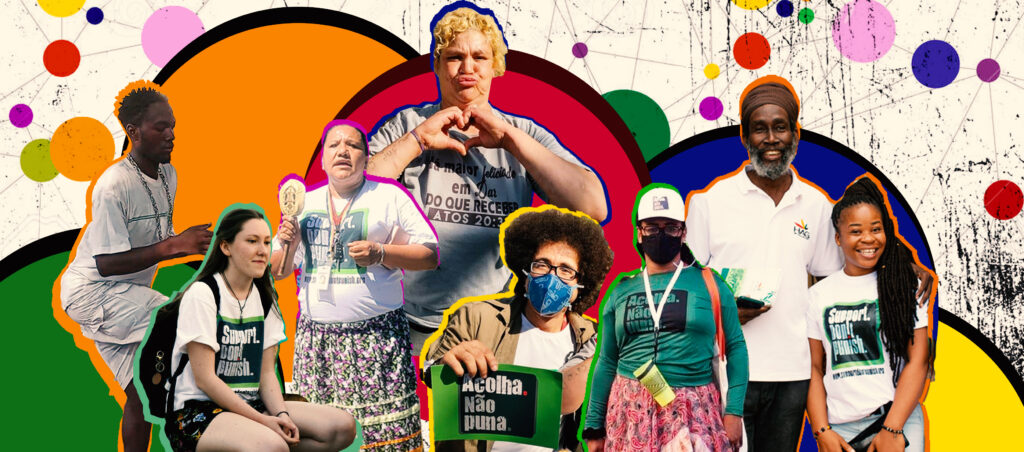
Gesturing to What is Possible: Drugs Users Supporting Each Other
Peter Krykant Aura Roig Juan Fernández Ochoa
Rather than asking the state for services, what kinds of change are made possible when we prioritise people supporting each other?
Arika have been creating events since 2001. The Archive is space to share the documentation of our work, over 600 events from the past 20 years. Browse the archive by event, artists and collections, explore using theme pairs, or use the index for a comprehensive overview.
Rather than asking the state for services, what kinds of change are made possible when we prioritise people supporting each other?
Dworkin asks: What would a non-expressive poetry look like? A poetry of intellect rather than emotion?
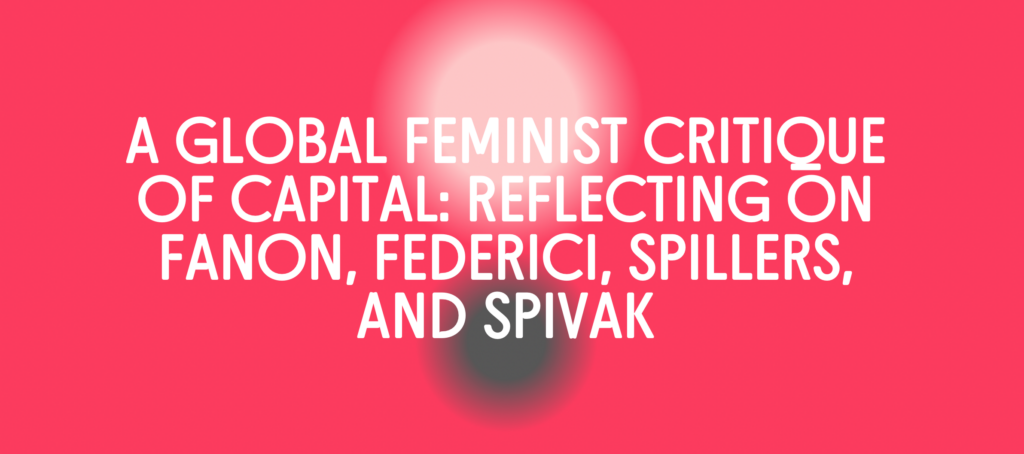
A conversation and livestream considering a global feminist critique of capital with Silvia Federici, Hortense Spillers and Gayatri C. Spivak.
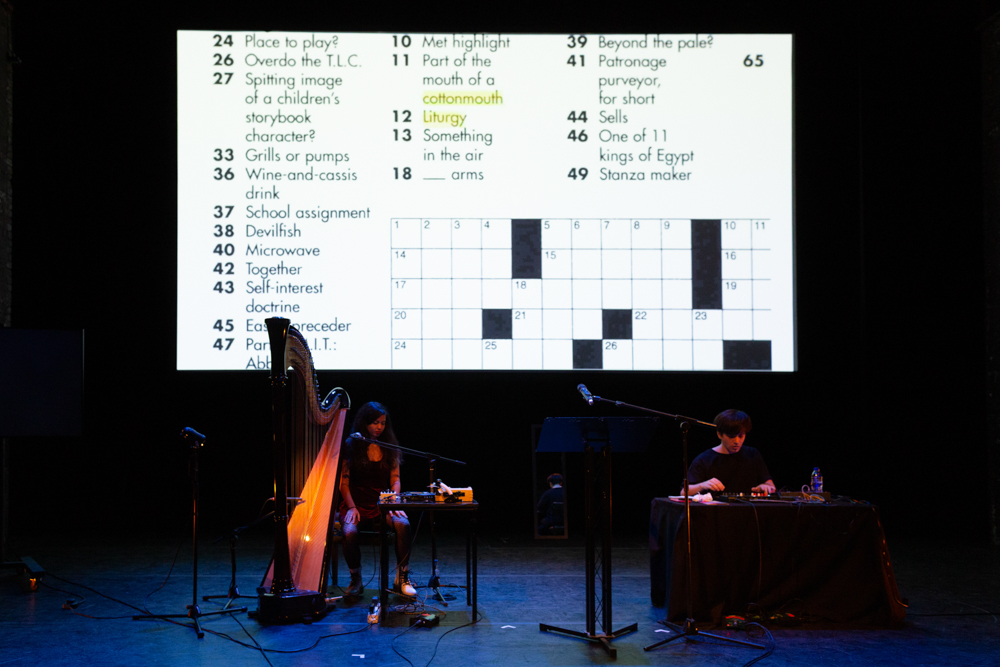
A multi-media harp and spoken word tribute to the incalculable, the in-deducible, the suspicious static noise that accompanies the voice of truth, and the attempted aberrations in the domain of emergence.
Ecstatic, intensely joyous experimental club music: like “the sound of our water ceremonies…40 bands playing their melodies at once to recreate the cacophony of the first aurora and the call of the morning star Venus”.
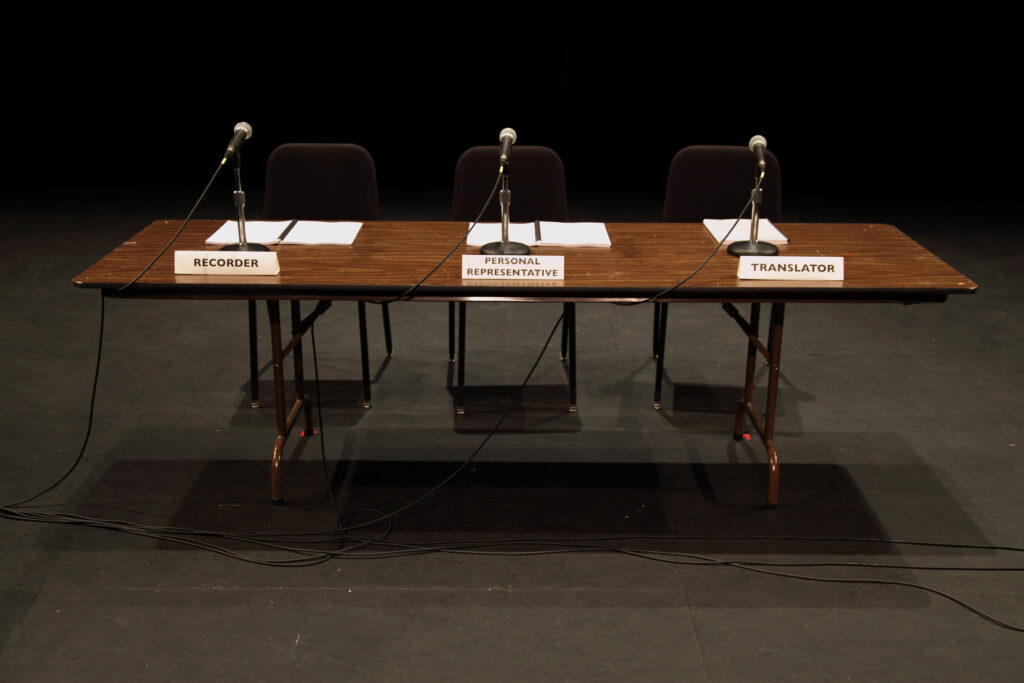
Somewhere between performance, stripped down theatre and an intense kind of public learning or maybe even a public hearing.
Wave Formations is a 5 screen work in which each screen runs through a series of fades and then stroboscopic flashes of colour, to create a series of visual harmonics.
Imagine entering a library where readers can borrow human beings serving as open books. Then select a book stack that specialises in sex work.
(Cyber)feminist, non-essentialist transgender and queer daily radio shows using the formula of morning radio as an arch way of thinking about the scripted behaviour and controlled empathy of systematic care.
An open-ended moment in an ongoing series of films, notes, performances, diagrams and drawings which trace the questions they share. A “porous space between cinema time-space and lived time-space.”
How black radical practices of abolition imagine a way out of the caging and mass killing of life.
A performative survey of listening, as we managed to find it being used as a tool in different practices, disciplines and communities in North America (music, poetry, film, philosophy, activism…).