Keiji Haino & Tony Conrad
Keiji Haino Tony Conrad
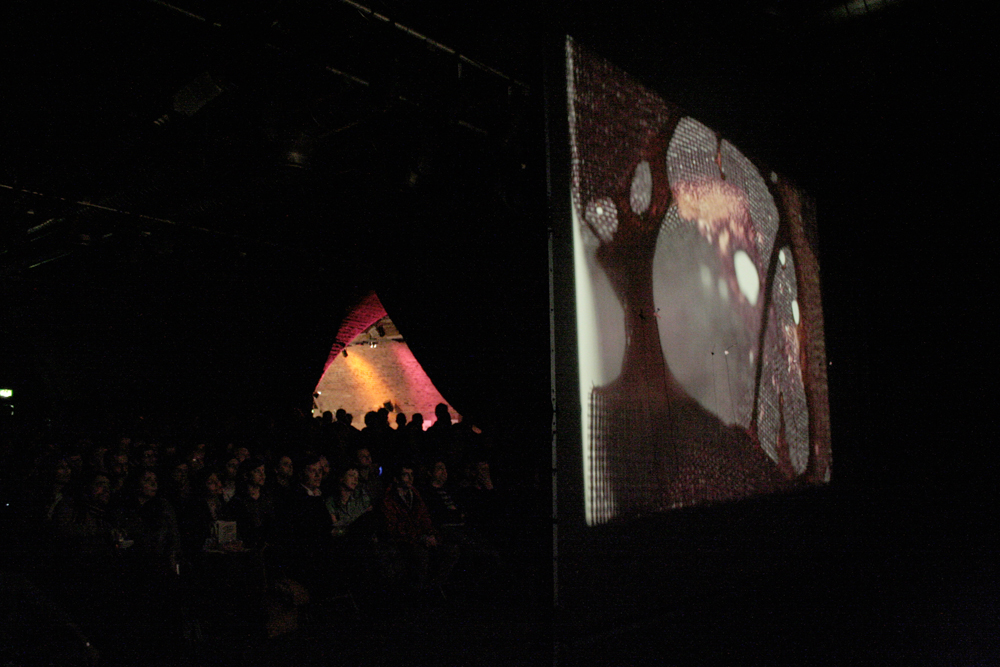
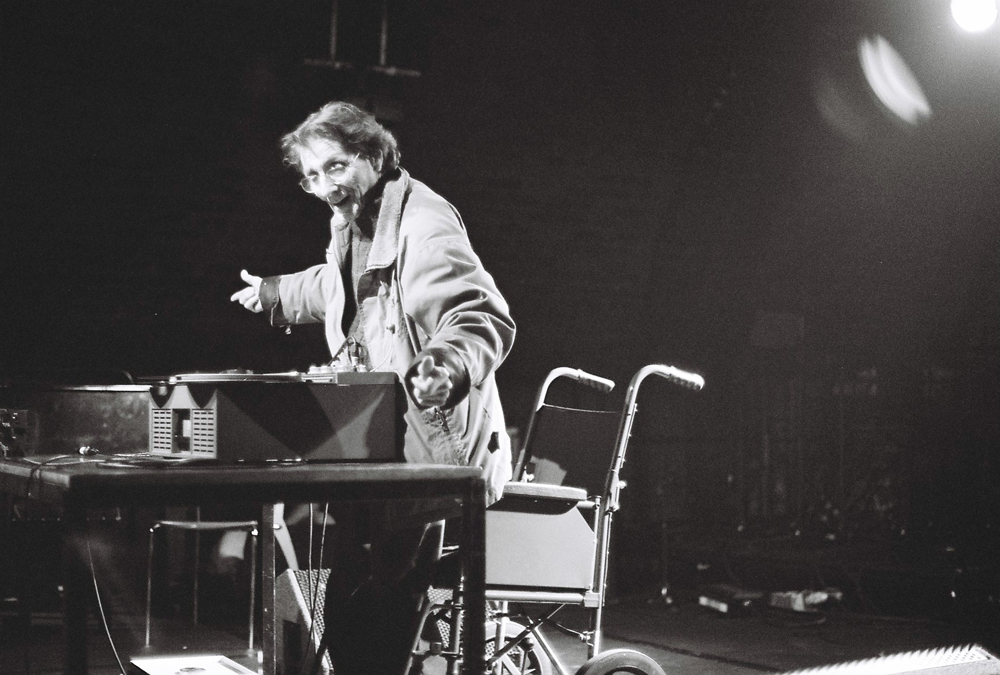
Although Tony had visited Haino in Japan, and they played together in private, this was the first time anyone other that Haino’s cat saw them perform together.
Arika have been creating events since 2001. The Archive is space to share the documentation of our work, over 600 events from the past 20 years. Browse the archive by event, artists and collections, explore using theme pairs, or use the index for a comprehensive overview.
Although Tony had visited Haino in Japan, and they played together in private, this was the first time anyone other that Haino’s cat saw them perform together.
Merzbow takes the junk of sound and transforms it into blistering noise assaults with an incredible spectrum and impact.
This set continues on from the Bud Neill inspired clatter using the contents of the Usurper twin’s pockets.
Performance of a Sudoko based graphic score giving rise to a process of self cancellation.
Robin Hayward – exploring the micro-sounds of a tuba, filling slowly with sand.
Summing up of the investigations with a reflection on what has been done that week and what could be done the next.
A poetic multi-screen performance about “the inadequacy of the arbitrary passing moment and the impossibility of permanence”. About time and change.
An assembly to try and provide some experiential and theoretical resources for the renewal of a certain affective, extra-political sociality, in the face of one of our great adversaries; the forces of colonial, imperial, genocidal denial.
A short chat about what we (Arika) might be trying to do with our program for the Biennial.
One of the most startling cinematic debuts on record, The Flicker is more a hallucination than a film, an out of body experience and riotous celebration of visual harmonics frequencies. An experiment in perception, come with your mind and eyes open.
Moor Mother is a musician, Philadelphian housing activist and black quantum futurist.
Inhabiting a different kind of energy, Ueinzz’s open rehearsals reveal a glimpse into their ongoing daily theatrical modes of caring – multiplying the ways in which their plays are meant to be felt, rather than understood.