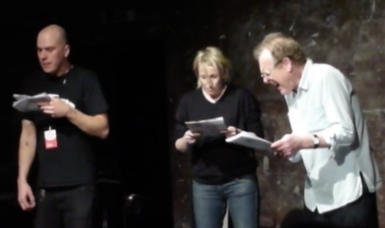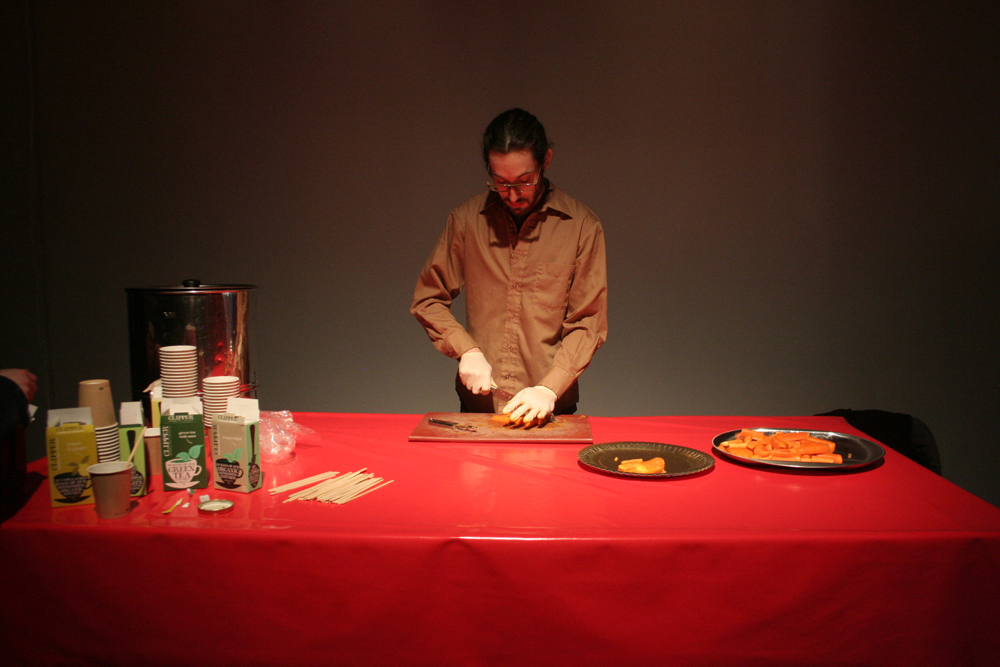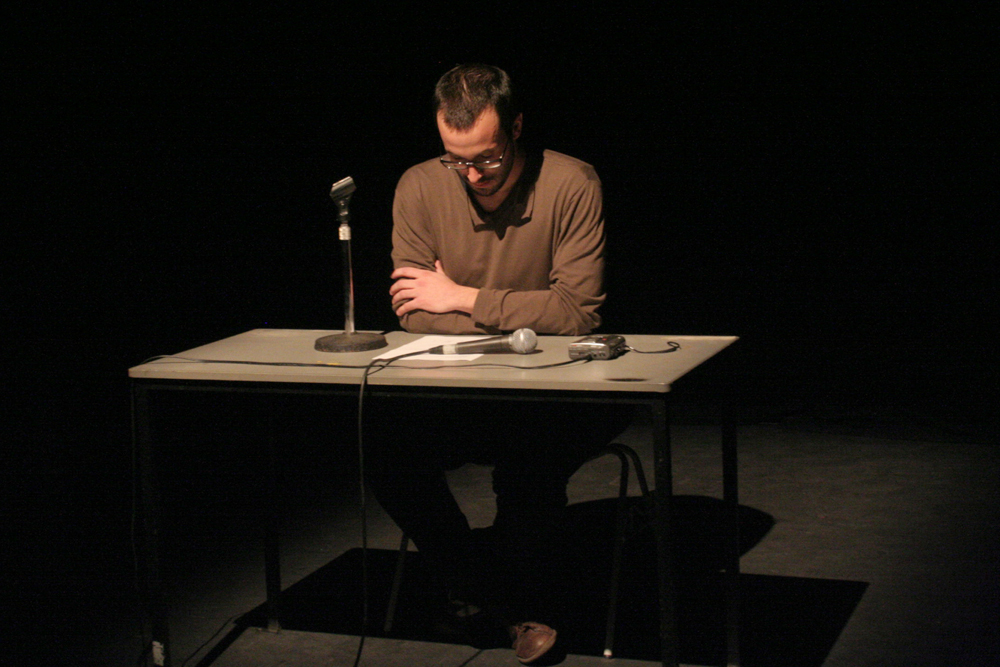
Overheard (Suspension of Belief Sketch 4)
Resonance Radio Orchestra
There are core ways in which our listening to the radio differs from other kinds of listening. What happens when we pay attention to how we pay attention?
Arika have been creating events since 2001. The Archive is space to share the documentation of our work, over 600 events from the past 20 years. Browse the archive by event, artists and collections, explore using theme pairs, or use the index for a comprehensive overview.
There are core ways in which our listening to the radio differs from other kinds of listening. What happens when we pay attention to how we pay attention?
5 days of film, music, discussion and study of our collective incompleteness—arrayed against the colonial ordering of how we come to know the world—practicing how we might exist otherwise, right here and now. Can we start to know and practice the world to come?
Elizabeth’s writing pulls apart toxic settler colonialism and the worldview used to justify it; working towards an alternative distribution of powers, so that ways of being otherwise can endure.
Performing with hand built radio transmitters, which react to interference in the atmosphere and the electrical impedance of his hands, his radio art is a form of social practice; a statement in opposition to mass media.
Brother and sister stumble over the early morning horizon in a spectral haze of emotionally devastating lunar vocals and oblique, lithium-soaked folk.
If life is assaulted by power, where do we find spaces for living? A conversation with Peter Pál Pelbart.
Paul Sharits is one of our all time heroes, and one of the great artist filmmakers of the 20th Century.
A stroboscopic and intense sensory overload of flashing abstract forms, cut to ribbons by modified projectors.
Acting at the minimum. Each film here substitutes one small thing for another, (ironically) transforming received meanings by the simplest of actions; often kind of funny too.
Chris Corsano, Akio Suzuki and John Butcher performing in the Hamilton Mausoleum, Hamilton.
Taking a scalpel to the relationship between performer and audience: cutting something out to see what’s left, a drastic subtraction and shift of emphasis.
Autobiographical detail becomes a lens to reflect and refract the deepest aspects of personal and social life in Delany’s ground-breaking non-fiction writing.