Boudry/Lorenz
Pauline Boudry Renate Lorenz
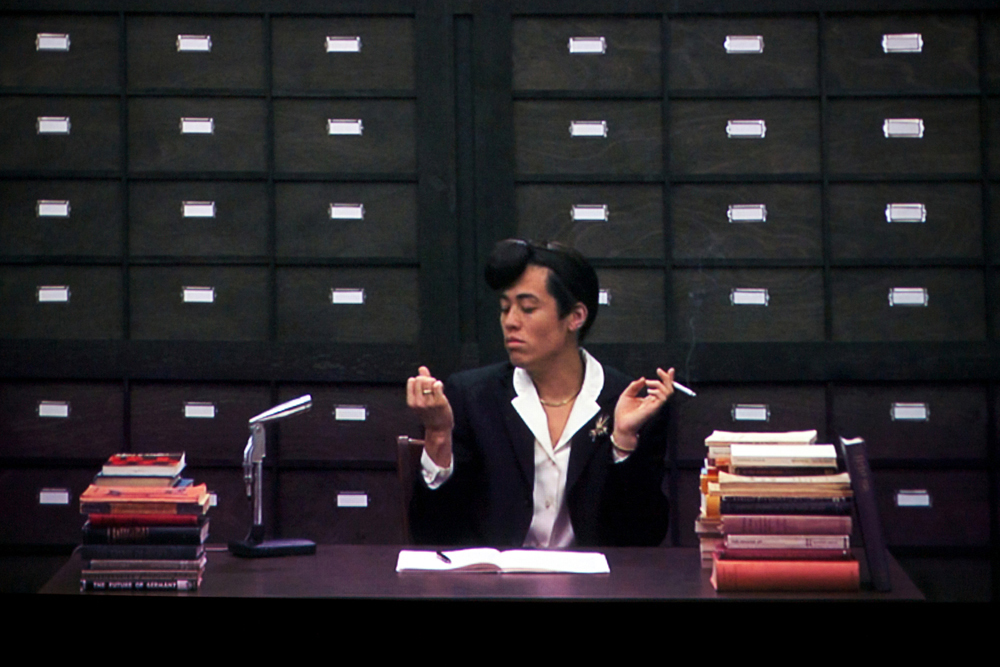
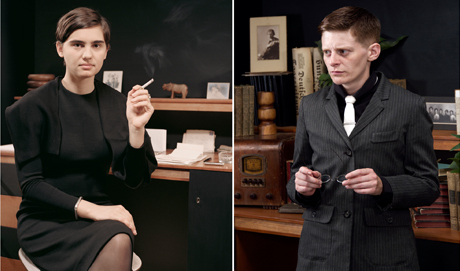
Trans-temporal drag, sexuality and the re-staging of illegible moments in history.
Arika have been creating events since 2001. The Archive is space to share the documentation of our work, over 600 events from the past 20 years. Browse the archive by event, artists and collections, explore using theme pairs, or use the index for a comprehensive overview.
Trans-temporal drag, sexuality and the re-staging of illegible moments in history.
Reading their letters to each other, and chatting about prefigurative politics as the practice of relentlessly building worlds through unspeakable violence and loss; of building worlds and living in them anyway.
Come for the crip ingenuity; stay for the smooth feels of what it is to be each other’s everything.
How do communities practice being one another’s means, addressing their material problems facing them replicating the state’s violent logic of who is disposable.
A queer black operatic requiem for piano and voice that asks us to stay in the hold of the slave ship, that tries to understand the connection from the slave ship to the prison.
Ken presents his Nervous Magic Lantern, wherein film itself is forsaken for an investigation of hypnotic and trancelike crystaline forms. Eric La Casa works with recordings of everyday occurrences: the background hum of place.
Life and death dramas unfold in the snowy American North, using three-screen documentary footage and a soundtrack by KYTN favourite, vocalist Daniel Menche.
A performed installation by one of Germany’s most interesting visual artists, based on edited transcripts of the 1961 trial of Adolf Eichmann in Jerusalem and the writings of Hannah Arendt
When we look, how do we objectify the body; how can we reflect on our (self) image as a construction?
The role of feelings in public life, (political) depression and creative survival.
A meditation on how all of us perform — sometimes reinforcing, sometimes subverting — the shifting categories of gender, sexuality and race.
Rather than asking the state for services, what kinds of change are made possible when we prioritise people supporting each other?