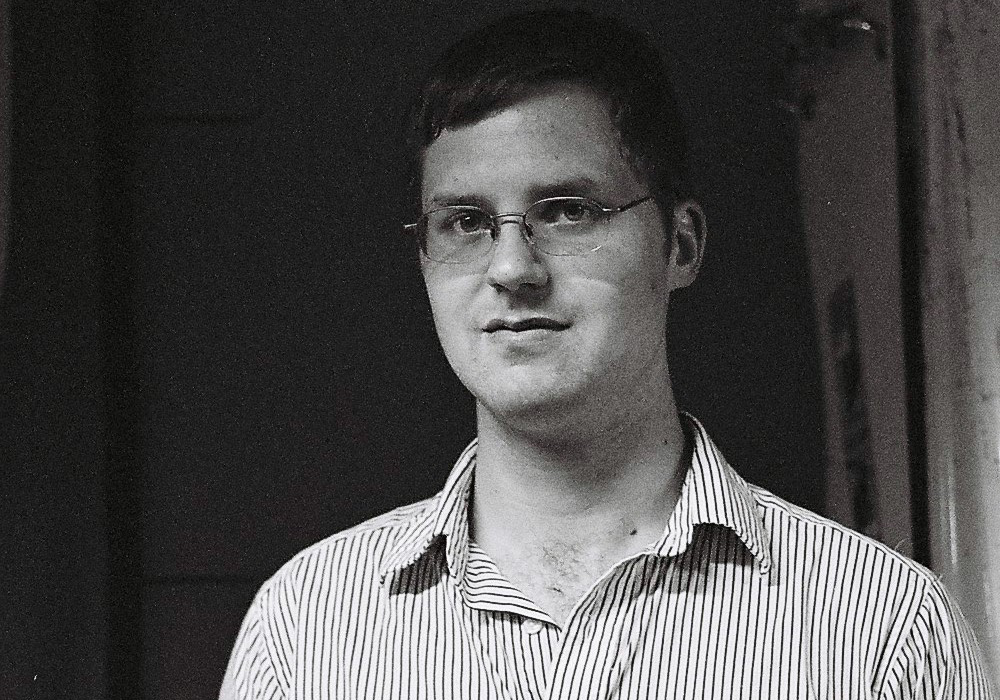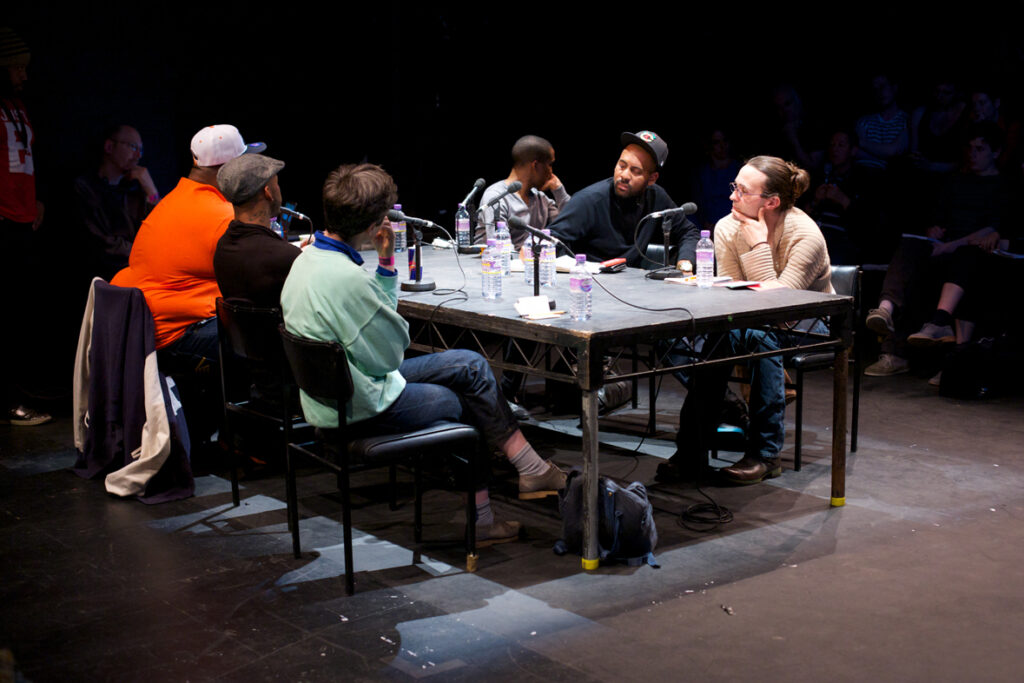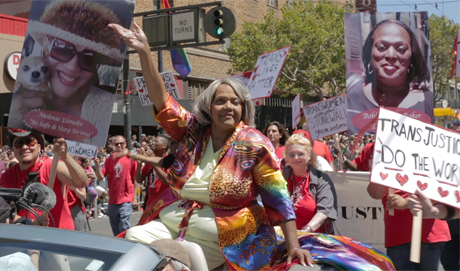
Miss Major in conversation with Eric A Stanley
Eric A Stanley Miss Major
A conversation of intergenerational trans-resistance and anti-racist fierceness between two of the most inspiring public speakers we know.
Arika have been creating events since 2001. The Archive is space to share the documentation of our work, over 600 events from the past 20 years. Browse the archive by event, artists and collections, explore using theme pairs, or use the index for a comprehensive overview.
A conversation of intergenerational trans-resistance and anti-racist fierceness between two of the most inspiring public speakers we know.
Relative patterns of occlusion and exposure occupy two screens. Each exposure fires a stroboscopic flash of colour: yellow for one screen; blue for the other, filling the centre of both screens with colour, haloed with after-images.
Post consideration and post rationalisation… How do we think about experimental music and film after the performance?
A sound of buzzing and flickering metallic drones, glottal stops and guttural growls, and also an explosiveness and purity of sound that reminds you as much of Bill Dixon as anyone else.
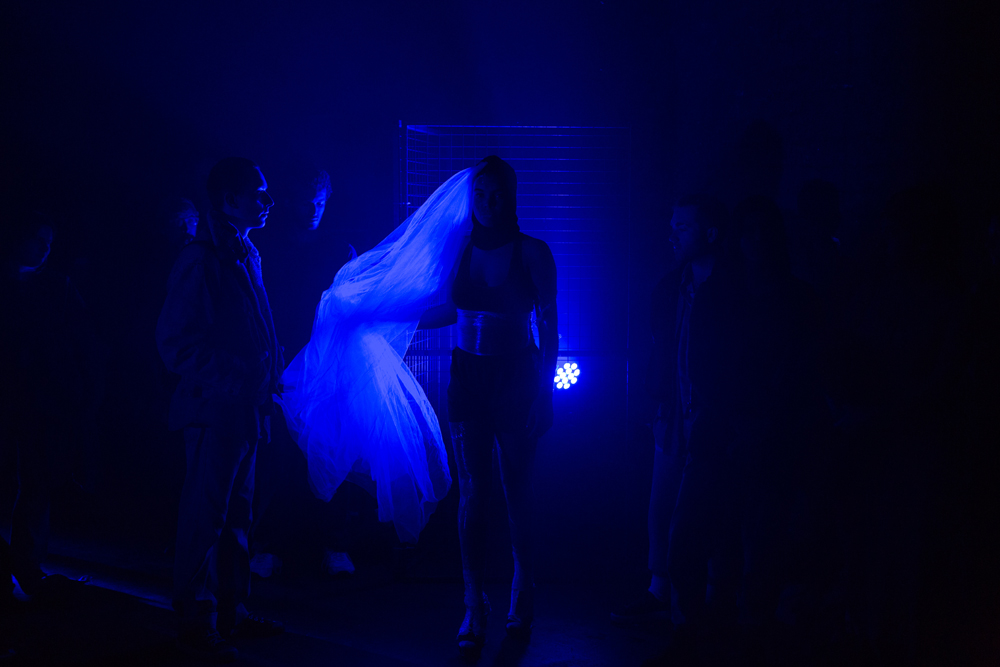
Mashed up queer fantasy of worker’s revolts, biblical demons and present-day hells, and dubbed out cyborg-electro.
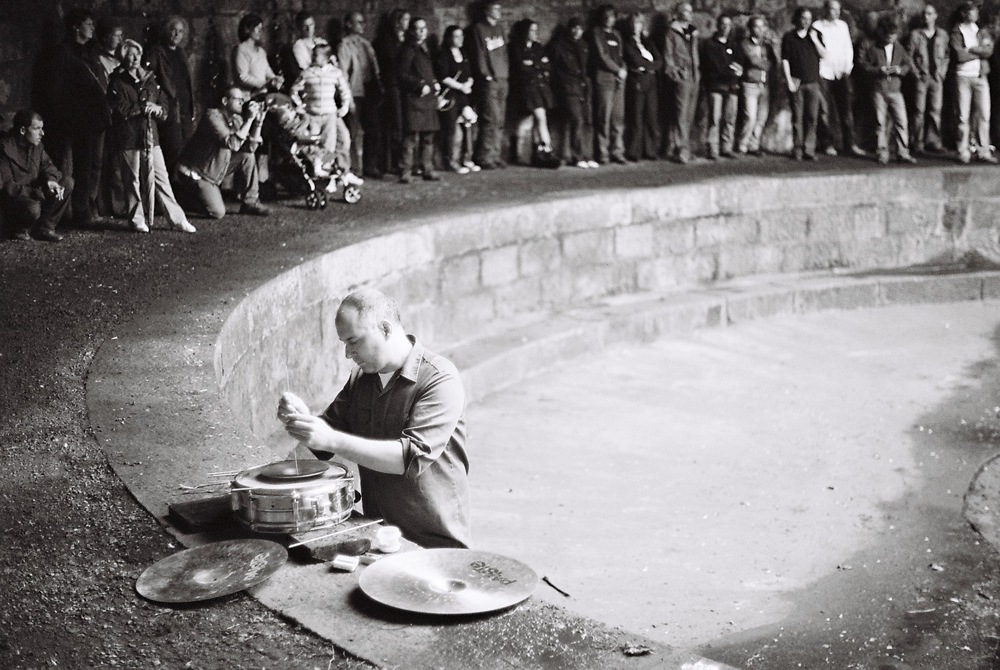
Disused railway turning circle at east end of Union Terrace Gardens, a historically public space at the centre of a regeneration land-grab for the private gain of a local petro-chemical magnate.
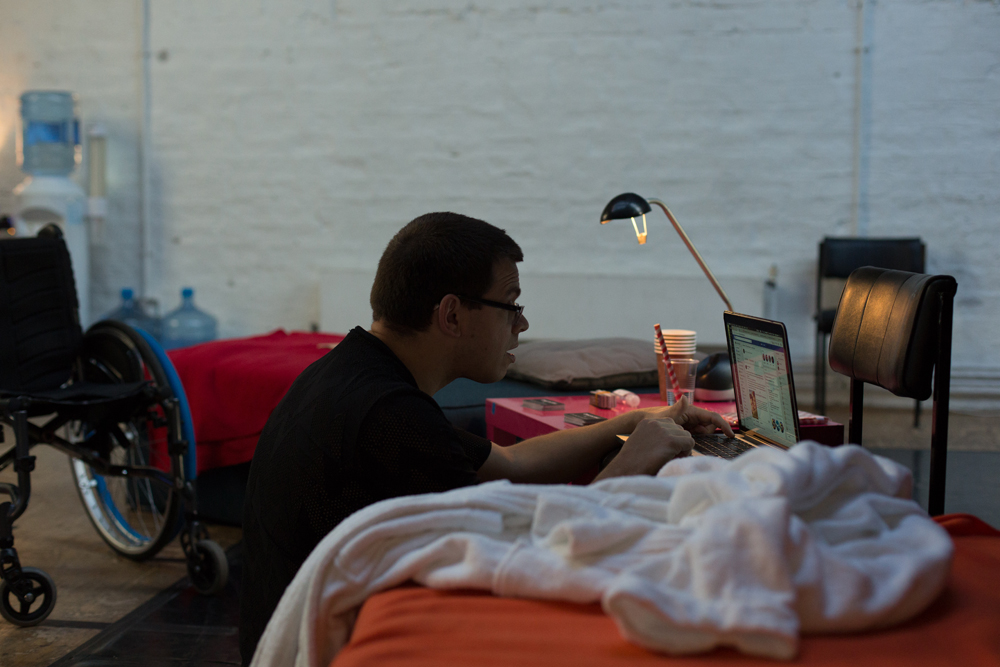
Ten short intimate one-on-one conversations with Robert Softley Gale – We all want to see ourselves reflected in the world around us—in society, in art, in culture… in porn?
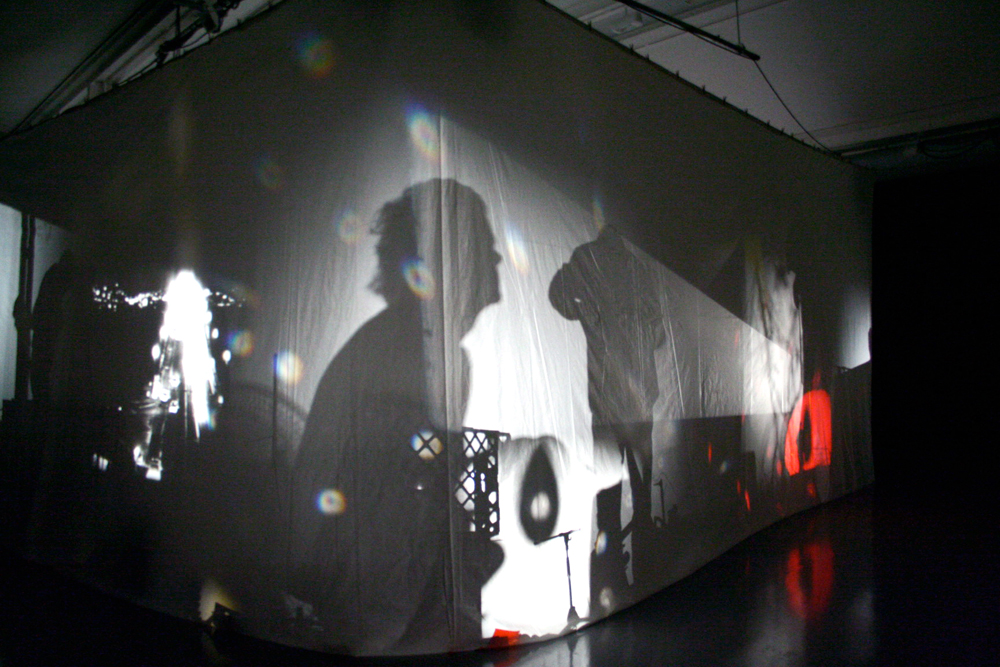
The Cube is a 6 hour performed installation in which sound and image are treated as independent but equal, where musicians and filmmakers sit alongside each other, improvise to and feed off both projected image and amplified and acoustic sound.
A full-blooded, emotional attempt to reinvigorate improvisation from a musically inclined philosopher and two philosophically inclined improvisers.
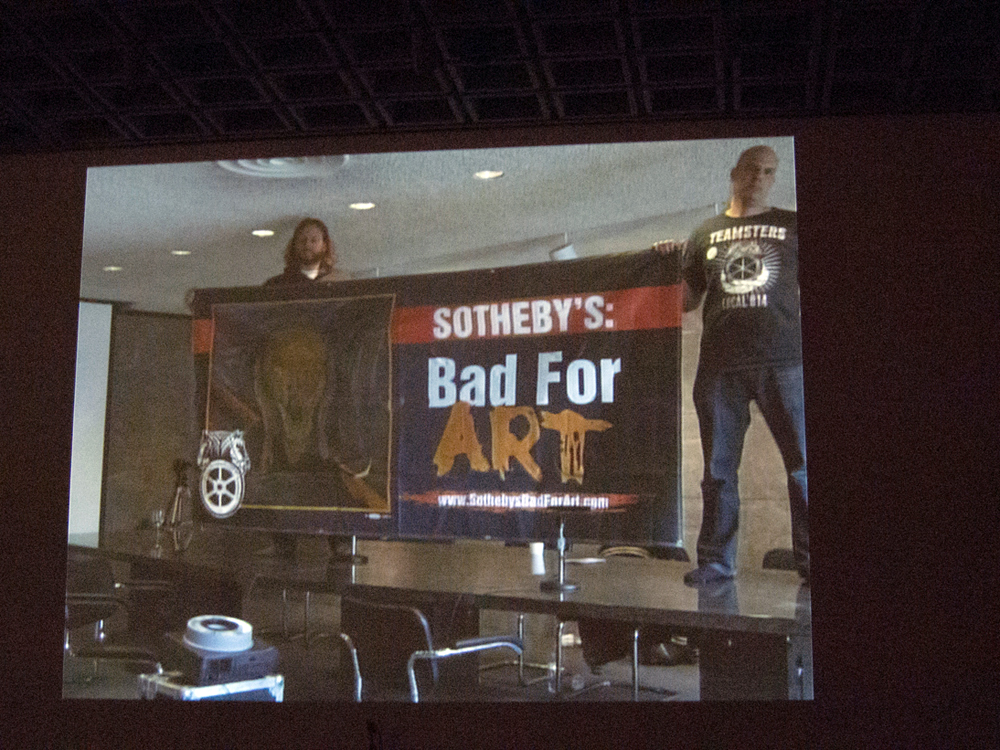
When one calls a strike, who hears the call, who attunes and listens to it? How to listen to the call of a strike? What prevents one from hearing this call or stops one from listening to it?
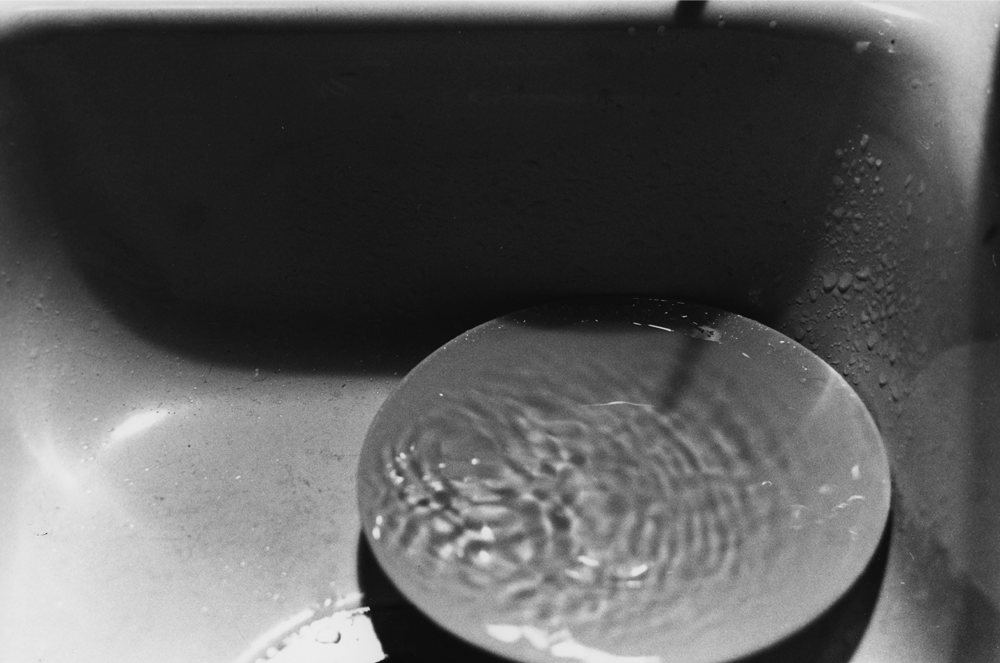
Everyday objects and materials (rubber bands, paper, a sink, microphones) disabused of their inertia and made to speak for themselves in a kind of focusing in on the tiny, repetitive, almost unobserved (sonic/ visual) potential of everyday things put into motion.
A historical narrative of the black and latino/a transgender, bisexual, lesbian, and gay House and Ballroom Scene in relation to its artistic practices.