Before or after finitude?
Arika Catherine Christer Hennix Florian Hecker Robin MacKay
Electronic music, time, thought, the word, and consecutive matters
Arika have been creating events since 2001. The Archive is space to share the documentation of our work, over 600 events from the past 20 years. Browse the archive by event, artists and collections, explore using theme pairs, or use the index for a comprehensive overview.
Electronic music, time, thought, the word, and consecutive matters
Join activists, academics and artists as they reflect on abolitionist praxis and thought, exploring covergences with gender, poetry, technology, performance, speculation, aesthetics, film and culture. This series of events commemorates Black August and is for anyone who wishes to answer the abolitionist call to action and thought.
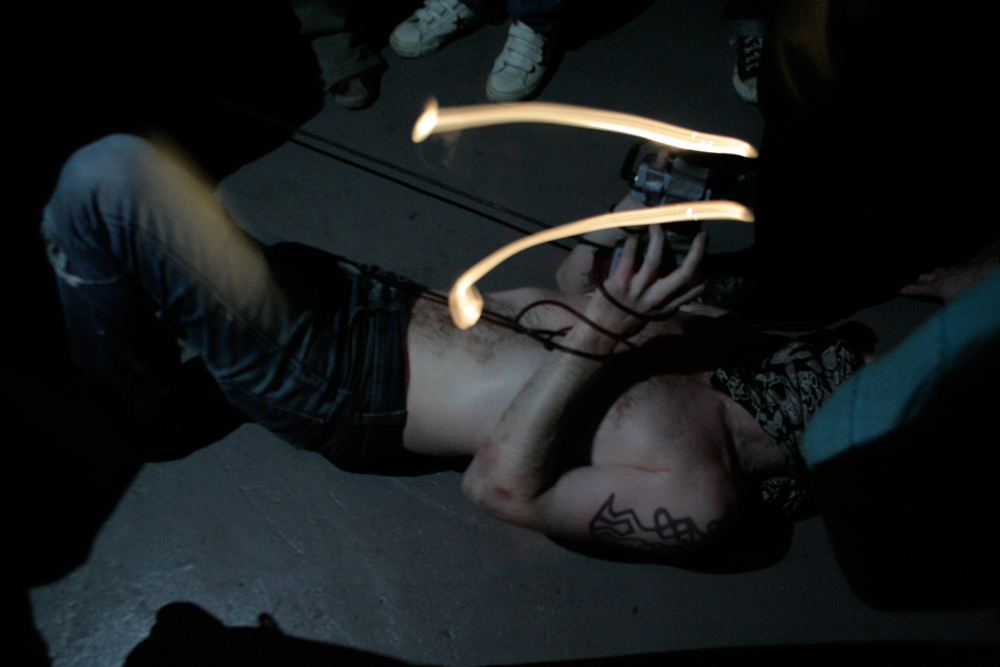
Glasgow. Power electronic klutz behaviour by Kovorox sound head-honcho. Bruised bodies and broken microphones.
Renouncing the bind of the written word, Chopin’s sound poetry is a magical evocation of the pure powers of the voices, stripped bare of language.
Investigating the border between the audible and the visible means looking at the margins, the edges of creativity where artists test out new boundaries and define them anew.
A sort of prayer and conference, a sort of scream and dialogue – a monologue and declaration at the time, addressing how we can build complicity with one another.
The Experimental Improvisers Association of Japan, [EXIAS-J] are a loose collective of musicians and dilettantes who seem to represent an entire and self sufficient scene in one band.
A series of events organised by the Vogue’ology collective from the House Ballroom community in New York grounded in the scenes history of autonomous, self-organised struggle and a shared investment in collective art practices and how those intersect with the multiple and often divergent struggles for freedom.
TEST is a collective creative improvising quartet based out of the NYC Underground (figuratively and literally). Their street-hardened, spatial Jazz is riotous and intense: is also makes us think about collective organization, and different ideas of responsibility and liberty.
Can we find ideas of queer anarchism, failure and low theory in popular culture?
Joan La Barbara presents works exploring the colour spectrum of a single pitch resonating in her skull, an evocation of bird song and circular singing.
How might two of the great musicians working within contrasting traditions of freedom collaborate? What might this produce: musically, socially, allegorically?