Standing in the Flesh
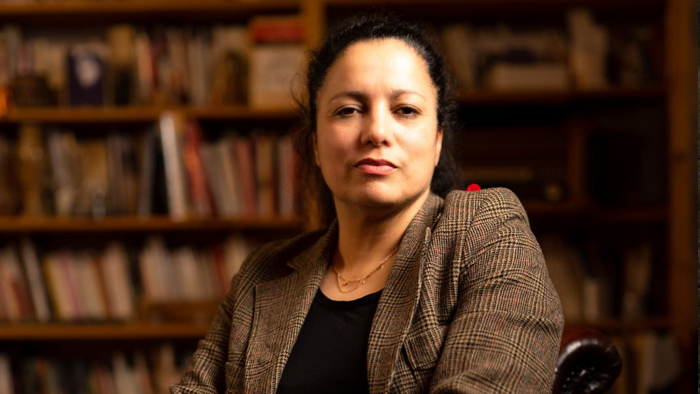
Hortense J. Spillers
In rethinking the body, the law, the state, gender, race, violence, care and empathy, how we might give humanness a different future?
Arika have been creating events since 2001. The Archive is space to share the documentation of our work, over 600 events from the past 20 years. Browse the archive by event, artists and collections, explore using theme pairs, or use the index for a comprehensive overview.
In rethinking the body, the law, the state, gender, race, violence, care and empathy, how we might give humanness a different future?
Birthed from the collective stagger in global consciousness of the late 50’s and 60’s, this programme celebrates epochal, groundbreaking films that all address sound in their own way and that have opened pathways to experimentation.
The club as a community and a site for performed politics: deep/ queer house, vogue femme, lipsync and ballroom.
Ecstatic, scalding and ludicrously heavy, nobody matches Incapacitants for live noise energy. One of the most exhilarating live acts in underground music.
On the birthday of Marsha P. Johnson, this event brings together several elements that celebrate the radical care and kinship characteristic of the Trans revolutionary.
A performance for dry ice and four specially constructed steel tables, each one heated by a single candle until searingly hot.
A performed installation by one of Germany’s most interesting visual artists, based on edited transcripts of the 1961 trial of Adolf Eichmann in Jerusalem and the writings of Hannah Arendt
Joe Colley specialises in hotwired sound constructions full of ominous electronic disturbances and caustic, noxious drones. For KYTN, Joe created a situation of controlled chaos with 50 light sensitive oscillators placed in a field of candles.
Part old-fashioned Renaissance man, part hardcore avant-gardist, the Canadian painter-photographer-filmmaker-musician gives full vent to his genius in the exhilarating perceptual vaudeville, named after the ‘central region’ of tissue that acts as a conduit between the brain’s two hemispheres.
What is happening when systems of repression try to grasp communities’ ways of being, living or surviving, applying laws of sexuality, gender or race to cast them as criminal?
A conversation between Philip and Moten: how do we read NourbeSe’s anti-narrative poetic lament in Glasgow today, given the city’s role in the history of slavery?
How do communities practice being one another’s means, addressing their material problems facing them replicating the state’s violent logic of who is disposable.