Episode 5: Hidden in Plain Sight
Voguing, drag, clubbing, and the politics of communities making different performances of gender and sexuality visible.
Arika have been creating events since 2001. The Archive is space to share the documentation of our work, over 600 events from the past 20 years. Browse the archive by event, artists and collections, explore using theme pairs, or use the index for a comprehensive overview.
Voguing, drag, clubbing, and the politics of communities making different performances of gender and sexuality visible.
I wanna be with you everywhere is an everywhere gathering envisioned for and by disability communities and anyone who wants to get with us. IWBWYE returns to Performance Space and any space on June 21 for an outdoor pop-up and hybridized event.
Ecstatic, intensely joyous experimental club music: like “the sound of our water ceremonies…40 bands playing their melodies at once to recreate the cacophony of the first aurora and the call of the morning star Venus”.
A panel exploring the poetics of abolition. “Poetry is not only dream and vision; it is the skeleton architecture of our lives. It lays the foundations for a future of change.”
One of the most incessantly experimental musicians in the UK, Youngs’ aesthetic is entirely unique, never really part of any scene [whilst influencing many], steadfastly unafraid and honest
Joan La Barbara presents works exploring the colour spectrum of a single pitch resonating in her skull, an evocation of bird song and circular singing.
One-shot sonic portraits of 4 houses, their inhabitants and their relationship to sound, from 2 of the most deep-thinking field-recording artists around.
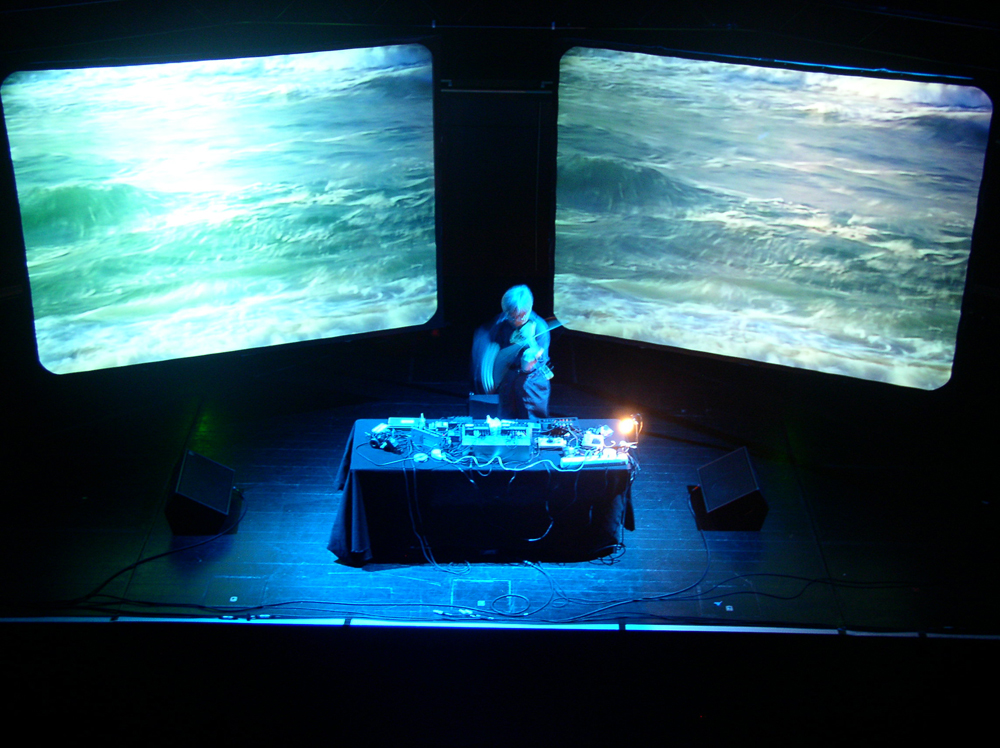
A new interpretation of Kosugi’s Catch-Wave, producing a cloud of fluctuating, hypnotic drones, in front of a backdrop of projected waves.
Inspired by the supernatural horror of H. P. Lovecraft, black metal and a sense of worry as to what constitutes an object, or a world.
Dworkin asks: What would a non-expressive poetry look like? A poetry of intellect rather than emotion?
A conversation between Philip and Moten: how do we read NourbeSe’s anti-narrative poetic lament in Glasgow today, given the city’s role in the history of slavery?
Can a collective performance of NourbeSe’s poem of black life as it exceeds containment enact alternative forms of selfhood that emerge in and out of African diasporic experience?