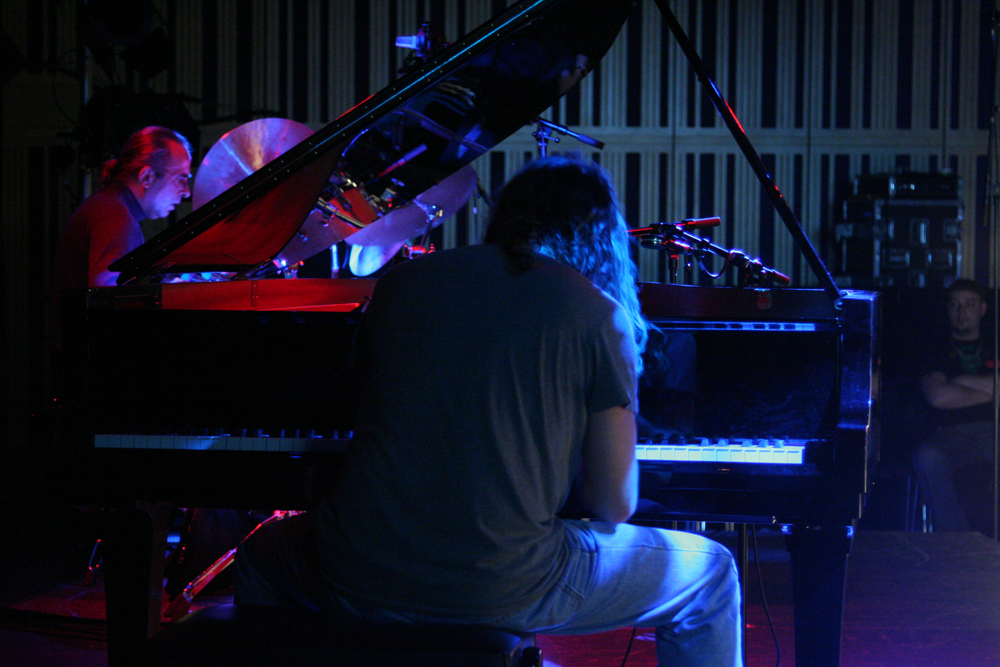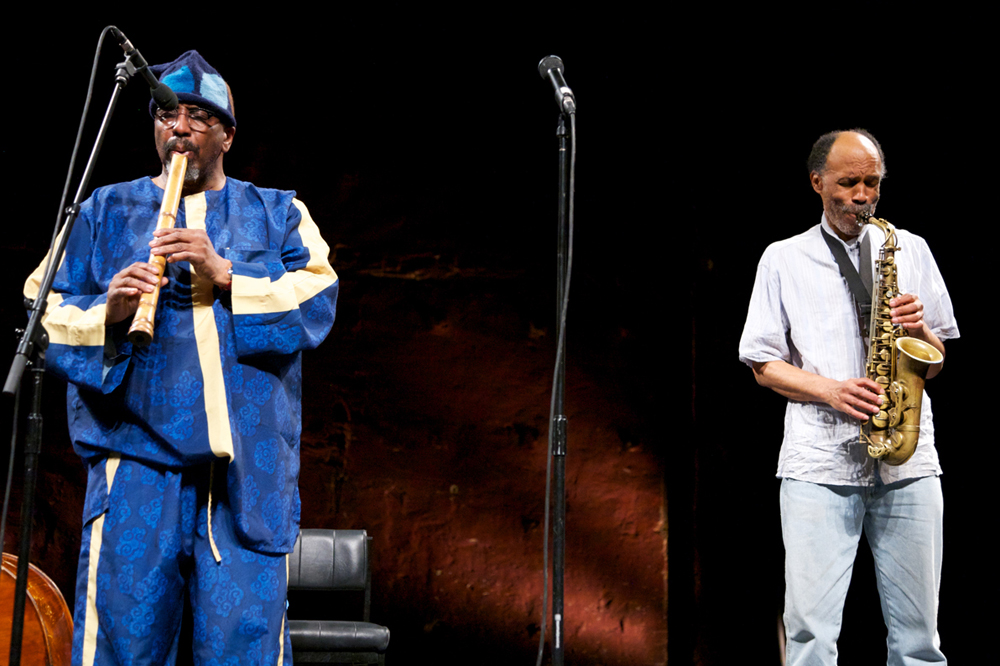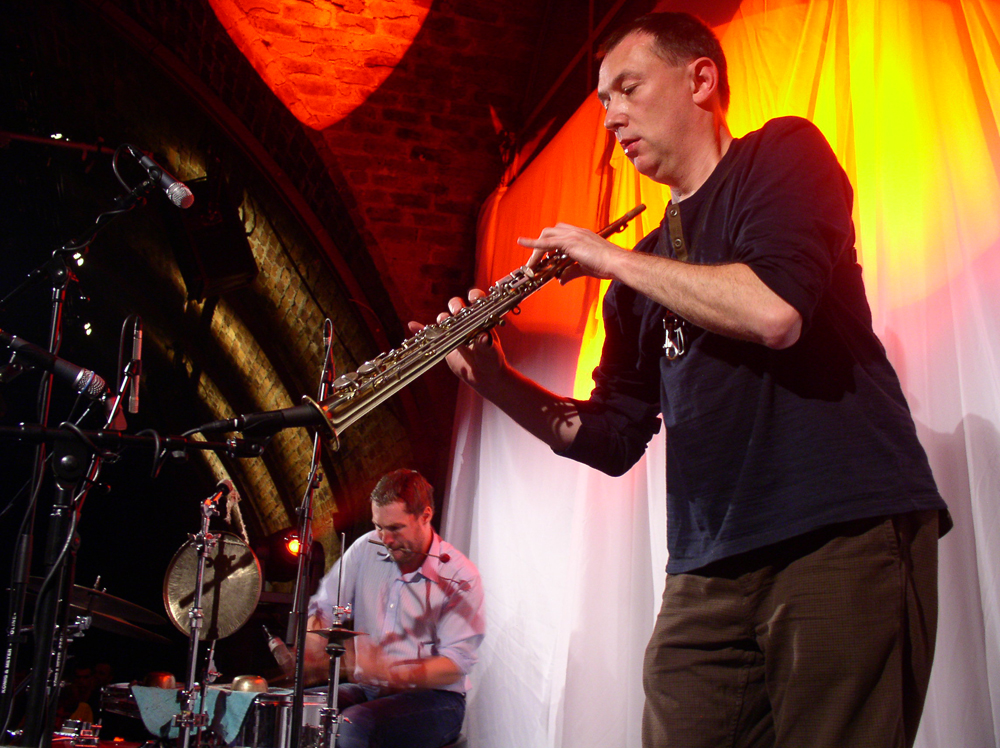
John Butcher & Ingar Zach
Ingar Zach John Butcher
Originally billed as a duo of Ingar Zach and Derek Bailey, John Butcher stood in for Bailey at the last minute.
Arika have been creating events since 2001. The Archive is space to share the documentation of our work, over 600 events from the past 20 years. Browse the archive by event, artists and collections, explore using theme pairs, or use the index for a comprehensive overview.
Originally billed as a duo of Ingar Zach and Derek Bailey, John Butcher stood in for Bailey at the last minute.
Free jazz pianist John Blum with an everywhere-at-once presence in duo with Jackson Krall, incendiary free jazz drummer and sound sculptor
What might Carter and Parker’s collaboration tell us about our own performances of responsibility and liberty, whether individual, social or musical?
Three intense solo performances for drums (both played and screamed through), cymbal, voice, credit card, bird whistle, and guitar amplifier/leads.
Three intimate 45 minute sessions, reading your political questions – using Tarot, Palmistry, Reiki, Astrology, and Philosophy, and the invented methods of Fake and Political Therapy.
Three documentary films exploring diverse realities of sex workers around the world followed by a closing ceremony of the festival.
Hartmut is going to talk a little about his work at large and the politics of how his films are constructed. And we’ll screen one of his best films: B-52.
A testimony to poverty from Chris’s own experiences, and an invitation to engage with an all too typical situation and context through a kind of imaginary listening.
In true reality television style, this in-depth artist talk will tackle all the hardest-hitting questions and juiciest details about care, creative collaboration, and disability justice.
From really simple, open instructions, An Unrhymed Chord creates a kind of half-way point between composition and improvisation.
Stripping back the domesticated ‘meaning’ of (everyday, mundane, kitchen) tools to reveal “a lexicon of rage and frustration.” Plus an allegorical use of mundane, everyday things as an examination of how meaning is constructed in film.
Formed as a means to realise William Bennett’s goal of “a sound that could bludgeon an audience into submission”