House
Eric La Casa Jean-Luc Guionnet
One-shot sonic portraits of 4 houses, their inhabitants and their relationship to sound, from 2 of the most deep-thinking field-recording artists around.
Arika have been creating events since 2001. The Archive is space to share the documentation of our work, over 600 events from the past 20 years. Browse the archive by event, artists and collections, explore using theme pairs, or use the index for a comprehensive overview.
One-shot sonic portraits of 4 houses, their inhabitants and their relationship to sound, from 2 of the most deep-thinking field-recording artists around.
Instead of the one-way monologue of normal performance, what would be the result of an actual collective dialogue? Where would it go?
Come for the crip ingenuity; stay for the smooth feels of what it is to be each other’s everything.
Usurper luddite twins’ disabled instruments play a game of pick-up-sticks with the deconstructed horn of a young Derby opponent.
A stroboscopic and intense sensory overload of flashing abstract forms, cut to ribbons by modified projectors.
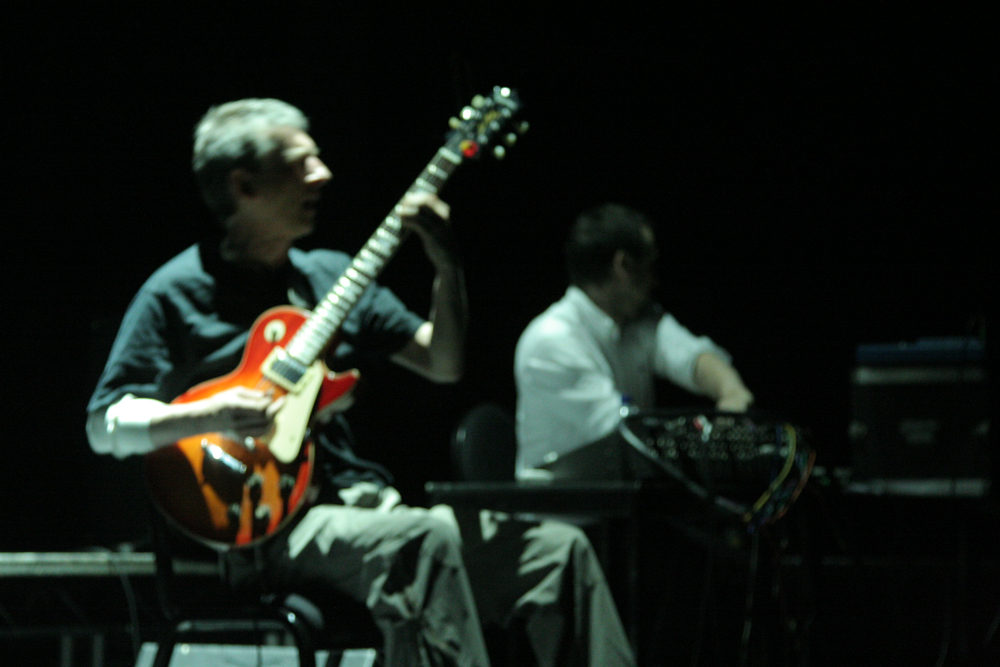
A preposterously heavy, eye of the storm musical tug of war, in which two drummers, electronics and electric guitar fall over each other in a droning crush.
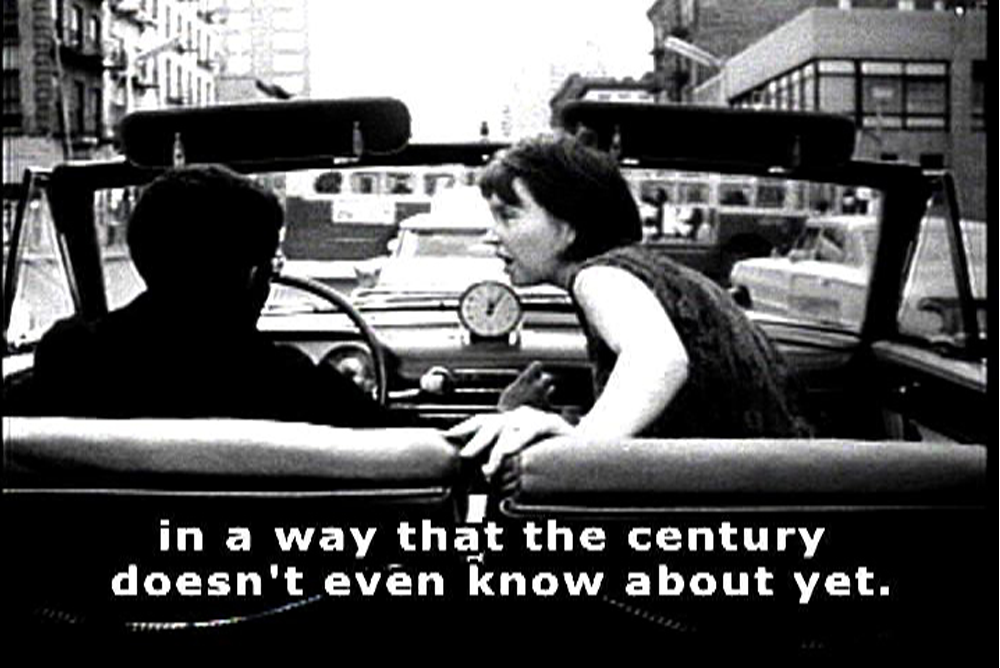
A parody of a (Manhattan) road movie and meditation on bifurcation, in paths traveled between the seen and the heard; a road trip played over and over from different perspectives.
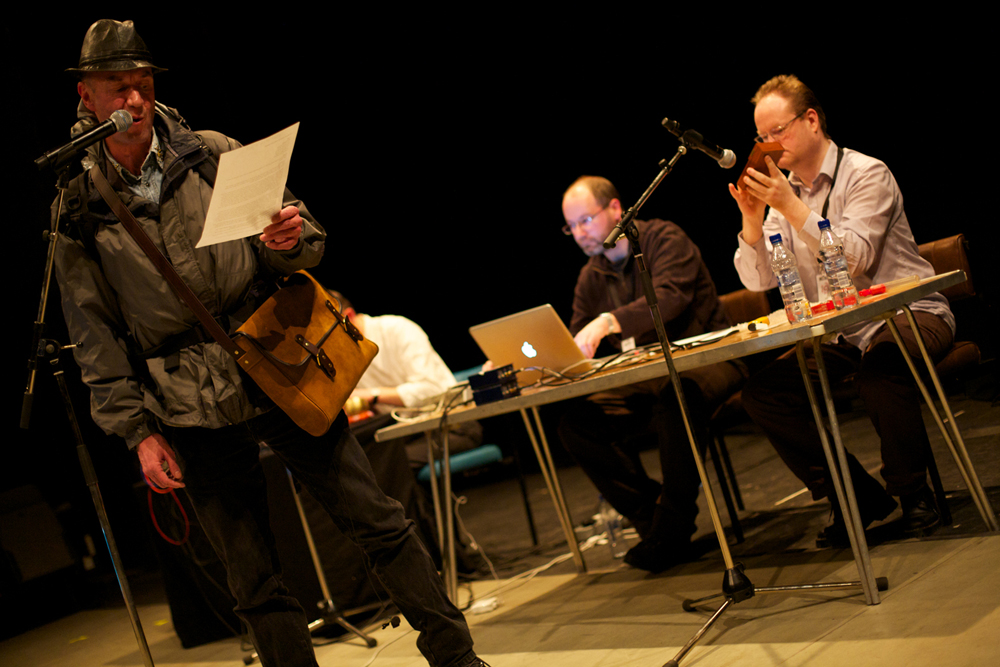
The first performative part in a game of chance and endurance as actor Tam Dean Burn constantly broadcasts for 24hrs.
The 2006 INSTAL festival saw a broad selection of artists that included Blood Stereo and Ludo Mich, Ellen Fullman and Sean Meehan, Keiji Haino and Tony Conrad and a specially created performance by Maryanne Amacher.
An LSD trip gone right via dense explorations of post-Fahey steel and low level drone.
Elizabeth’s writing pulls apart toxic settler colonialism and the worldview used to justify it; working towards an alternative distribution of powers, so that ways of being otherwise can endure.
How does this practice, that simultaneously resists and honours the distinctions between these genres, materials and senses, determine the inhabitation of another: a convergence of aesthetic and social experimentation?