It wasn’t history but memory
It wasn’t history but memory
A conversation weaving together music, poetry and discussion which asks what decolonisation means in the Gàidhealtachd and how we can hold the complexity of Scotland’s role in empire?
Overview
How do Gaelic language and culture look at the world, and what does that mean for these islands in these times? What has survived centuries of clearance and suppression, and what does Gaelic revival mean now? What does decolonisation mean in the Gàidhealtachd, and how can our conversations hold the complexity of Scotland’s role in empire? Questions like these are critical for political work that’s rooted in Scotland, but we’re often missing real understanding from a Gaelic perspective of what’s happened and happening in Scotland. Looking at both traditional and contemporary culture, and weaving together music, poetry and conversation, we’ll try to open up some of these questions and grow our understanding of where we’ve come from and where we might go.
Context
This event builds on Harry Josephine’s conversation with Leanne Betasamosake Simpson and Robyn Maynard for Episode 11. Together they thought through abolitionist tactics from Indigenous and Black communities, and–amongst other things–related those to the context here and in the highlands of Scotland.
Something great about that event was the back and forth between highland and North American experiences of anti-colonial resistance, but also the engagement with forms of complicity that are often easier to ignore. This kind of analysis is amazingly developed in Colin G Calloway’s White People, Indians, and Highlanders, that Josie and we both read around the same time. You can read her thoughts at the time HERE. That book traces the historical experiences of colonisation of Highland Scots, and Indigenous communities in North American: how both were considered to be land based, tribal, savages that needed civilising. It also thinks through the forms of complicity those communities were instrumentalised through–fighting on different sides of colonial conflict, or how some people cleared from their land became the shock troops of British colonisation elsewhere. This kind of analysis, of resistance and complicity, is difficult to engage with. But it is also very necessary if we are to better understand counter-colonial practices between every river and every sea. Hopefully this event will get into some of this too.
Content Notes: Discussion of the effects of colonialisation and Scotland’s relationship to it.
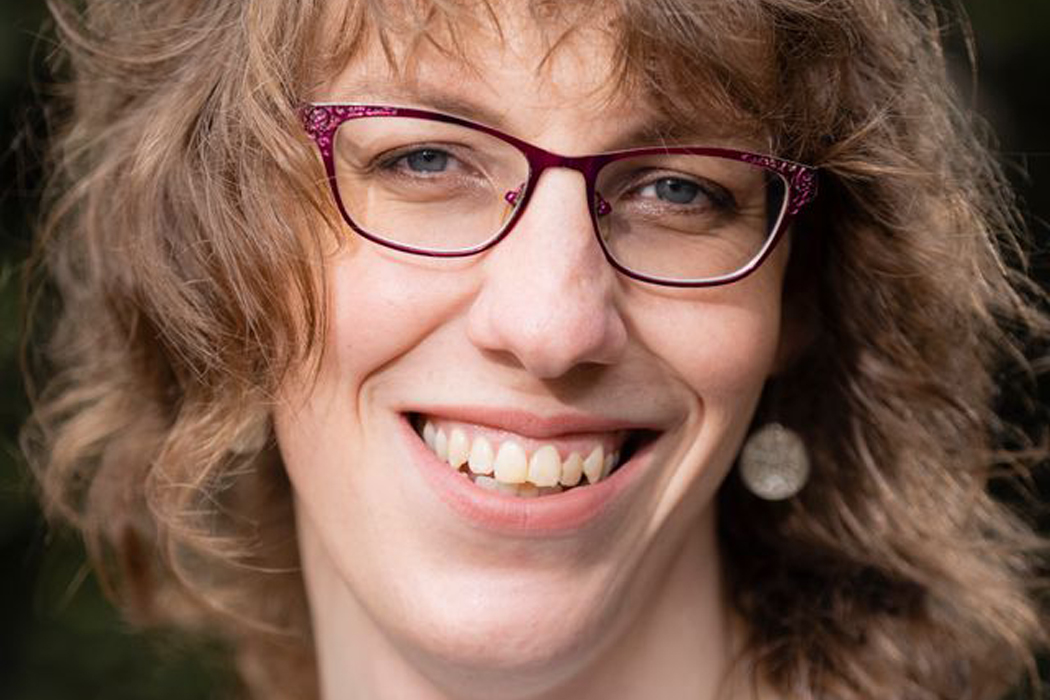
ReadHarry Josephine Giles is a writer and performer from Orkney, now living in Leith. She has lived on four islands, each larger than the last. She has a MA in Theatre Directing from East 15 Acting School and a PhD in Creative Writing from the University of Stirling. Her work happens in the crunchy places where performance and politics get muddled up.
As a poet, Harry Josephine has toured globally, given feature sets at venues from the Bowery Poetry Club to Edinburgh’s Hogmanay, performed at festivals from the New Zealand Writers Festival to Montreal’s Metropolis Bleu. Her verse novel Deep Wheel Orcadia was published by Picador in October 2021 and won the Arthur C. Clarke Award for science fiction. Her poetry collections – Tonguit (Freight Books 2015) and The Games (Out-Spoken Press 2018) – were shortlisted for the Edwin Morgan Poetry Award (twice), the Forward Prize for Best First Collection, and the Saltire Poetry Book of the Year.
As a theatre artist, Harry Josephine has been featured in the SPILL National Platform, and at festivals including to Forest Fringe (UK), NTI (Latvia), Verb Festival (Aotearoa) and Teszt (Romania). Her one-to-one show What We Owe was listed in the Guardian’s “Best of the Edinburgh Fringe” round-up – in the “But is it art?” section. Her multimedia poetry show Drone debuted in the Made in Scotland Showcase at the 2019 Edinburgh Fringe and toured internationally.
Ailean Dòmhnallach, a leading figure in the Gaelic musical scene, is in demand internationally as a composer, musical director, piper, singer, workshop leader, and lecturer on Gaelic music. One of his myriad gifts is to make pibroch accessible and lovable. His work as a scholar-performer reuniting seventeenth-century piping with its Gaelic roots is influencing a whole generation of pipers.
Ailean has performed at many of the major Celtic and piping festivals around the world. He lectured on the Scottish Music course at the RSAMD, (renamed the Scottish Conservatoire of Music) from its inception in 1995 until the end of 2013 to be free-lance for 2014 when he received a commission to write ‘The Bruce700’ He had previously been musical director for BBC television series eg. An Ataireachd Bhuan (1992), Éideadh nan Guth (1994) the first Gaelic Hogmanay show in1994-95, ‘Seudan a’Chuain’ (GrampianTV 1996) BBC eightpart series ‘Na h-Eilthirich’ (1998) as well as other commissions.In 1999, Ailean directed a pioneering series of piping concerts for the Edinburgh International Festival (EIF) and in 2000 he was music director for ‘The Well’ a ten-show series sponsored by River Dance in Dublin. In 2004 his EIF concert series ‘From Battle Lines to Bar Lines’ won the ‘Herald Angel Award’ voted by journalists. In 2005, he co-directed six-part television series ‘The Highland Sessions’, which was screened on RTE, BBC3 and ITV and won the best documentary music award in Ireland.
In January 2007, The BBC made a documentary on Ailean and his brothers, Dr Angus and Iain (also famed pipers). The three brothers were born in the tiny Gaelic-speaking township of Glenuig in Moidart.
Ailean won one of the highest awards in piping, the Clasp at the Northern Meeting, two years running (1989 and 1990) and then followed a style of playing that was closer to his own Gaelic heritage.
Access
Live Captions
Content Notes
Discussion of the effects of colonialisation and Scotland’s relationship to it.
See general Access information for Episode 12: From the Rivers to the Seas event